
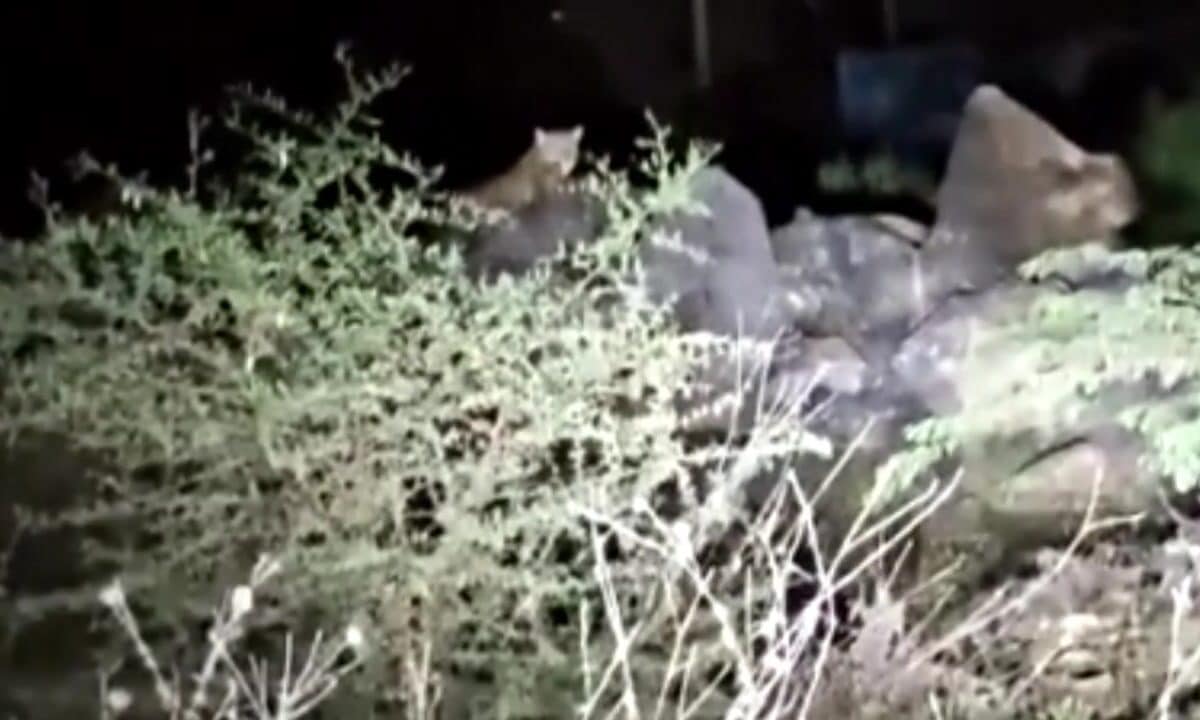
A wave of palpable tension and severe panic has gripped the rural community of Bhilwara following the confirmed sighting of a panther near the revered Awara Mata Temple located within the Baliya Khera region. The unexpected appearance of the formidable wild predator during the early morning hours has completely altered the daily routine of the local inhabitants, turning a peaceful dawn into a period of extreme anxiety and heightened alertness.
The agricultural and residential expanse surrounding Baliya Khera has historically served as a zone where human habitation intersects with natural wildlife corridors, yet direct sightings of apex predators in close proximity to religious and residential landmarks remain exceedingly rare and alarming. The terrain near the Awara Mata Temple features dense thickets and enclosures, which historically provide natural camouflage and temporary shelter for wandering wildlife descending from nearby forested zones in search of water and prey.
According to ground reports received from the vicinity, the panther was first spotted in an enclosure near the temple during the early morning hours, immediately triggering urgent alarms among the early risers and agricultural workers in the area. The precise physical location of the sighting close to a place of daily worship has compounded the gravity of the situation, as local devotees and daily visitors frequent the path regularly, thereby elevating the immediate risk to human safety.
In the wake of this alarming wildlife sighting, local residents and community representatives have expressed profound concern over their immediate security, emphasizing that ordinary villagers are now hesitant to venture out into the fields for routine agricultural chores. Community members have urgently appealed to the local authorities to recognize the gravity of the threat and to ensure that public safety is prioritized through immediate boots-on-the-ground interventions.
The broader regional impact of this incident extends across the entire district, touching upon the psychological well-being of agrarian households whose livelihoods depend on unhindered access to open fields, grazing lands, and water sources. When predatory wildlife breaches the threshold of populated zones, the economic rhythm of rural communities suffers instantly as outdoor economic activities come to an abrupt and cautious halt.
Amidst the growing apprehension among the populace, immense responsibility now rests upon the shoulders of the forest department, which holds statutory authority over wildlife management, rescue operations, and animal tracking within the region. Administrative officials are under intense scrutiny from the local public to deploy specialized rescue teams, install camera traps, and execute safe tranquilization or relocation protocols without any avoidable administrative delay.
As the daylight progresses and communities remain barricaded behind closed doors, the immediate forward outlook depends entirely on the swiftness and efficacy of the forest department's response strategy. Public expectations demand a permanent monitoring mechanism in the Baliya Khera area surrounding the Awara Mata Temple to ensure that human-wildlife conflict is proactively mitigated and that the tranquility of the region is successfully restored.
