
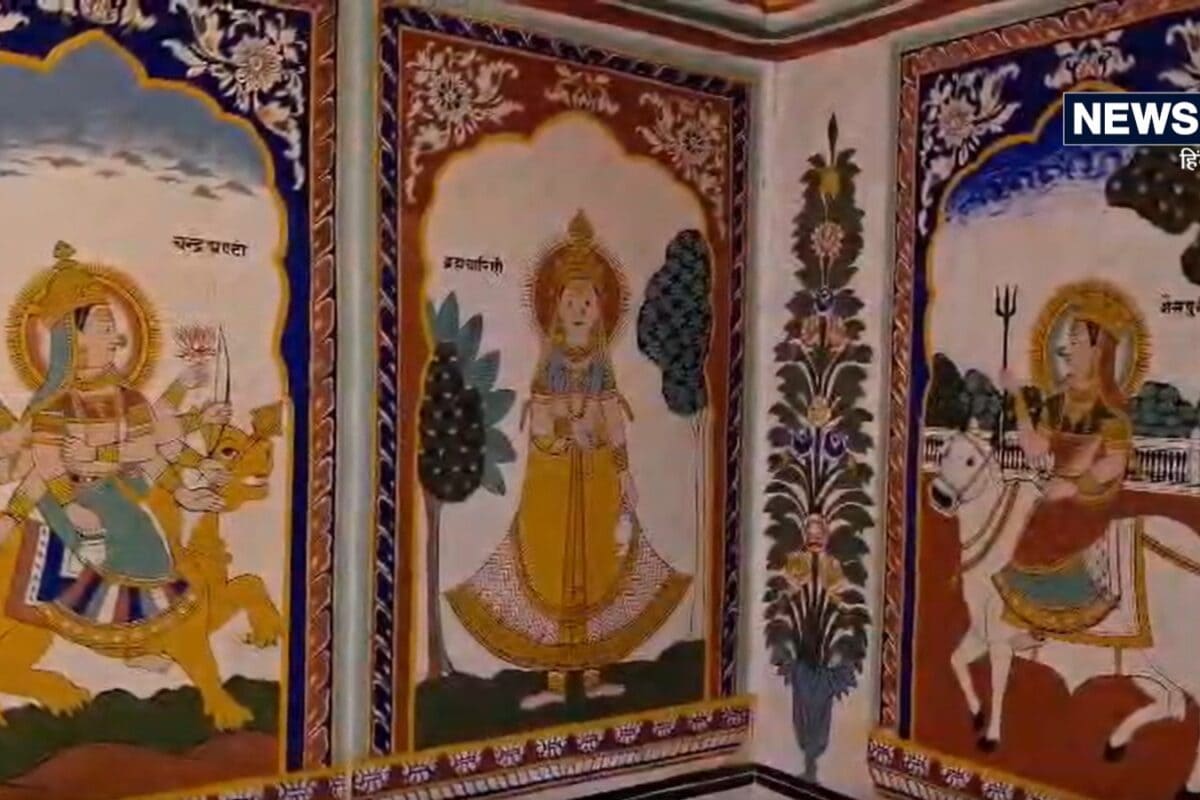
As the festive fervor of Navratri grips the nation, the historical Poddar Haveli located in Nawalgarh within the Jhunjhunu district has emerged as a paramount center of cultural and spiritual resonance. Built in the year 1902, this architectural marvel features intricately crafted murals on its ancient walls that vividly portray the nine distinct forms of Goddess Durga. These enduring artworks continue to command immense reverence from art enthusiasts, pilgrims, and heritage scholars who visit the region.
The historical context of the Poddar Haveli traces back to the early twentieth century, an era when Shekhawati patrons heavily invested in exquisite fresco paintings to display their prosperity, aesthetic sensibilities, and deep-rooted religious beliefs. The architecture of the haveli serves as a quintessential textbook example of traditional Rajasthani craftsmanship, where building construction and spiritual devotion evolved hand in hand. Over a century since its establishment, the structure has withstood environmental challenges while retaining the intricate details of its original artwork.
Examining the ground reality and artistic composition reveals that the murals vividly capture the nine forms of Goddess Durga with remarkable precision and vibrant natural pigments. The statistical uniqueness lies in the complete and unbroken depiction of all nine divine manifestations within a single residential heritage compound. This extensive artistic endeavor underscores the immense cultural importance placed on feminine divinity and spiritual protection by the builders of the haveli during 1902.
Art historians, cultural preservationists, and local stakeholders consistently emphasize that the illustrations inside the Poddar Haveli transcend mere decorative elements, acting instead as profound visual messages of feminine power and societal strength. Community leaders and heritage guides note that visitors from across the country arrive in Nawalgarh specifically to witness how art and faith intertwined during the Shekhawati boom. These firsthand accounts highlight a collective pride among residents regarding their ancestral heritage.
The presence of such magnificent heritage structures significantly impacts the broader regional economy, drawing tourism interest toward Jhunjhunu and neighboring districts. The cultural prominence of the Poddar Haveli elevates the tourism profile of Shekhawati, encouraging local businesses, artisans, and hospitality providers to engage with heritage conservation efforts. This continuous influx of culturally inclined tourists fosters economic dynamism and reinforces local identity.
Administrative bodies and heritage conservation committees play an active role in overseeing the preservation of sites like the Poddar Haveli in Jhunjhunu and Nawalgarh. Statutory oversight ensures that structural integrity is maintained and that historical frescoes are protected from deterioration caused by moisture and aging. Local authorities frequently collaborate with heritage experts to implement best practices in artifact conservation.
