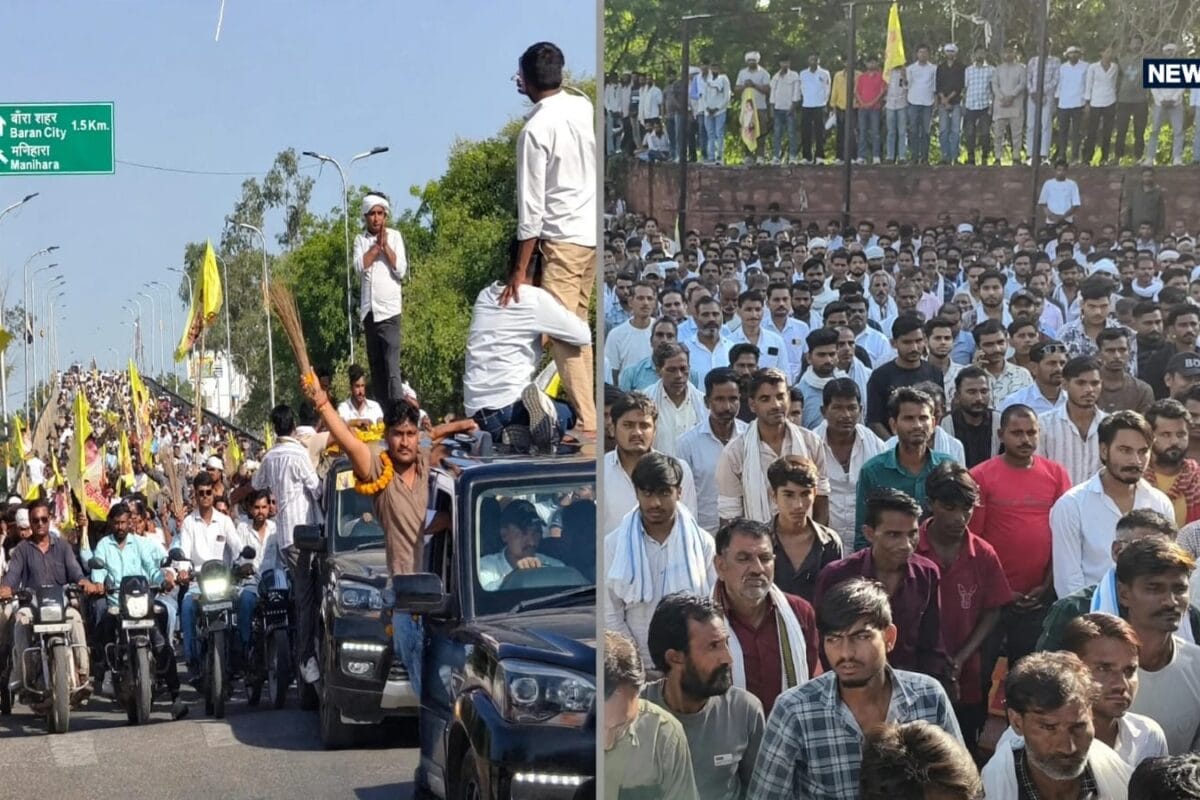
The agrarian crisis in Baran district has taken a dramatic turn as farmer leader Naresh Meena continues his indefinite hunger strike outside the district collectorate over the acute shortage of agricultural fertilizers. The agitation, which has drawn widespread attention across the region, began after a massive farmer march was organized from Kamkheda Balaji. Farmers and supporters accompanied the leadership to the district headquarters to press their urgent demands regarding the availability and distribution of essential farming inputs.
The root cause of the current confrontation lies in the severe supply deficit and pricing concerns surrounding Di-ammonium Phosphate, commonly known as DAP, which is vital for upcoming agricultural operations. Farmers have been facing immense difficulties in procuring adequate quantities of fertilizers through official channels, leading to distress among the agrarian community. The movement spearheaded by Naresh Meena seeks to address these systemic supply chain bottlenecks that directly threaten rural livelihoods and agricultural productivity in the region.
Central to the ongoing agitation is the explicit demand for making DAP fertilizer available to the farming community at a regulated and affordable rate of 1350 rupees. The high cost and black-marketing of essential farming supplies have placed an unbearable financial burden on ordinary cultivators. By fixing a firm economic benchmark, the protesters are demanding immediate market intervention to ensure transparency, accessibility, and fair pricing for every registered farmer within the district.
Tensions escalated significantly when Naresh Meena outright rejected the negotiation proposals brought forward by the delegation of administrative officials stationed at the protest site. Insisting that local committees lack the executive authority to resolve systemic grievances, he laid down a strict condition that formal talks must be conducted directly at the chief secretary level. This uncompromising stance reflects the deep distrust between the agitating groups and local administrative machinery regarding the handling of agricultural crises.
During his address from the hunger strike stage, Naresh Meena launched a fiery political verbal attack against former minister Pramod Jain Bhaya, escalating the rhetoric surrounding regional political influence. In a direct challenge regarding public support, he taunted his political rivals by remarking that whether they prepare traditional feasts or invite senior political figures like Rahul Gandhi and Govind Singh Dotasra, the gathering and public backing he commands will undoubtedly remain far larger.
The agitation also received prominent backing from former minister Rajendra Gudha, who visited the hunger strike venue to express solidarity with the farmers. Taking a strong stance against the state administration, Gudha issued stern warnings and criticized the systemic apathy towards rural grievances. The alignment of multiple political figures with the farmer movement has transformed a localized supply protest into a broader political showdown within the state.
Looking ahead, the situation threatens to spiral into a major statewide confrontation if a formal resolution is not reached swiftly. Naresh Meena has issued a final ultimatum, declaring that if the legitimate demands of the farming community are not met, thousands of farmers will march from Baran to Jaipur on October 4 to stage a complete siege of the chief minister residence, raising the political stakes for the state government significantly.