
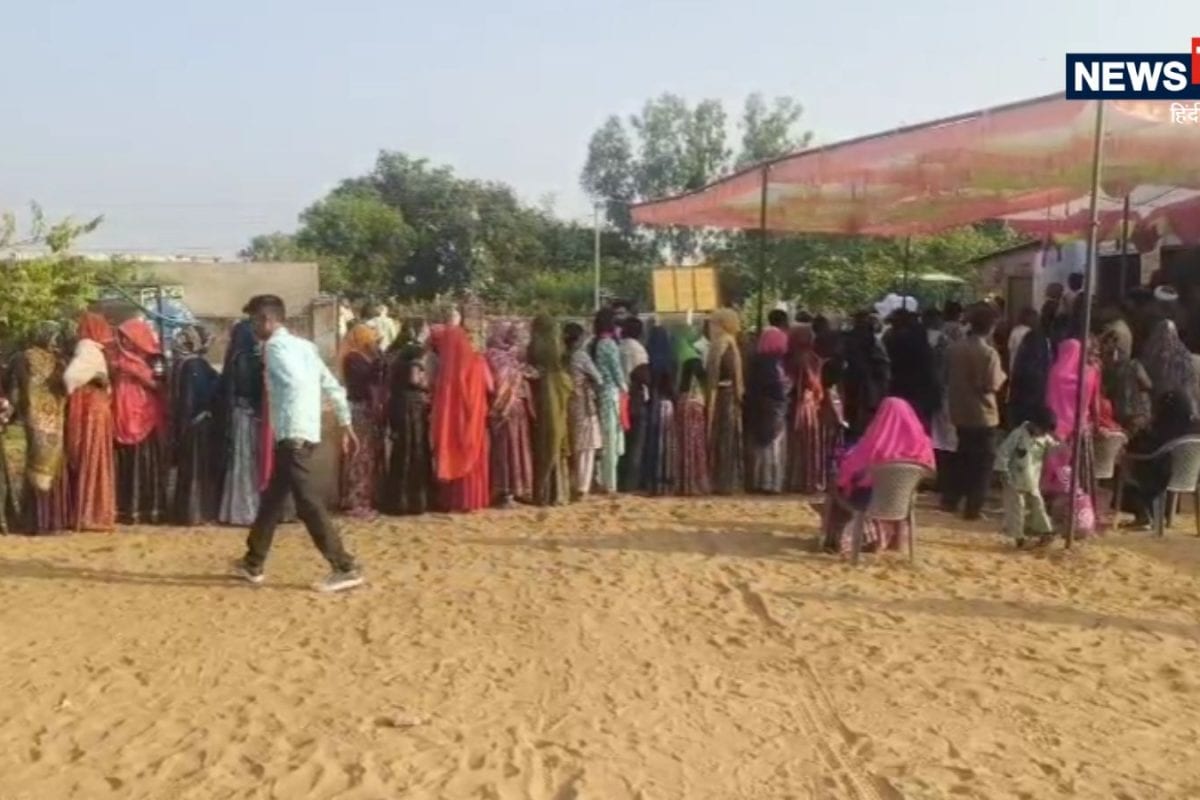
The fourth phase of the ongoing rural local body elections in Rajasthan has recorded an impressive and robust voter turnout, reflecting deep democratic engagement among rural citizens. Across the state, 116 panchayat committees went to the polls, culminating in a cumulative participation rate of 84.42 percent. This high level of turnout underscores the profound significance that grassroots governance holds for rural communities, who view these elections as the foundational pillar for local development and resource allocation.
Historically, panchayat elections in Rajasthan have always commanded substantial attention due to their direct impact on village-level administration, infrastructure development, and social welfare distribution. The decentralization of power envisioned under the Panchayati Raj system aims to empower local populations, making them active participants in policy execution. The fourth phase represents a critical milestone in this electoral cycle, capturing the collective aspirations of millions of rural voters striving for accountable and responsive local leadership.
Delving into the specifics of the electoral data, participation varied across different regions, yet maintained a remarkably high baseline overall. The highest voter participation was registered in Jaisalmer district, specifically within the Khuhadi panchayat committee, where an astounding 92.51 percent of eligible voters exercised their franchise. Close behind were several other rural pockets, including Rawatsar in Hanumangarh with 92.12 percent, Chhoti Sarwa in Banswara with 92.14 percent, Nachna in Jaisalmer with 91.37 percent, and Patodi in Barmer with 91.30 percent.
Further detailed statistics from the electoral commission indicate that enthusiasm remained exceptionally high in other parts of Jaisalmer as well. The Jaisalmer panchayat committee itself recorded 91.04 percent voting, while Fatehgarh and Sankra both witnessed 90.79 percent turnout. These figures highlight an overwhelming commitment among desert communities to participate in the democratic process, defying challenging geographical conditions to cast their ballots and shape their local governance structures.
Conversely, while the overall trend was overwhelmingly positive, certain panchayat committees recorded comparatively lower turnout figures, though still substantial by standard metrics. The lowest participation was observed in the Siwana panchayat committee of Balotra district at 72.35 percent, followed by Jaisamand in Salumbar at 76.26 percent. Additionally, Ramgarh Shekhawati in Sikar district recorded a turnout of 78.07 percent. These variations provide important analytical insights for political observers and election planners examining regional voting behaviors.
Administrative machinery across the participating districts worked tirelessly to maintain law and order, ensuring that polling stations remained secure and accessible for all demographic segments, including women and elderly voters. District election officers deployed adequate security personnel and logistical support to manage the massive influx of voters. Special arrangements were made at sensitive booths to prevent any untoward incidents, thereby preserving the sanctity and transparency of the electoral mandate.
As the fourth phase successfully concludes, attention now shifts toward the subsequent administrative procedures, including the safe storage of electronic voting machines and ballot papers in secured strongrooms. Political parties and independent candidates await the upcoming counting dates with bated breath, as the results will decisively shape the political landscape of rural Rajasthan. The high voter participation guarantees that the emerging local leaders will command strong democratic legitimacy as they assume office to steer grassroots development.
