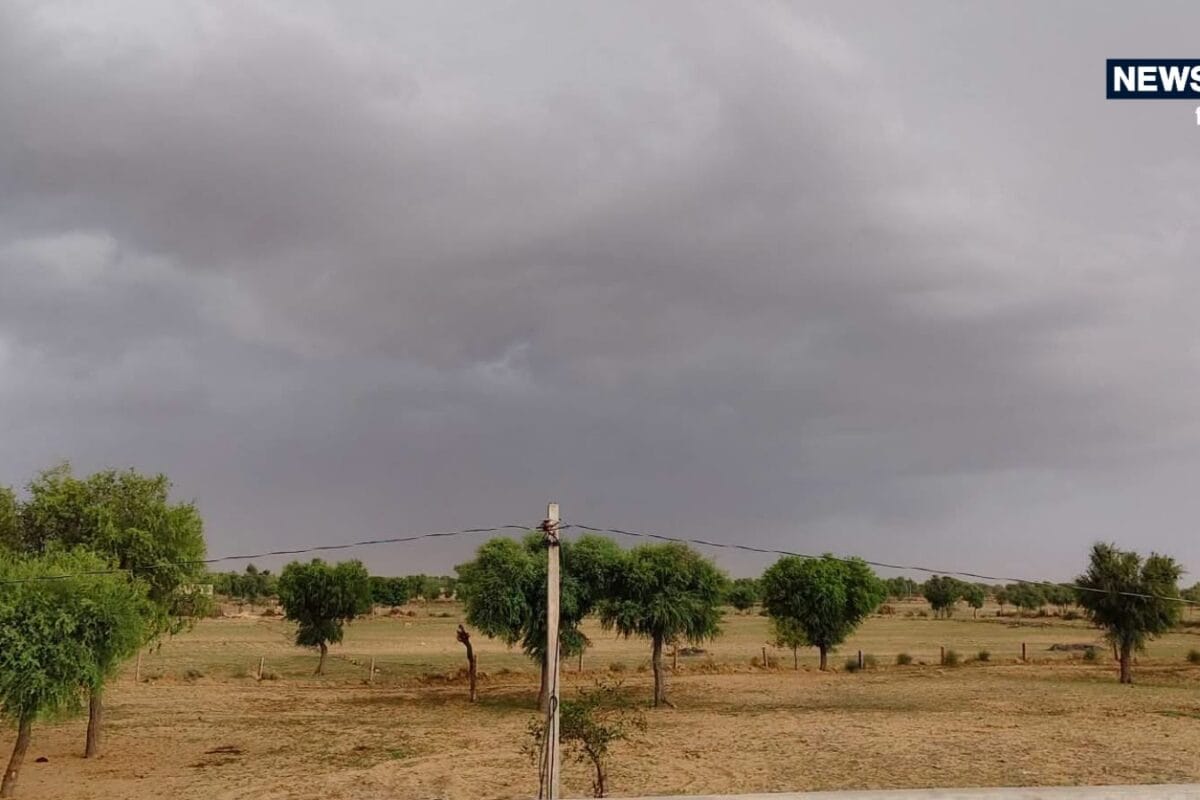
The southwest monsoon has officially and completely withdrawn from the entire state of Rajasthan, spanning from Jaipur to Jaisalmer, marking the formal end of the rainy season. According to data released by the meteorological department, the monsoon completed its exit from the remaining parts of the state on October 3, which was approximately three days later than the normal historical schedule for the region. This delayed retreat has subsequently led to an abrupt weakening of all active precipitation systems and localized shower activities across the administrative borders of the state.
Historically, the transition from monsoon to post-monsoon conditions in Rajasthan follows a well-documented meteorological pattern dictated by continental pressure systems and shifting wind directions. As the seasonal trough positioned at an altitude of 5.8 kilometers above sea level over Rajasthan has progressively weakened, the underlying atmospheric dynamics have shifted drastically. The establishment of an anti-cyclonic circulation in the immediate vicinity of northern Gujarat and south-west Rajasthan has effectively halted moisture-laden incursions from adjoining oceanic corridors.
In the wake of this complete withdrawal, the ground reality across both eastern and western Rajasthan is characterized by sharply diminishing humidity and a stark absence of rainfall. Weather forecasting indicators confirm that October 4 will experience predominantly dry weather conditions across all territorial divisions. Furthermore, extended meteorological outlooks suggest that the vast majority of districts in the state will remain completely devoid of any significant rainfall activity for at least the upcoming week, cementing a prolonged dry spell for agricultural sectors.
Local communities, farming collectives, and regional traders have expressed deep concern regarding the sudden intensification of heat and the complete absence of late-season showers. Agricultural representatives note that while the delayed departure pushed the calendar, the immediate onset of intense dry heat poses significant logistical hurdles for soil moisture retention. Commercial traders in regional marketplaces have similarly observed shifts in daily public movement as citizens contend with unseasonal thermal discomfort brought about by the abrupt atmospheric shift.
Zooming in on the regional impact affecting districts such as Kotputli-Behror and surrounding areas, the withdrawal of the monsoon translates directly into elevated thermal indices and intensified diurnal temperature ranges. The local economy, heavily reliant on both agrarian output and localized commerce, must now recalibrate to manage the challenges of a prolonged dry phase. Community leaders and local businesses are adapting their operational schedules to cope with the searing afternoon heat, which has begun to test the resilience of outdoor laborers and daily commuters alike.
In response to these shifting meteorological parameters, the meteorological department and administrative bodies have maintained continuous oversight, issuing regular advisories to monitor temperature spikes and safeguard public health. While no statutory disaster response measures have been triggered by the dry spell, district authorities are actively reviewing agricultural advisory channels to ensure that local farmers receive timely updates regarding moisture conservation strategies. Public health directives are also being disseminated quietly to prevent heat-related ailments during peak afternoon hours.
Looking ahead, the forward outlook for Rajasthan over the next week projects maximum temperatures remaining consistently two to four degrees Celsius above normal seasonal averages. Meteorological monitoring stations confirm that October 3 recorded the state's highest temperature of 41.2 degrees Celsius in Pilani, establishing a formidable benchmark for the ongoing dry phase. As northern winds continue to dominate the regional airspace, citizens, administrators, and agricultural planners must prepare for a prolonged period of dry, arid weather devoid of any cooling relief in the immediate future.