
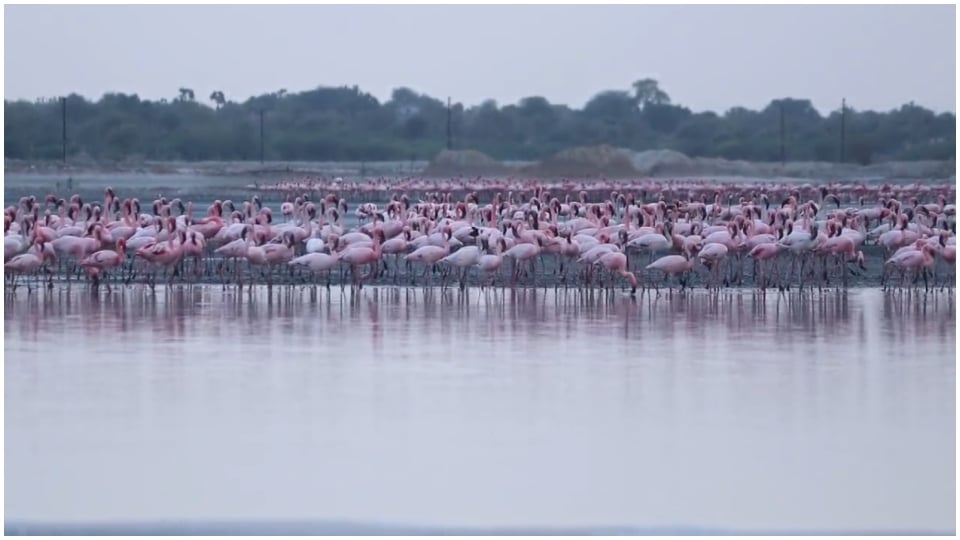
With the formal onset of the winter season in Rajasthan, the iconic migratory birds known as flamingos have officially started arriving at the vast expanses of Sambhar Lake, located in the Jaipur region. This annual avian migration marks a significant ecological event for the ecosystem, drawing the attention of wildlife enthusiasts, ornithologists, and local conservationists who closely monitor the health and vitality of the wetland every year.
Sambhar Lake, historically recognized as India's largest inland saltwater lake, has served for centuries as a vital winter habitat for numerous species of migratory birds traveling thousands of kilometers from their northern breeding grounds. The arrival of flamingos is a traditional indicator of changing seasonal patterns, transforming the saline landscape into a vibrant ecosystem teeming with avian life during the cooler months of the year.
Recent observations on the ground confirm that these elegant pink birds have begun populating several key water bodies surrounding the main basin. Specifically, sightings have been officially reported across Ratan Talab, Mundia Talab, Naliasar, and various other interconnected local water bodies where shallow waters provide suitable feeding grounds rich in algae and small aquatic organisms.
Despite the joyous arrival of the flamingos, environmentalists and local communities have expressed tangible concerns regarding the current ecological conditions of the region. The primary cause of anxiety stems from deficient rainfall recorded during the preceding monsoon season, which has left several localized water bodies with lower than average water levels and diminished geographic spread.
The broader regional impact of reduced precipitation extends across the entire Sambhar ecosystem and surrounding districts, potentially influencing the availability of natural food sources and safe nesting areas for the migratory flocks. Local administrative bodies, agricultural communities, and nature enthusiasts are closely observing how these environmental shifts might alter the duration and density of the avian migration this season.
Administrative oversight and monitoring by local forest and wildlife departments are currently underway to track the health of the arriving flocks and ensure that human interference remains strictly minimized. Local authorities are coordinating with ecological experts to evaluate the changing water parameters and assess whether additional protective measures are required for the designated wetland zones.
Looking forward, the upcoming weeks will be crucial in determining whether further waves of migratory birds will successfully inhabit the lake despite the rainfall deficit. Public expectations remain high for favorable weather conditions that could potentially replenish the vital water bodies of Ratan Talab, Mundia Talab, and Naliasar, thereby securing a safe and sustainable habitat for the flamingos throughout the winter.
