
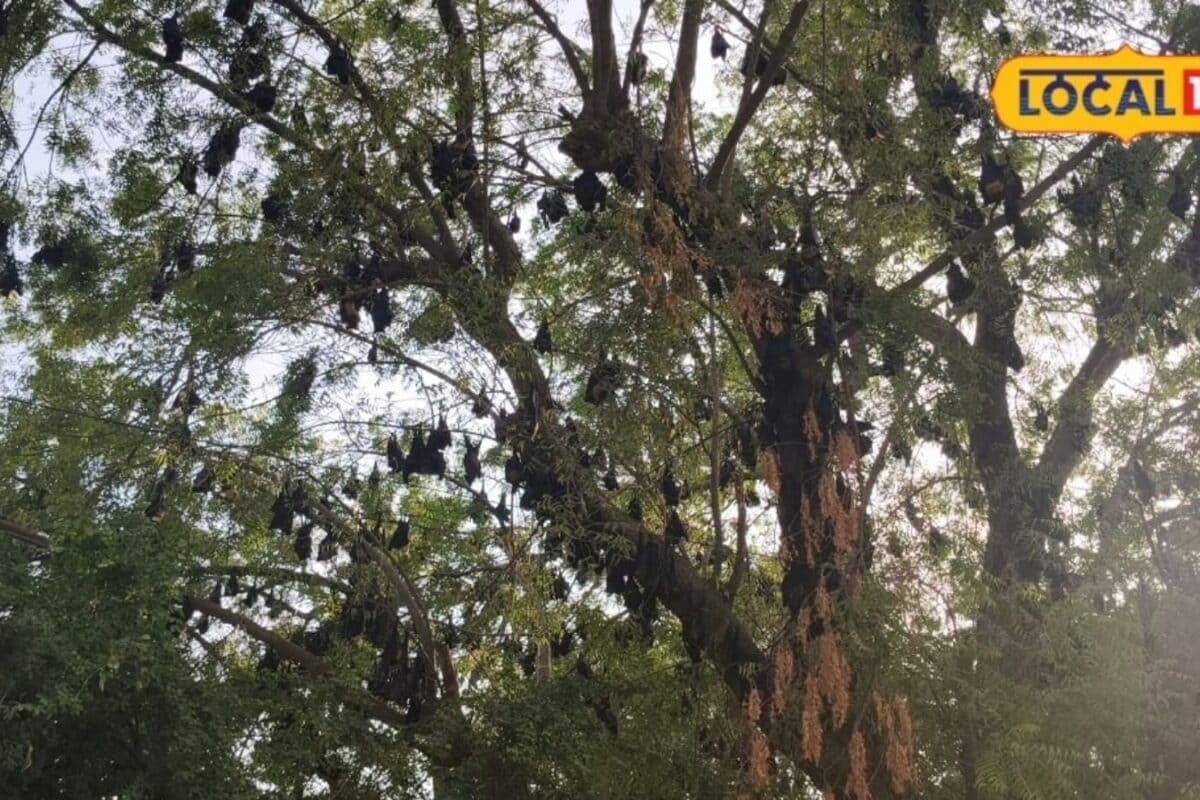
Following the conclusion of the monsoon season, the city of Bikaner has witnessed a notable ecological arrival with migratory fruit bats, commonly known as falahari bats, establishing their temporary habitat. Around 400 fruit bats have been actively observed roosting on the trees situated within the municipal Toy Train Park. This seasonal phenomenon highlights the predictable yet fascinating movement patterns of these winged mammals as they seek suitable environments during the transitional phase of the weather.
Historically, wildlife observers and local naturalists have noted that these populations arrive annually in the region during the final days of August and maintain their presence through the month of December. As the winter season progresses and colder weather sets in across the region, these bats traditionally migrate toward relatively warmer areas. Although observational evidence strongly suggests that their origins lie within the neighboring agricultural and forested tracts of Haryana and Punjab, formal scientific confirmation regarding their precise native habitats and migratory routes remains under observation.
The ground reality at the Toy Train Park presents a striking behavioral pattern characteristic of these species. Throughout the daylight hours, the approximately 400 fruit bats remain securely suspended upside down from the upper branches of the park's mature trees, resting and conserving their energy. However, the moment dusk approaches and evening sets in, these creatures become active, taking flight in search of essential food sources, predominantly targeting local vegetation, flowering plants, and fruit-bearing trees.
Providing valuable academic insight into this annual phenomenon, Professor Pratap Singh, Head of the Department of Zoology, has documented the timeline and ecological significance of these arrivals. According to his expert observations, while their exact transit corridors require further empirical mapping, their continuous presence provides a robust subject for faunal studies. Furthermore, academic monitoring over the past several years indicates a consistent upward trend in the population numbers visiting the Bikaner area during this specific window.
Beyond their behavioral peculiarities, these migratory fruit bats hold immense value for the broader regional environment, extending their impact to surrounding districts including Kotputli-Behror and neighboring ecosystems. As primary consumers of nectar, flowers, and fruits, they act as critical natural agents for pollination and seed dispersal. Their nocturnal foraging habits facilitate the regeneration of diverse plant species, making them indispensable contributors to regional biodiversity and the health of local green cover.
While these visitors are generally harmless and integrate into the urban ecosystem of the park during their seasonal stay, local civic authorities and municipal caretakers maintain an observant approach toward managing the park grounds. Given the rising population counts documented year after year, public spaces accommodating these roosting colonies require careful environmental management to ensure the peaceful coexistence of urban visitors and local wildlife populations.
Looking ahead, the presence of these fruit bats until December serves as an annual reminder of the interconnected nature of regional wildlife corridors spanning across Rajasthan, Haryana, and Punjab. Environmentalists and researchers anticipate further studies to precisely map their migratory pathways in the coming years. Public awareness programs and sustained academic observation led by experts like Professor Pratap Singh will continue to document these patterns, ensuring greater protection and appreciation for these vital ecological contributors.