
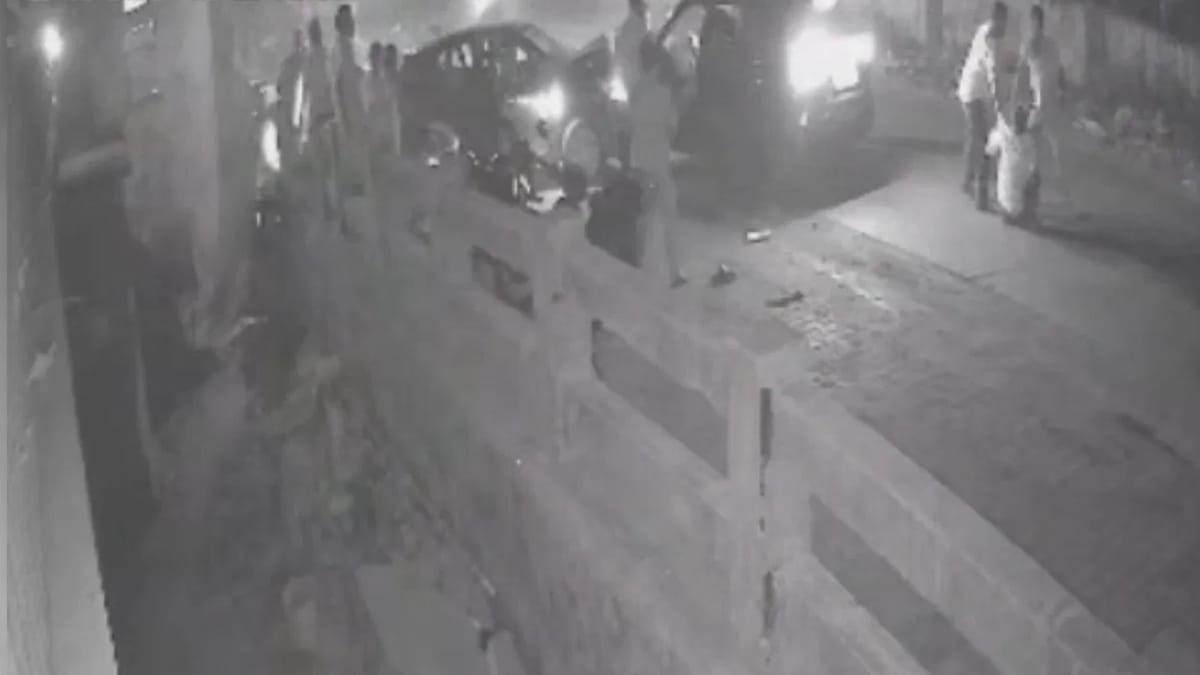
A harrowing incident unfolded on the old National Highway-12 located within the jurisdiction of Bundi, where a high-speed vehicle wreaked havoc, putting civilian lives at grave risk. The sequence of events began when the speeding car lost control, veering across lanes and making initial contact with another incoming vehicle from the opposite direction. The sudden collision created immediate panic among bystanders, commuters, and nearby residents who witnessed the terrifying episode unfolding on a busy stretch of the regional roadway.
The geographical and infrastructural significance of the old National Highway-12 has historically made it a critical transit route for regional commerce, daily commuters, and heavy transport vehicles. Over the years, urban expansion and increased vehicular density along this corridor have exponentially multiplied traffic congestion and safety hazards. Despite various intermittent safety campaigns, the absence of stringent speed monitoring mechanisms on secondary arterial stretches often leads to dangerous driving behaviors, reckless maneuvers, and severe accidents that endanger public safety.
As the runaway vehicle careened off its trajectory following the initial impact, it surged towards the roadside, creating a scene of absolute devastation. Without any warning, the out-of-control automobile plowed directly into six motorcycles that were parked neatly along the edge of the thoroughfare. The sheer kinetic force of the impact utterly crushed the parked two-wheelers, scattering debris across the tarmac and blocking pedestrian pathways while amplifying the scale of destruction.
In the immediate aftermath of the violent impact, chaos ensued as local traders, shopkeepers, and residents rushed forward to rescue the victims trapped or injured in the wreckage. Eyewitness accounts confirmed that the collision resulted in four people sustaining various injuries, requiring urgent medical intervention. Good Samaritans and local community members played a pivotal role in coordinating initial rescue efforts, administering immediate comfort, and alerting emergency medical services and law enforcement authorities.
While the immediate geographical focus remains localized to Bundi, the broader regional impact extends across neighboring districts within the greater administrative framework, including Kotputli-Behror. Incidents of this magnitude directly affect the psychological sense of security among families who rely on these transport routes for daily livelihood, commercial trade, and educational commuting. The disruption caused by such crashes underscores the urgent necessity for comprehensive traffic calming measures and enhanced surveillance across regional highways.
Responding swiftly to the crisis, local administrative bodies and traffic police units dispatched personnel to secure the accident perimeter, clear the blocked roadway, and restore normal traffic movement. Authorities initiated preliminary investigations to determine the exact velocity of the car, verify vehicle documentation, and ascertain whether mechanical failure or driver negligence caused the loss of control. Law enforcement officials have reiterated their commitment to enforcing traffic regulations more strictly along vulnerable highway segments.
Looking ahead, community leaders, safety advocates, and administrative stakeholders are calling for a thorough review of speed limits, pedestrian pathways, and designated parking zones along the old National Highway-12. Public expectations center on heightened police patrolling, installation of speed deterrents, and strict punitive actions against motorists who flout traffic laws. As the four injured individuals continue their medical recovery, authorities have pledged to conclude their inquiry expeditiously and implement preventive protocols to avert similar tragedies in the future.