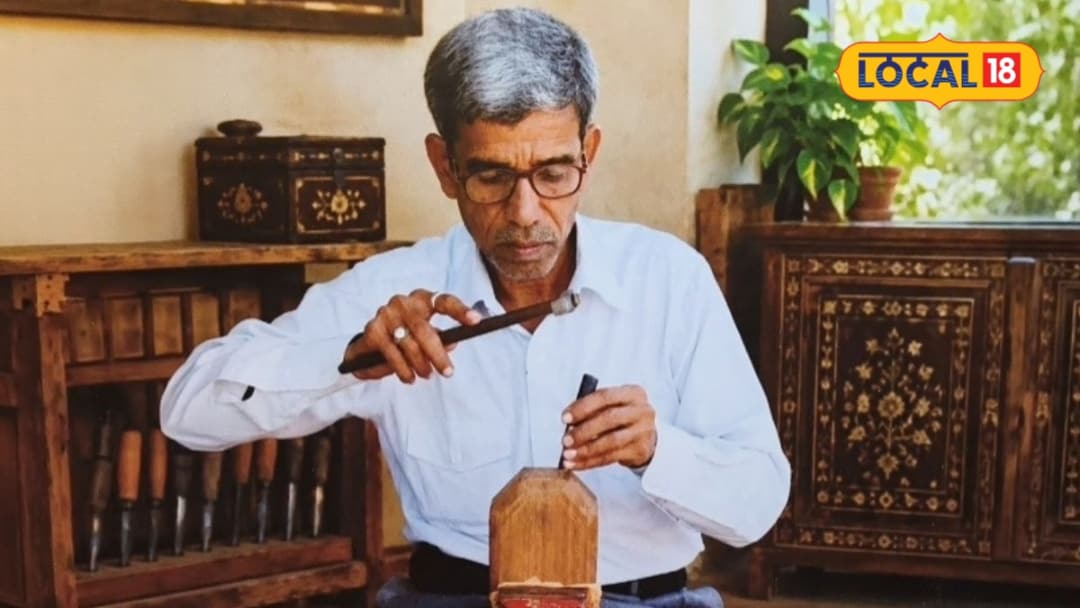
In the vibrant cultural landscape of Jaipur, master craftsman Ram Dayal Sharma stands as a towering pillar of dedication, relentlessly preserving the rare and intricate craft of Tarakashi art. Since the year 1975, Ram Dayal has devoted his entire life to mastering, refining, and safeguarding this traditional craft, which involves meticulously embedding fine metallic wires into wooden surfaces to create breathtaking designs. His unwavering commitment has not only kept an ancient heritage alive but has also set a gold standard for traditional artisans across the region.
The historical roots of Tarakashi art trace deep into the royal patronage systems of Rajasthan, where artisans utilized their unmatched dexterity to create ornate wooden artifacts embellished with metal wires. Over the decades, modernization and industrialization threatened to extinguish this labor-intensive traditional craft, pushing numerous generational artisans toward alternative livelihoods. However, visionaries like Ram Dayal chose to anchor themselves to their ancestral heritage, enduring systemic challenges and economic shifts to ensure that the delicate techniques of wire-inlay work on wood were not lost to the pages of history.
A defining hallmark of Ram Dayal's extraordinary technical proficiency is his ability to work with astonishing precision, carving grooves as narrow as 1 MM into wood before expertly hammering copper, brass, and silver wires into them. This demanding process requires absolute concentration, immense patience, and profound anatomical understanding of wood grain behavior. The intricate geometric and floral patterns that emerge from this meticulous labor are a testament to his decades of unyielding discipline and mastery over his medium, transforming ordinary blocks of timber into mesmerizing works of high art.
The exceptional caliber of Ram Dayal's craftsmanship has transcended domestic borders, earning him global acclaim and profound recognition from high-ranking dignitaries and cultural institutions alike. Among the most illustrious milestones of his celebrated career was the momentous occasion when he presented his masterpiece artwork directly to the Prince of Wales during a high-profile diplomatic and cultural exchange. Such prestigious acknowledgments underscore the undeniable international appeal and elite status of his wooden inlay creations, elevating the cultural prestige of Jaipur on the global map.
Closer to home, the resonance of Ram Dayal's artistic triumphs extends deeply into the broader socio-economic fabric of the region, including districts like Kotputli-Behror, where traditional handicrafts form the backbone of cultural identity. Local artisans, handicraft enthusiasts, and regional trade communities frequently look up to his monumental journey as a beacon of hope and resilience. By demonstrating that traditional skills can achieve global renown without losing their indigenous soul, he has continuously inspired younger generations to take up indigenous trades and safeguard regional heritage.
Despite the lack of widespread institutional support that traditional handicrafts often face, the administrative community and cultural bodies have periodically stepped forward to honor his stellar contributions. Ram Dayal has been decorated with numerous prestigious accolades, most notably the highly coveted National Handicraft Award, which validates his lifelong struggle and artistic excellence. Cultural preservation authorities continue to study his methodologies to formulate better academic frameworks for training budding artisans in advanced wire-inlay techniques.
Looking toward the future, the legacy established by Ram Dayal Sharma serves as an enduring roadmap for the revival and sustenance of traditional Indian arts. As discussions around heritage tourism and artisanal entrepreneurship gain momentum across Rajasthan, experts emphasize the urgent need to institutionalize masterclasses led by veterans like him. By mentoring young aspirants and documenting his 1 MM precision techniques for posterity, Ram Dayal ensures that the luminous threads of Tarakashi art will continue to shine brightly for generations to come.