
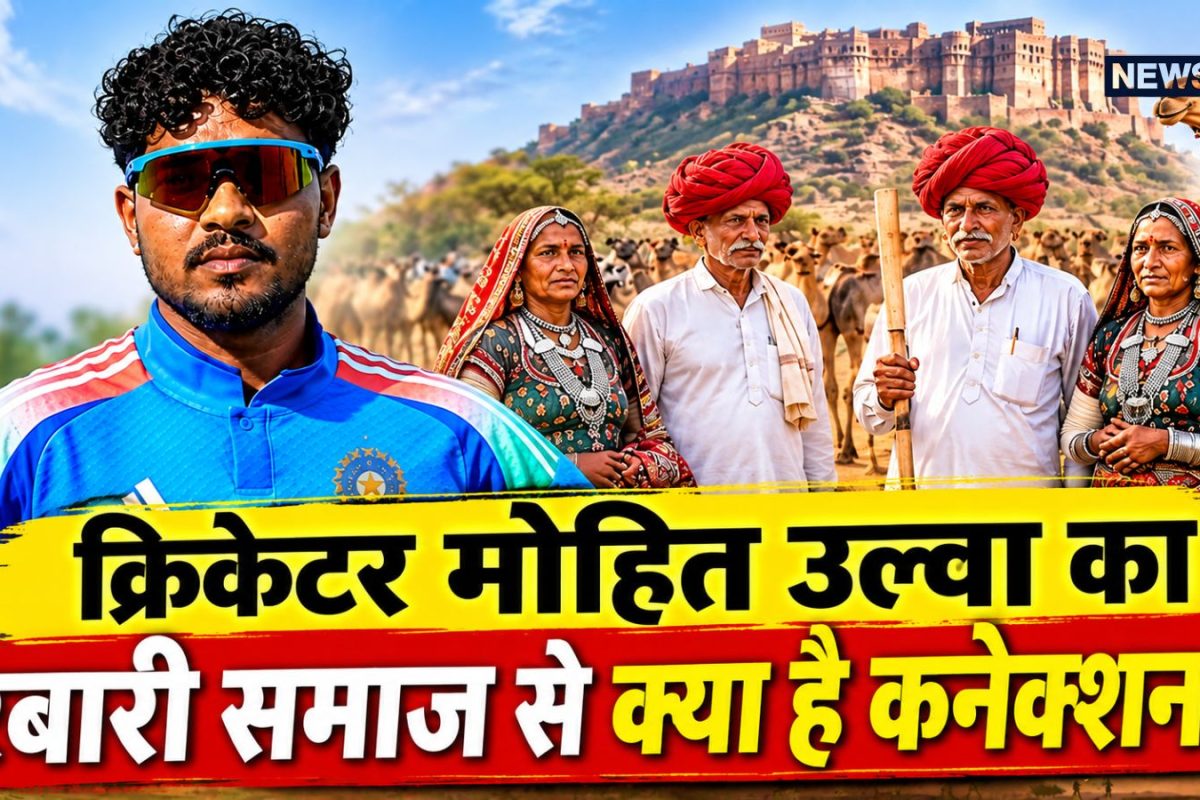
The name of the prominent pastoral community, the Rabari society, has recently come into intense public focus across Rajasthan and Gujarat following the remarkable achievements of young sporting talent. Eighteen-year-old cricketer Mohit Ulva, hailing originally from Surendranagar in the state of Gujarat, has secured a prestigious position in the Indian Under-19 cricket team. His selection and subsequent recognition under his traditional surname have generated immense curiosity among sports enthusiasts and historians alike, prompting a renewed nationwide interest in the lineage, cultural identity, and societal contributions of the Rabari community.
Historically, the Rabari community, widely recognized by alternative names such as Raika and Devasi, boasts an influential heritage spanning over seven centuries across the western territories of India. The roots of this resilient pastoral group are deeply intertwined with the rural and semi-arid landscapes of Rajasthan and Gujarat, where their lifestyle has traditionally revolved around large-scale animal husbandry. Ethnographic records and regional oral histories meticulously document their long-standing expertise in rearing diverse livestock, including camels, sheep, goats, cows, and buffaloes, which form the absolute economic backbone of their traditional livelihood structures.
A profound historical milestone defining the martial valour and community pride of the Rabari society dates back to the year 1299 AD. According to historical chronicles passed down through generations, members of this community played a decisive role in defeating the invading military forces of Khilji during a major regional conflict. In grateful commemoration of this historic victory and their unwavering bravery, the administrative and managerial control of the revered temple during the annual Saraneshwar Mahadev fair in Sirohi is traditionally entrusted to the Rabari community for two consecutive days every single year, a sacred custom that continues to be strictly observed to this day.
Geographically, the demographic distribution of the Rabari population is heavily concentrated across specific western districts of Rajasthan, notably including Jodhpur, Pali, Jalore, and Sirohi. Within these core territorial zones, the community is structurally divided into two major socio-cultural branches, namely the Maru Raika and the Godwar Raika. Each of these distinct branches maintains unique traditional customs, attire, dialect nuances, and specialized pastoral management practices that have been carefully preserved and transmitted across successive generations despite modern socio-economic transformations.
The traditional pastoral economy practiced by the Raika and Devasi groups has historically served as a critical pillar of the rural agrarian and livestock ecosystem in the region. By sustaining vast herds of camels, sheep, goats, and cattle, the community not only preserves indigenous animal breeds but also contributes significantly to regional dairy production, wool supply, and organic manure essential for traditional farming practices. Their deep ecological knowledge regarding seasonal migration routes, grazing pastures, and indigenous veterinary medicine remains a subject of considerable study among agricultural scientists and developmental economists.
In contemporary times, while traditional livestock rearing continues to face modern environmental and economic challenges, the younger generation of the Rabari community is gradually branching out into diverse professional spheres, including higher education, corporate sectors, public administration, and elite sports. The remarkable rise of eighteen-year-old Mohit Ulva to the national cricketing stage acts as a powerful source of immense inspiration for the youth within Surendranagar, Rajasthan, and beyond, proving that talent combined with perseverance can successfully bridge traditional heritage with modern mainstream opportunities.
Looking forward, the growing public awareness surrounding the Rabari society, catalyzed by personal achievements of individuals like Mohit Ulva, is expected to foster greater cultural appreciation and academic documentation of their glorious 700-year history. Elders, community leaders, and cultural historians emphasize the critical importance of preserving their oral traditions, historical manuscripts, and unique customary rights associated with heritage sites like the Saraneshwar Mahadev temple in Sirohi. As the community navigates the complexities of the twenty-first century, honoring its ancestral legacy remains paramount for maintaining collective dignity and cultural continuity.
