
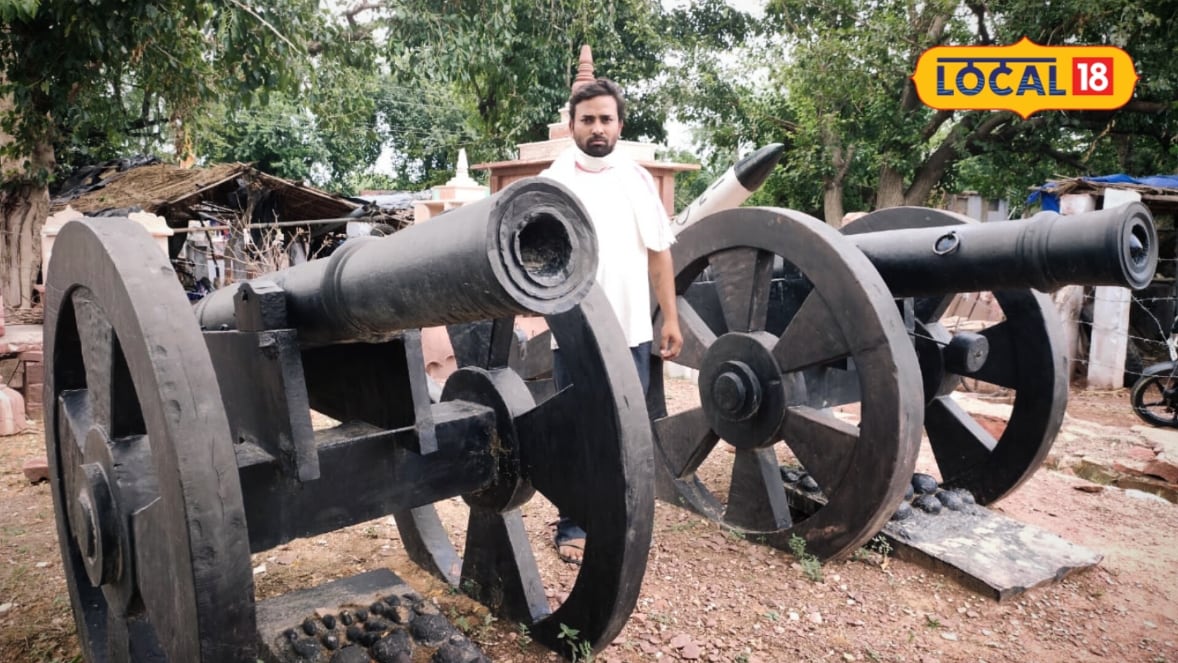
In the heart of Rajasthan's culturally rich region, traditional stonemasonry has found a remarkable new expression through the extraordinary talent of young artisan Gajanand Saini from Karauli. Demonstrating meticulous craftsmanship and profound artistic dedication, Saini has been hand-carving intricate replicas of ancient royal cannons exclusively out of the renowned Karauli red stone. This rare artistic pursuit bridges the gap between historical heritage and contemporary decorative art, turning raw stone into symbols of bygone royal eras.
The historical significance of these stone creations is deeply rooted in the royal legacy of Rajasthan, where red stone has traditionally been utilized for monumental architecture and fortifications. By choosing to replicate the artillery pieces that once dominated medieval battlefields, the artist pays homage to the military engineering and grandeur of historic kingdoms. Every cannon crafted in Karauli reflects the rich architectural vocabulary of the region, ensuring that ancient techniques of stone-cutting are preserved for future generations.
Examining the ground reality of this specialized craft reveals an intensive process requiring immense physical labor, patience, and geometrical precision. Working with Karauli red stone demands expert handling, as even a minor miscalculation can ruin weeks of delicate carving. The economic and logistical framework surrounding this niche sector involves careful selection of quality stone blocks, specialized carving tools, and precise transport logistics to deliver these heavy, delicate masterpieces safely to distant destinations.
Art enthusiasts, interior designers, and heritage property owners have increasingly acknowledged the aesthetic value of these stone cannons, leading to enthusiastic stakeholder feedback. While formal quotes and commercial negotiations remain private, the surging nationwide appreciation demonstrates how traditional artisans are successfully finding high-value markets for their creations. Cultural commentators and local patrons frequently emphasize that supporting such skilled practitioners is essential for sustaining indigenous art forms in modern times.
The broader regional impact of this thriving craft extends well beyond individual workshops, contributing significantly to the cultural identity and economic ecosystem of the area. As orders for these distinctive stone cannons pour in from various states, Karauli strengthens its reputation as a premier hub for exceptional stone artistry. Local youth and aspiring artisans observe these developments with renewed inspiration, recognizing that mastery over traditional skills can yield nationwide recognition and sustainable livelihoods.
While this artistic enterprise is primarily driven by private talent rather than direct state intervention, the broader implications of preserving traditional crafts invite supportive administrative attention. Cultural departments and heritage conservation bodies often highlight the importance of safeguarding such intangible heritage and promoting indigenous craftsmen through exhibitions and artisan registries. Ensuring institutional backing can further amplify the reach of local creators onto international platforms.
Looking toward the future, the outlook for this unique stone-crafting tradition remains exceptionally promising as long as master artisans continue to pass down their expertise. With nationwide demand steadily increasing, the legacy initiated by craftsmen in Karauli is poised to scale new heights of artistic and commercial success. Observers and art historians anticipate that these magnificent stone cannons will continue to grace prestigious architectural projects for decades to come, cementing the enduring legacy of Rajasthani stonework.