
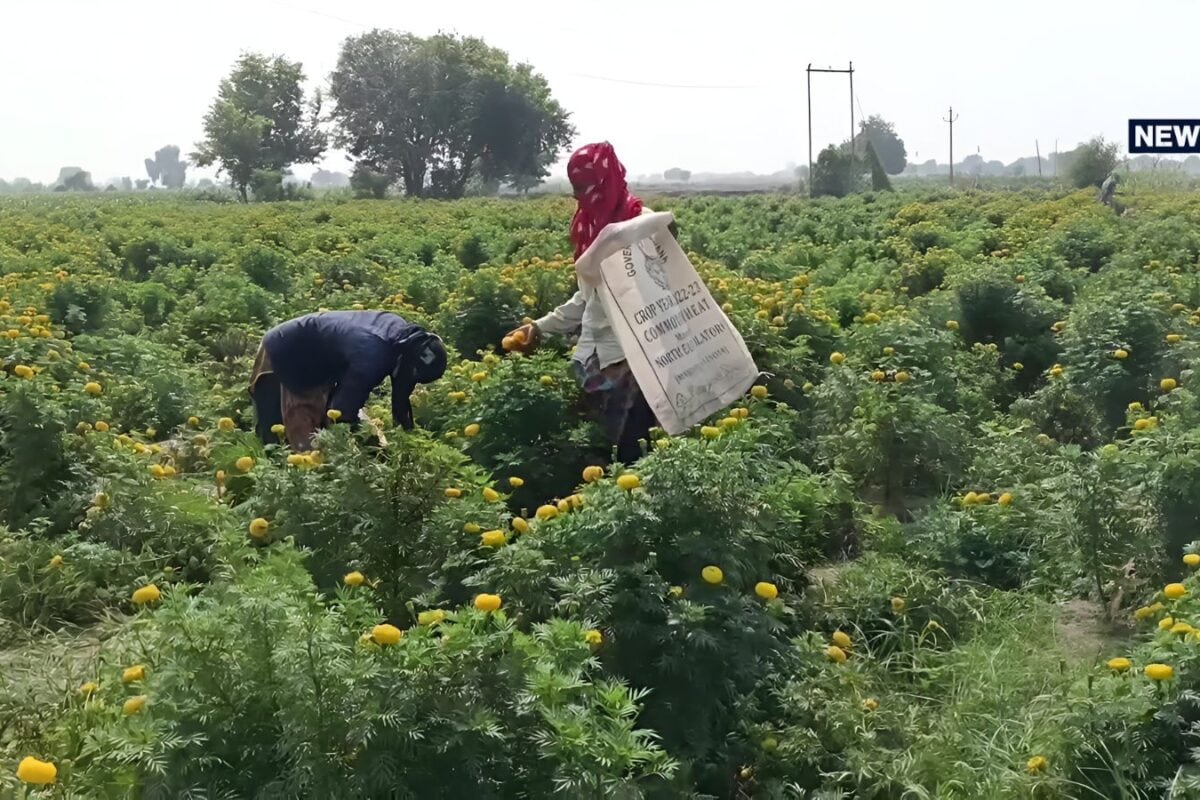
In a significant departure from traditional agrarian practices, agricultural communities in the Bharatpur district of Rajasthan have embarked on a profitable economic transformation. Farmers across several notable villages, specifically Burawai, Sunari, and Mahatoli, have successfully shifted their focus away from conventional farming methods to engage in large-scale marigold and floral cultivation. This progressive agricultural evolution has rapidly gained momentum across the region, redefining local farming paradigms.
Historically, the agrarian landscape of this region was dominated by seasonal conventional crops such as wheat and mustard. While these traditional staples served local sustenance and basic market demands, they frequently offered limited profit margins subject to weather fluctuations and shifting market valuations. Recognizing the pressing need for higher economic returns and sustainable land utilization, forward-thinking cultivators in Burawai, Sunari, and Mahatoli began experimenting with commercial floriculture.
Presently, this transition has expanded significantly, with marigold flowers being cultivated across thousands of bighas of agricultural land. The expansive fields, once dedicated solely to staple grains, now showcase vibrant stretches of bright orange and yellow blossoms. This massive acreage dedicated to flower production has not only altered the geographical aesthetics of the region but has also established a robust local economy driven by consistent floral demand from surrounding markets.
Local agricultural stakeholders, including experienced growers and regional traders, have noted that marigold cultivation offers distinct advantages over traditional crops, particularly regarding harvest frequency and short growth cycles. Farmers who previously waited entire seasons for a single harvest are now reaping regular financial returns. This rapid turnover has directly injected liquidity into local households, enabling families to invest further in modern agricultural equipment, irrigation improvements, and overall livelihood enhancement.
The remarkable financial success observed in Burawai, Sunari, and Mahatoli has initiated a broader economic ripple effect across the wider Rajasthan region. Neighboring farming communities are closely observing the prosperity generated by these floral enterprises. The demonstrable profitability of marigold farming has served as a practical model for agricultural diversification, encouraging skeptics to reconsider traditional cropping patterns in favor of high-value market-driven alternatives.
Agricultural development experts and local administrative bodies have taken favorable note of this spontaneous shift towards floriculture. With thousands of bighas now under systematic flower cultivation, discussions are underway regarding potential logistical support, improved transportation channels to major urban markets, and institutional guidance to help manage fluctuating wholesale prices. Such administrative attention aims to secure long-term stability for the expanding community of flower growers.
Looking forward, the outlook for floriculture in Burawai, Sunari, and Mahatoli remains exceptionally promising as these areas cement their reputation as dedicated flower villages. As regional demand for ceremonial, festive, and decorative flowers continues to rise year-round, local farmers are preparing to expand their cultivation footprints even further. This pioneering agricultural shift firmly establishes that strategic crop diversification can successfully elevate rural economies and secure a prosperous future for the farming community.
