
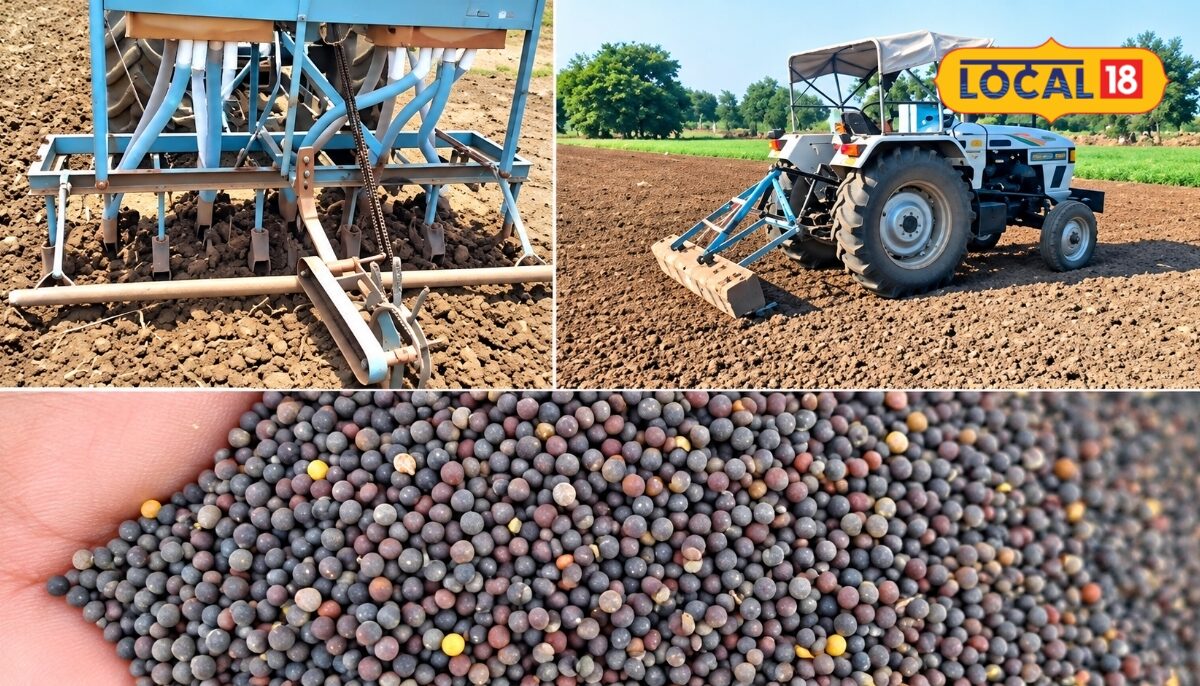
Agricultural authorities in the Nagaur district of Rajasthan have issued comprehensive guidelines regarding the optimal sowing period and agricultural practices for mustard farming during the Rabi season. The month of October marks the primary operational window for sowing mustard in this region, with agricultural scientists emphasizing that the period between October 10 and 25 is the most favorable time to initiate cultivation. Ensuring that sowing occurs strictly within this stipulated timeframe is critical for safeguarding the crop against adverse climatic fluctuations and establishing robust root systems.
Historically, mustard cultivation has remained a foundational component of the agrarian economy across the arid and semi-arid regions of Rajasthan. The region's agro-climatic conditions are inherently suited for oilseed production, provided that agricultural practices are aligned with seasonal transitions. Over generations, farming communities have relied on traditional wisdom supplemented by contemporary scientific research to optimize their crop cycles, making timely October sowing a time-tested strategy for mitigating risks associated with winter frost and terminal heat stress.
At the ground level, achieving a bountiful harvest involves meticulous attention to several agronomic parameters, beginning with thorough field preparation and the maintenance of adequate soil moisture levels. Agricultural experts strongly recommend the selection of high-yielding and disease-resistant certified seeds, specifically highlighting advanced varieties such as RH-749 and Giriraj. These specific cultivars have demonstrated superior adaptability and resilience under local edaphic conditions, thereby offering farmers a reliable pathway toward enhanced agricultural productivity.
Local farming cooperatives and agricultural extension workers have actively engaged with the farming community to disseminate these critical technical insights. Stakeholders note that adopting scientific cultivation methods, such as maintaining optimal plant population through line sowing rather than random broadcasting, ensures uniform nutrient uptake and sunlight exposure. Furthermore, experienced agronomists emphasize the economic stakes involved, pointing out that disciplined execution during the initial planting phase directly correlates with superior market realization during the subsequent harvest season.
While the primary reported focus remains centered on the Nagaur district, the broader implications of these agricultural guidelines extend across the entire regional agricultural landscape, including adjacent administrative zones. The alignment of local farming practices with expert recommendations helps stabilize rural livelihoods and reinforces the economic resilience of agrarian households who depend heavily on oilseed yields for their annual income and financial security.
To support these agricultural endeavors, local administrative bodies and district agricultural departments continue to monitor seasonal preparations, ensuring that farmers have uninterrupted access to certified seeds, necessary fertilizers, and technical advisory services. Periodic dissemination of weather advisories and pest management protocols further strengthens the institutional framework supporting the farming community throughout the protracted crop lifecycle.
Looking forward, the successful execution of the October sowing schedule is expected to set a positive benchmark for the upcoming Rabi harvest. Agricultural extension services remain committed to guiding producers through subsequent critical stages, including timely irrigation scheduling and targeted nutrient management, ensuring that the agricultural sector maintains sustained growth and economic viability well into the future.
