
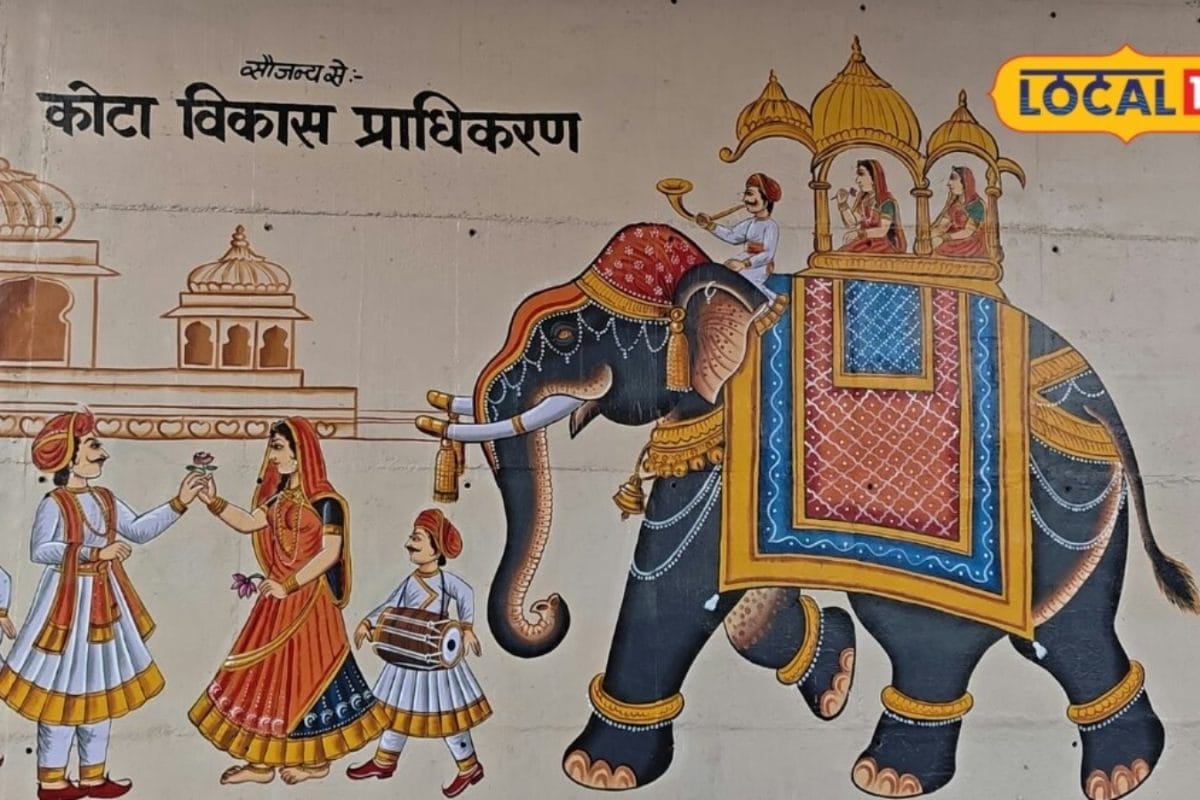
In a significant infrastructural and aesthetic enhancement initiative ahead of the Deepotsav festivities, the urban landscape of Kota is undergoing a vibrant transformation. Spearheaded by the Kota Development Authority, the city administration has launched a comprehensive beautification drive that is currently altering the visual appeal of prominent public spaces. At the center of this initiative is the strategic deployment of traditional artists and muralists tasked with redefining the architectural geometry of major urban transit corridors.
The administrative focus of this beautification drive has been firmly placed on the crucial Kotri intersection, where the massive pillars and retaining walls of the flyover have been designated as canvases for indigenous artistic expression. Historically, urban flyovers and elevated concrete structures across Rajasthan have presented a stark, monotonous grey facade that detracted from urban aesthetics. Recognizing this architectural limitation, the Kota Development Authority devised a targeted aesthetic intervention to infuse local culture into everyday commuting spaces.
Executing an initiative of this scale involves meticulous logistical planning and the mobilization of skilled artisans specializing in traditional Rajasthani art forms. While specific financial allocations and labor counts fluctuate based on the expanse of the walls at the Kotri intersection, the project utilizes weather-resistant pigments and specialized sealants designed to withstand the regional climate variations of Kota. Every brushstroke is carefully curated to reflect the authentic color palettes traditionally associated with Mewar, Marwar, and Hadoti artistic traditions, ensuring absolute fidelity to the region's historical craftsmanship.
Local stakeholders, urban commuters, and resident welfare associations within Kota have responded with enthusiastic support for the flyover transformation. Observers note that transforming utilitarian concrete into a dynamic gallery of folk culture fosters a deeper sense of civic pride among residents. Business owners near the Kotri intersection report an immediate positive shift in the commercial environment, as the vibrant artwork draws pedestrians and families to the area, transforming a standard transit junction into a cultural destination.
Beyond the immediate municipal boundaries of Kota, this beautification model serves as a strategic precedent for urban development initiatives throughout the broader region. The integration of indigenous art into modern infrastructure projects demonstrates how municipal bodies can successfully merge utilitarian engineering with cultural preservation. Neighboring administrative districts and urban improvement trusts are closely monitoring the Kota Development Authority's methodology, evaluating its potential replication for upcoming regional festivities and civic beautification campaigns.
Administrative oversight and execution remain under the direct purview of the Kota Development Authority, ensuring strict adherence to timelines and artistic quality benchmarks. Municipal engineers and urban planners coordinate closely with the painting crews to ensure that structural integrity is maintained while surface applications are completed. Regular inspections are conducted to verify that the materials used meet environmental and safety standards required for public infrastructure projects in Kota.
Looking toward the future, the completion of the Kotri intersection flyover painting marks merely the initial phase of a broader urban renewal strategy slated for Kota. As the city prepares for the peak celebrations of Deepotsav, municipal authorities plan to evaluate the success of this pilot project to determine potential expansion to other flyovers, underpasses, and public walls across the city. Through sustained administrative commitment and community participation, Kota continues to solidify its reputation as a progressive urban center that fiercely preserves its timeless cultural identity.
