
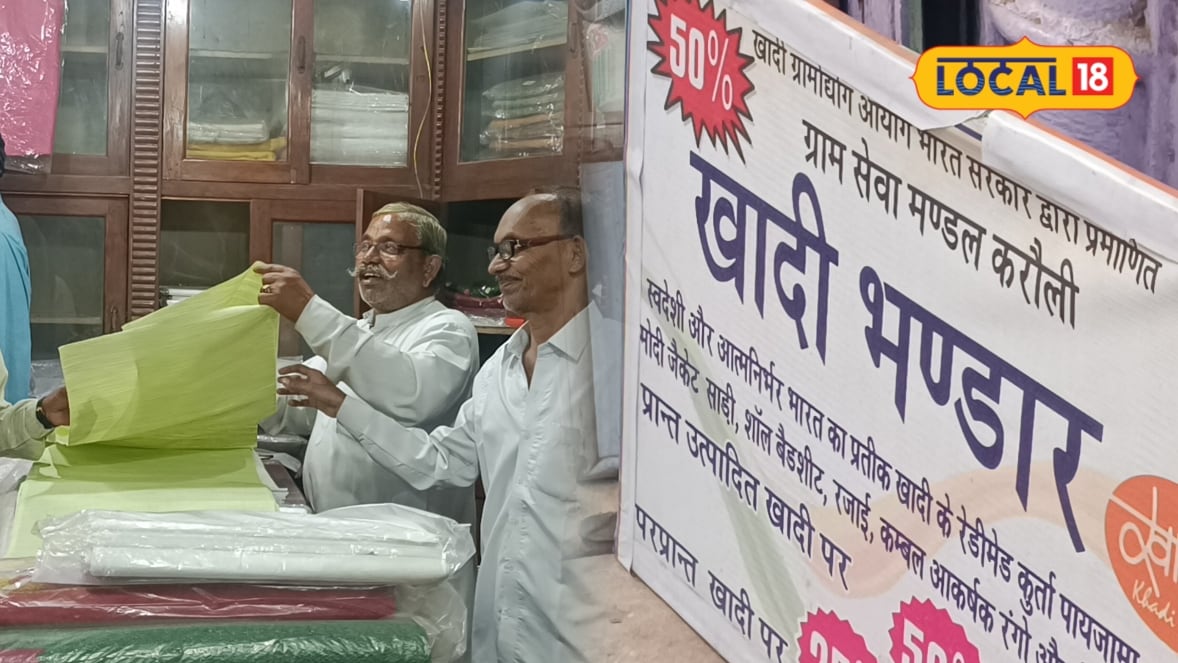
Khadi enthusiasts and ordinary consumers across Rajasthan have received a major financial relief as a special promotional campaign offering substantial discounts on traditional handspun fabrics officially commenced. The initiative brings a wide array of winter garments and domestic textile products within the affordable purchasing power of common households, bridging the economic gap that often accompanies premium handloom merchandise.
The historical foundations of this momentous retail drive trace back deeply into the pre-independence era, specifically rooted in the year 1946 when indigenous textile production began taking organized shape in the region. Over successive decades, this heritage has transformed into a vital pillar of local economic sustainability, preserving traditional craftsmanship while adapting flexibly to contemporary clothing demands and shifting seasonal consumer preferences.
Operating out of the established Gram Seva Mandal located in Karauli, the ongoing retail program incorporates a carefully structured pricing mechanism designed to promote local craftsmanship. Specifically, consumer goods manufactured exclusively within the boundaries of Rajasthan are being retailed with an attractive fifty percent discount, whereas products sourced from Khadi manufacturing units of other states carry a twenty-five percent price reduction.
To combat the severe winter climate effectively, the participating centers have heavily stocked their inventories with a diverse selection of seasonal utility items. Shoppers visiting the exhibition spaces can readily acquire authentic Kashmiri shawls, fashionable Modi jackets, classic Nehru jackets, warm traditional kurta-pajama sets, heavy-duty quilts, and thick woolen blankets tailored for the freezing months.
The broader regional impact of this extensive promotional period extends significantly across neighboring administrative divisions, including the developing commercial networks within Kotputli-Behror and surrounding districts. Local economic analysts note that such seasonal discounting drives stimulate localized retail momentum, encouraging cooperative trade frameworks and enhancing the visibility of indigenous artisan communities.
Administrative oversight and operational management of the seasonal distribution are closely monitored by governing cooperative bodies to maintain transparent pricing and adequate inventory levels. Officials ensure that the subsidized pricing structures directly benefit genuine buyers while upholding the foundational quality standards associated with authenticated handloom goods throughout the state.
Looking ahead, the promotional window remains wide open for interested patrons until January 30, providing ample duration for families to plan their seasonal purchases strategically. Organizers anticipate a steady surge in footfall and total sales volume as the winter temperature drops further, reinforcing the enduring cultural and economic relevance of handloom fabrics in modern society.
