
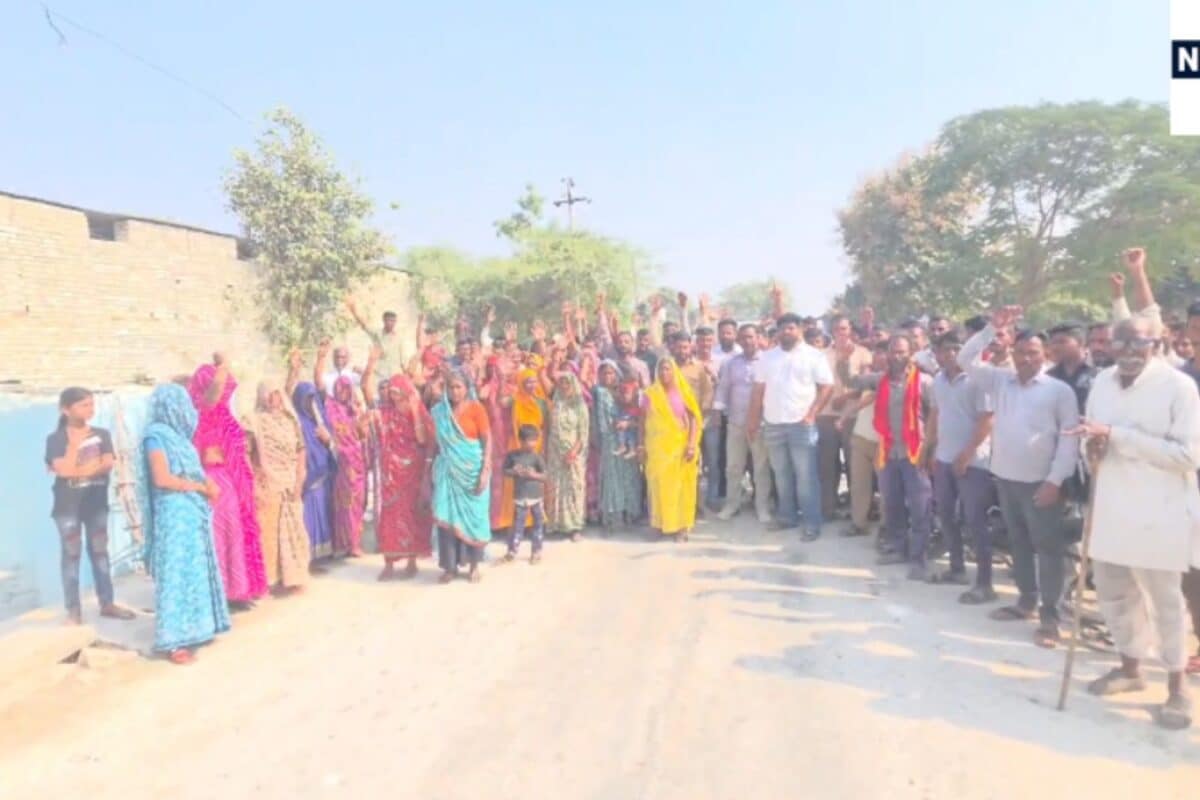
In a dramatic escalation of public grievance, a local representative in Jhalawar district resorted to extreme measures to highlight administrative apathy regarding critical rural infrastructure. Ward member Ranjeet Singh climbed atop a public overhead water storage tank in Salotia village to protest against the prolonged stagnation of Jal Jeevan Mission works. The protest instantly drew massive crowds of distressed villagers to the site, creating a tense atmosphere as local authorities scrambled to negotiate with the determined representative who demanded immediate accountability for the stalled public utility services.
The roots of this severe confrontation stretch back several years, exposing systemic delays in executing foundational water security projects meant for rural households. According to detailed local accounts, the massive overhead water tank in Salotia village was constructed approximately three to four years ago with substantial public expenditure. However, despite the physical completion of the storage structure itself, the crucial distribution network—comprising underground supply pipelines and individual household tap connections—was never installed, rendering the multi-million-rupee structure utterly useless and symbolic of bureaucratic neglect.
The ground reality in Salotia village remains grim, with households enduring severe hardships due to the complete absence of functional tap water infrastructure. While the overarching Jal Jeevan Mission was conceptualized to provide every rural household with assured potable water supply through individual tap connections, the implementation on the ground in Jhalawar district suffered from acute administrative inertia and contractor apathy. For years, villagers made repeated representations to various departmental offices, only to be met with bureaucratic apathy and hollow promises, ultimately forcing their elected ward member to take drastic action.
Amidst the escalating tensions atop the water tank, the protest transformed into a collective platform for frustrated residents to voice their deep-seated anger against local administrative authorities. Villagers gathered in large numbers around the base of the structure, raising slogans and demanding immediate intervention from senior district officials and engineering departments. The community emphasized that constructing a water tank without laying pipelines defeats the entire purpose of public welfare schemes, leaving citizens dependent on erratic and distant traditional water sources despite government claims of complete rural coverage.
The implications of such infrastructure failures extend far beyond immediate inconvenience, critically impacting the socio-economic fabric and daily life of rural communities in the broader region. Access to safe drinking water is a fundamental prerequisite for public health, educational continuity, and economic stability, particularly for women and children who traditionally bear the burden of fetching water from distant sources. The administrative failure in Salotia village highlights structural bottlenecks in executing central and state-sponsored welfare schemes, underlining the urgent need for robust monitoring and time-bound project delivery across the district.
Following hours of high-stakes negotiations and mounting pressure from the gathered community, district administration officials and department engineers rushed to the spot to defuse the volatile situation. Recognizing the legitimacy of the grievances raised by Ranjeet Singh and the protesting villagers, the authorities engaged in extensive dialogue to address the core demands. The administration formally assured the public that comprehensive corrective measures would be initiated without further delay, specifically promising that pending pipeline installation and tap connection works would commence within one month.
With the administrative assurance officially communicated and recorded in the presence of villagers and local leaders, the protest was successfully called off, allowing Ranjeet Singh to safely descend from the water tank. However, public sentiment remains cautious, with residents making it clear that accountability will be strictly monitored in the coming weeks. As the one-month deadline set by officials begins, the people of Salotia village await the tangible commencement of pipeline works, determined to ensure that their fundamental right to clean drinking water is finally honored after years of administrative delay.
