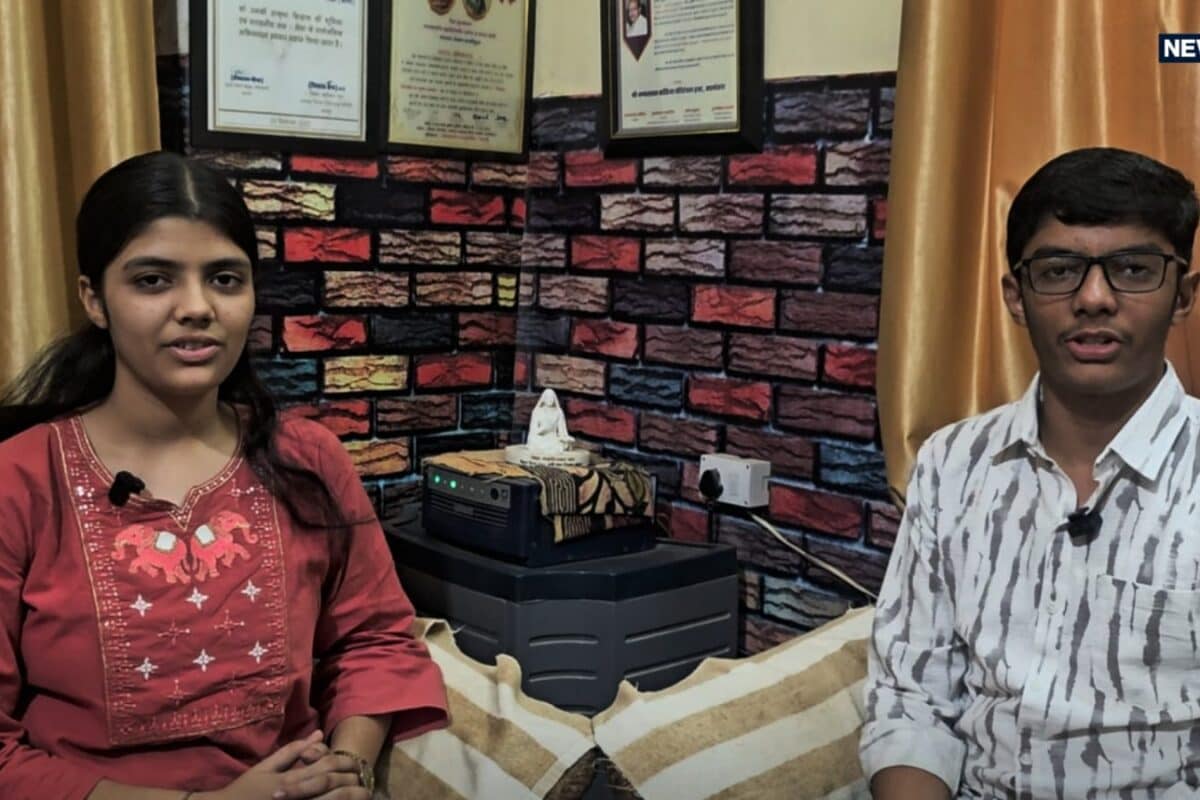
Amid the prominent demonstrations involving CJP and Gen-Z currently unfolding in the national capital of Delhi, an inspiring narrative of perseverance, discipline, and profound cultural connection has emerged from the Jalore district of Rajasthan. Two young student siblings have captured public attention through an extraordinary literary feat that underscores the immense potential of focused youth dedication. This remarkable undertaking highlights how traditional values continue to inspire the younger generation despite modern distractions and societal agitations.
The historical and cultural context of this endeavor is deeply rooted in the preservation of ancient Indian knowledge traditions. For centuries, the Upanishads have served as foundational philosophical texts of the Vedic tradition, demanding immense concentration and reverence to study and reproduce. By choosing to manually transcribe these sacred texts, the young scholars have aligned themselves with ancient scribal traditions, ensuring that the timeless wisdom encapsulated within these scriptures remains alive through physical and deliberate engagement.
Delving into the meticulous details of this monumental project, the entire execution spanned exactly one hundred days, resulting in the successful handwritten compilation of one hundred distinct Upanishads. The division of labor between the siblings reflects careful planning and mutual support; Madhav Joshi undertook the rigorous task of penning sixty-five Upanishads, while his younger sister, Archana Joshi, successfully completed thirty-five Upanishads. This statistical milestone is particularly striking given their young age and concurrent academic responsibilities.
Local educationists, community leaders, and academic mentors have expressed profound admiration for the unwavering dedication demonstrated by the Joshi siblings. Observers note that both students consistently maintain exceptional academic performance while remaining actively engaged in various literary and creative extracurricular activities. Archana Joshi has already received significant formal recognition for her scholarly pursuits, having been selected for the prestigious Padmakshi Award conferred by the education department of the Rajasthan government.
The resonance of this achievement extends far beyond the immediate boundaries of Jalore, inspiring students and educators across the wider region. In an era where digital consumption often supersedes deep contemplative study, this family-driven initiative demonstrates that rigorous intellectual pursuits are still attainable by young minds. Educators across Rajasthan have pointed to this endeavor as a benchmark for fostering cultural awareness and sustained concentration among school-going children.
Administrative authorities and educational stakeholders have lauded the initiative, recognizing it as a testament to the effectiveness of traditional value-based learning combined with modern academic discipline. Officials from the Rajasthan government education department have highlighted such achievements as vital for motivating other students to look beyond standard textbooks and engage deeply with rich historical literature.
Looking toward the future, this remarkable feat is not an isolated incident for the siblings, who previously handwrote the entire Ramcharitmanas across two thousand one hundred pages during the COVID-19 pandemic lockdown. Observers, cultural historians, and educators expect that the Joshi siblings will continue their literary endeavors, potentially inspiring structured archival or exhibition efforts to preserve their handwritten manuscripts for future generations of scholars and spiritual seekers.