
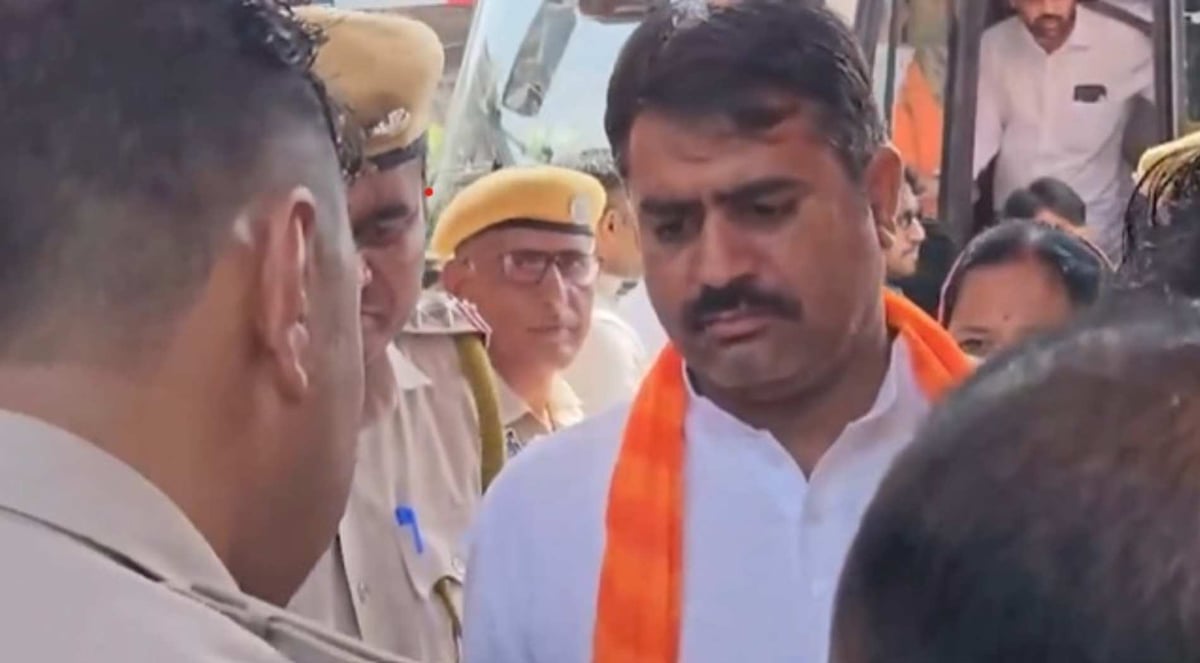
The high-stakes electoral battle for the coveted Jaipur Municipal Corporation mayoral post officially commenced on Friday morning at precisely 10:00 AM, drawing intense statewide attention. The municipal headquarters transformed into a major political epicenter as high-voltage political drama unfolded right at the entrance gates hours before ballots were cast. Observers, journalists, and citizens gathered around the administrative zone to witness a tense political standoff that immediately escalated tensions between opposing political factions.
Historically, municipal elections in the capital city of Rajasthan have always carried immense political significance, reflecting the shifting power dynamics of the state's urban electorate. The origin of Friday's unprecedented confrontation lies in underlying political tensions surrounding administrative control, procedural transparency, and representation within the civic body. Over recent weeks, political stakeholders have engaged in intense behind-the-scenes negotiations, raising the political temperature across the Jaipur division as the ruling and opposition parties lock horns for ultimate administrative dominance.
As the clock struck 10:00 AM, election officials ensured that polling procedures commenced within the fortified premises of the Jaipur Municipal Corporation. The logistical stakes surrounding the municipal administration are monumental, involving multi-crore development budgets, urban planning responsibilities, and civic infrastructure management for millions of residents. While electoral authorities maintained strict protocol at the polling booths, the atmosphere outside remained volatile, marked by heavy police deployment, barricades, and enthusiastic party supporters chanting slogans.
Amidst the growing chaos at the corporation gate, senior political leaders made their strong presence felt. Notably, Rafiq Khan staged a determined sit-in protest directly at the corporation gate, surrounded by party workers and loyalists who raised concerns over alleged procedural irregularities and administrative high-handedness. The protest transformed the entrance into a makeshift stage for political speeches, where leaders articulated their grievances and demanded absolute transparency from the election observers and civic authorities.
The ripples of the Jaipur mayoral election extend far beyond the capital city, significantly impacting surrounding districts including Kotputli-Behror, where local political workers closely monitor the urban power struggle. The political alignment established in the municipal corporation often sets a precedent for regional governance, influencing upcoming local body elections, trade policies, and rural-urban cooperative developments throughout the extended Jaipur metropolitan and regional periphery.
In response to the escalating political drama and potential security threats at the corporation gates, senior district and police administration officials stepped in to reinforce law and order. Additional police battalions were deployed around the perimeter to ensure that the electoral proceedings inside the corporation headquarters remained entirely unhindered. Statutory oversight committees and election observers closely monitored the situation, issuing clear directives to maintain peace and uninhibited access for authorized voters.
As the polling process continues through the day, political analysts and citizens await the final results with bated breath, knowing that the outcome will redefine urban governance in Rajasthan. The successful conclusion of this election will mark a new chapter for the civic body, setting administrative priorities for infrastructural development, public sanitation, and municipal welfare schemes for the foreseeable future.