
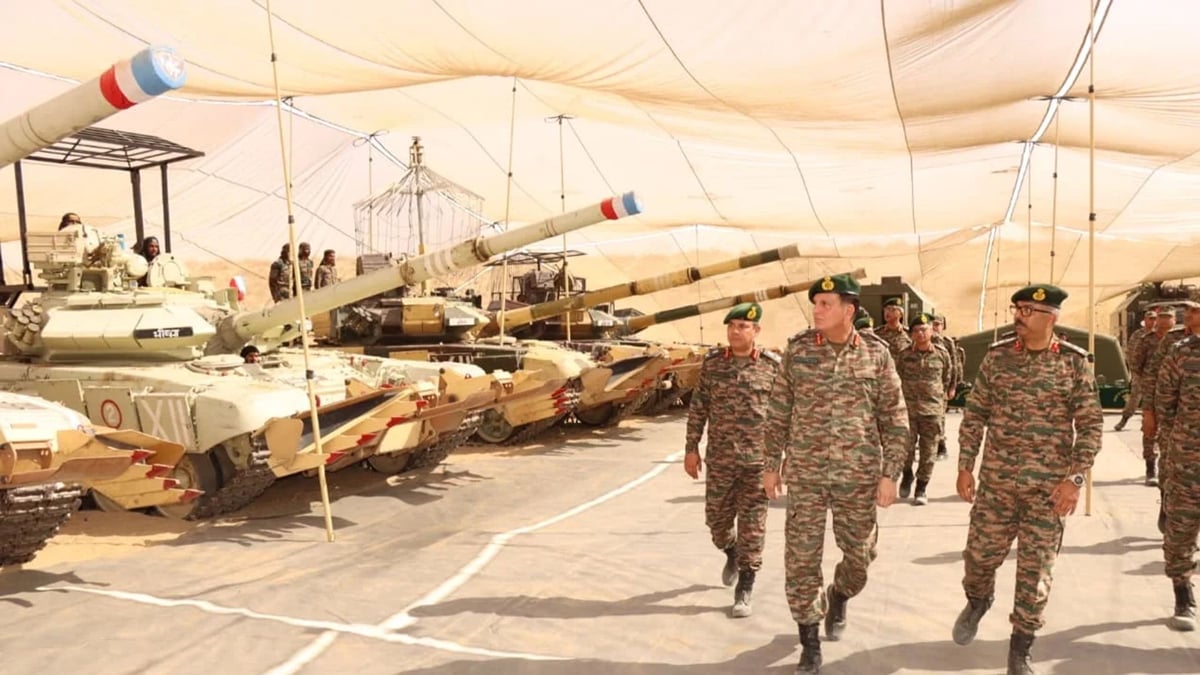
In a powerful display of tactical might and operational readiness, the Indian Army recently executed a comprehensive military drill in the challenging terrain of Jaisalmer. The exercise, designated as Akhand Prahar-2, brought together elite military formations to evaluate their combat preparedness under demanding desert conditions. Such strategic maneuvers are essential for maintaining the highest standards of defense preparedness across sensitive international borders.
The execution of large-scale military exercises in the western sector builds upon a long-standing tradition of rigorous training and strategic readiness within the Indian Armed Forces. Historically, the desert regions of Rajasthan have served as primary testing grounds for advanced warfare tactics, armored vehicle maneuvers, and mechanized infantry coordination. These continuous training paradigms ensure that military formations remain perpetually adaptive to evolving geopolitical dynamics and security challenges.
During the course of Akhand Prahar-2, military planners focused extensively on multi-dimensional warfare scenarios that replicate contemporary conflict environments. While specific quantitative metrics and classified logistical statistics remain restricted, the scale of deployment involved sophisticated coordination between various combat and support arms. The exercises meticulously evaluated logistical support chains, rapid deployment protocols, and communication networks under simulated hostile environments.
Military leadership and tactical commanders closely monitored the execution phases, emphasizing seamless synergy among participating units. Although formal public statements from individual civilian stakeholders or traders are not a standard feature of classified tactical drills, defense analysts note that such exercises reinforce regional stability. The presence of robust military formations also engenders a profound sense of security among local populations residing near border districts.
While the direct geographical epicenter of the exercise is rooted in the desert expanses of Jaisalmer, the ripple effects of enhanced national security resonate across all regions, including administrative zones like Kotputli-Behror. The overarching strengthening of defense capabilities directly contributes to a secure national environment, which in turn fosters uninterrupted economic growth, trade stability, and regional peace throughout the state of Rajasthan.
Administrative oversight and logistical facilitation for such major military undertakings involve meticulous planning between civil authorities and defense headquarters. State and local administrations coordinate closely with military planners to ensure unhindered movement of troops and heavy equipment, thereby maintaining established statutory protocols and public safety standards throughout the duration of the operational drills.
Looking ahead, the successful conclusion of Akhand Prahar-2 establishes a robust benchmark for future military engagements and joint operational protocols. The Indian Army continues to refine its strategic doctrines through continuous evaluation and debriefing sessions following such exercises. Public expectations remain centered on the sustained modernization and invincible preparedness of the armed forces as they safeguard the sovereignty of the nation.
