
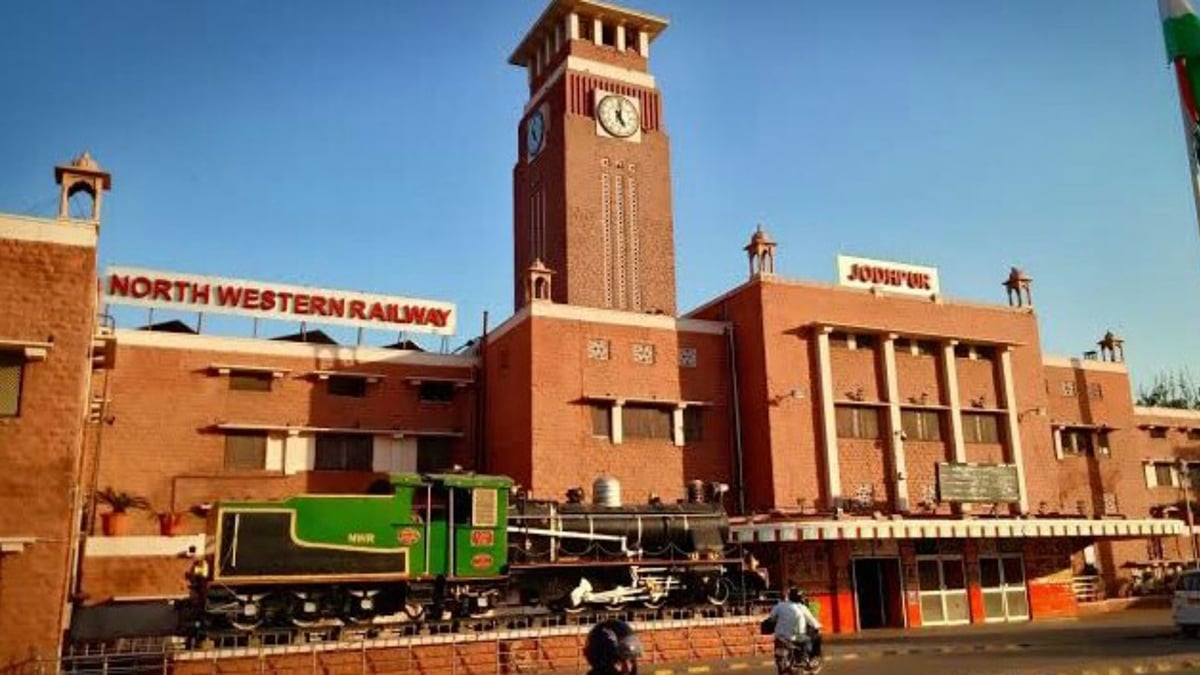
In a major development for pilgrims and travelers, the Indian Railways has announced the launch of a direct train service connecting Jodhpur directly to Katra. This infrastructural enhancement addresses long-standing logistical hurdles faced by devotees traveling from Rajasthan to the revered shrine of Mata Vaishno Devi. Commencing immediately, travelers embarking from Jodhpur will experience an uninterrupted journey to their sacred destination without the traditional interruptions at intermediate junctions.
Historically, travelers journeying from western regions of Rajasthan toward Jammu and Kashmir faced significant operational bottlenecks. Passengers boarding trains from Jodhpur were routinely required to disembark at Jammutawi and secure alternate arrangements to complete their onward journey toward Katra. This mandatory transfer involved strenuous logistical coordination, heavy luggage handling, and considerable inconvenience, especially for elderly citizens, families, and large pilgrim groups.
To alleviate these persistent commuter hardships, the railway administration thoroughly evaluated scheduling and connectivity parameters. Consequently, a definitive decision was reached to extend the operational route of an existing major service. Rather than terminating at Jammutawi, the route framework has been systematically revised to accommodate the extended geographical stretch leading directly to the foothills of the holy shrine.
According to official administrative announcements, the railway network has officially extended the Sabarmati-Jammutawi Express up to Shri Mata Vaishno Devi Katra. This strategic extension integrates the vital sectors of Sabarmati, Jodhpur, Jammutawi, and Katra into a unified, continuous rail corridor. Passengers can now book single-ticket itineraries that seamlessly bridge vast distances across multiple states without encountering forced layovers.
The regional impact of this railway extension stretches far beyond immediate passenger convenience, invigorating local tourism, commercial travel, and regional mobility. Communities situated along the extended transit corridor anticipate stronger economic exchanges and enhanced passenger flow. The streamlined connectivity serves as a vital bridge connecting traditional trade and tourism hubs with national pilgrimage routes, fostering a more integrated transport ecosystem.
Administrative oversight and execution of this extended train route involve meticulous coordination between various railway divisions and zonal authorities. Senior railway officials have confirmed that all technical clearances, signaling updates, and rake-sharing modalities have been finalized to ensure strict adherence to safety protocols and punctuality standards. Station masters and operational staff across the route have been briefed to manage the expanded service parameters efficiently.
Looking ahead, the successful rollout of this direct rail service establishes a promising benchmark for future route extensions and infrastructure optimization. Public expectations remain high as the railway administration continues to monitor operational efficiency and passenger feedback. This progressive initiative ultimately underscores the ongoing commitment to modernization and commuter-centric service delivery across the national rail network.
