
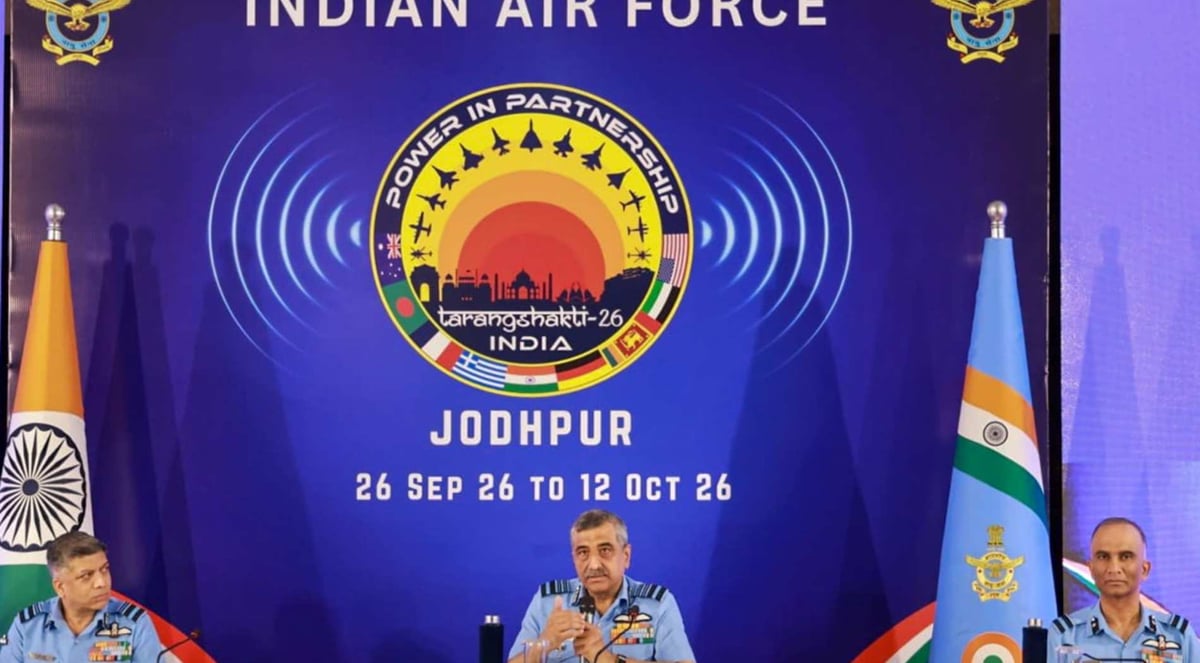
The Indian Air Force is preparing to host the second edition of its monumental multinational aerial exercise, designated as Tarang Shakti, at the strategically significant Jodhpur Air Force Station. This grand military event is scheduled to commence on September 26 and will successfully conclude on October 12, drawing significant global attention to India's defense capabilities and organizational prowess. As defense analysts closely monitor the preparations, the exercise stands out as a monumental milestone in bilateral and multilateral military engagements, cementing India's position as a robust pillar of regional security and peace.
Tracing the historical evolution of military diplomacy, international aerial exercises have consistently served as vital instruments for fostering interoperability among friendly foreign nations. The genesis of such comprehensive drills lies in the necessity to bridge doctrinal gaps, harmonize communication protocols, and enhance tactical coordination among diverse air fleets operating in complex tactical scenarios. Over the past decades, the Indian Air Force has systematically expanded its operational footprint, transforming from a primarily regional defender into a globally respected force capable of orchestrating highly sophisticated multi-nation aerial maneuvers.
Delving into the logistical scale and financial magnitude of the deployment, the Jodhpur Air Force Station is undergoing intensive preparations to accommodate high-value assets and specialized personnel from across the globe. Official figures confirm that precisely seven nations will participate in this year's edition, bringing diverse fighter jets, transport aircraft, and electronic warfare platforms. The financial and operational stakes involved underscore the rigorous planning required by ground crews, technical specialists, and air traffic controllers to ensure seamless execution, safe sorties, and optimal utilization of airspace during the multi-week deployment.
Stakeholder perspectives gathered from defense circles and regional administrative coordinators highlight an overwhelming sense of pride and anticipation regarding the mega exercise. Military strategists emphasize that hosting such an extensive contingent allows participating nations to share best practices in modern aerial combat, radar evasion, and precision strike operations. Furthermore, retired air marshals and aviation experts have expressed optimism, noting that direct interaction among pilots flying diverse combat aircraft fosters enduring strategic partnerships and mutual trust at the highest professional levels.
Examining the broader regional impact on the Kotputli-Behror district and surrounding territories, major national defense exercises invariably stimulate localized economic activity and infrastructural focus. Local businesses, hospitality providers, and transport networks experience a noticeable surge in engagement as international delegations, media personnel, and defense observers converge upon Rajasthan. This influx not only highlights the strategic importance of the western sector but also integrates local communities into the broader narrative of national security and international diplomacy.
Administrative response and statutory oversight remain paramount during high-intensity military operations of this magnitude, with the civil administration working in close coordination with defense authorities. Stringent safety protocols, restricted airspace notifications, and comprehensive ground-level security measures have been meticulously formulated to mitigate any potential disruption to civilian life. District officials and air force commanders are continuously reviewing contingency plans to guarantee that emergency services, public transport, and routine civic functions proceed without impediment throughout the duration of the event.
Looking toward the forward outlook, the conclusion of the second edition of Tarang Shakti on October 12 is expected to set a new benchmark for future multinational exercises hosted by India. The comprehensive debriefings, tactical evaluations, and technological exchanges recorded during the two-week schedule will undoubtedly shape future defense doctrines and collaborative training frameworks. Public expectations remain high as citizens and aviation enthusiasts eagerly anticipate witnessing unprecedented aerial formations lighting up the skies above the historic city of Jodhpur.