
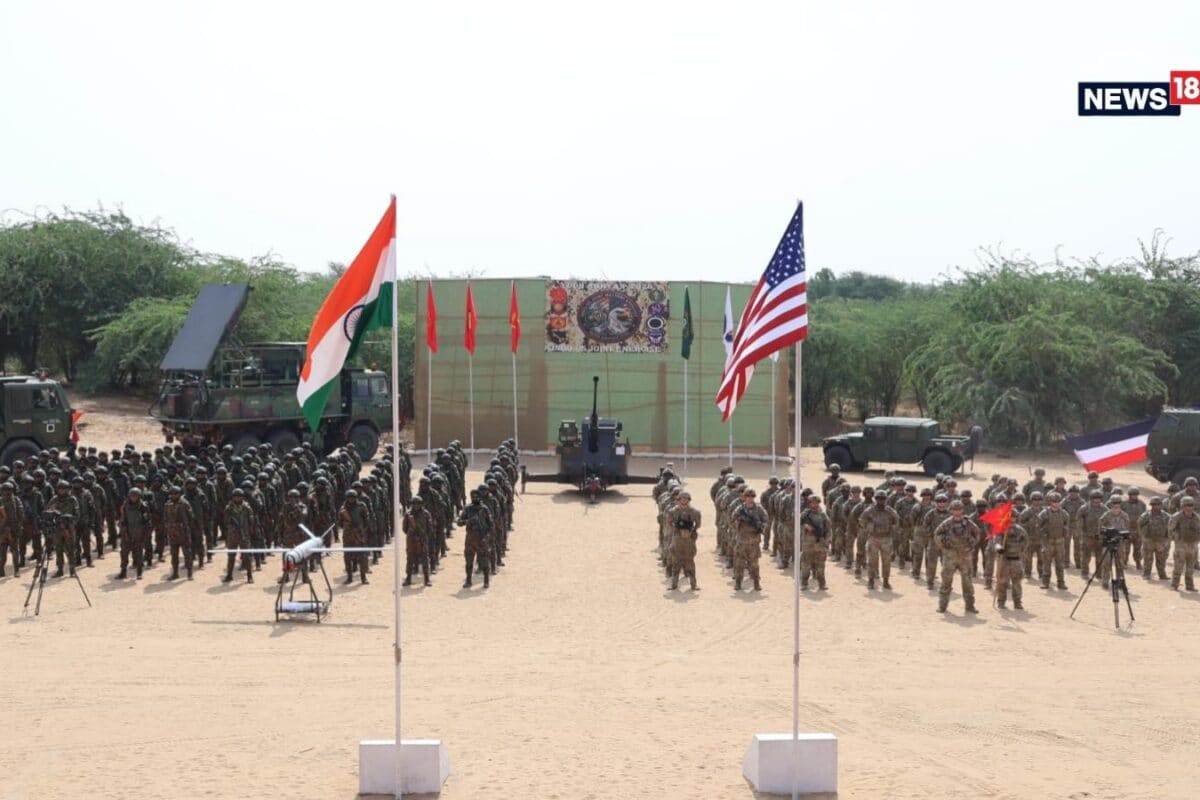
In a significant boost to bilateral defense cooperation and strategic preparedness, the joint military exercise 'Yudh Abhyas 2026' has officially commenced at the expansive Mahajan Field Firing Range located in Bikaner. This high-profile tactical engagement brings together elite contingents from both nations to rehearse complex combat maneuvers and strengthen interoperability in challenging operational theaters. The opening phase of the deployment has drawn intense attention from defense analysts, who view the event as a pivotal milestone in bilateral strategic relations.
The historical backdrop of the 'Yudh Abhyas' series dates back over two decades, evolving continuously to address contemporary geopolitical realities and emerging security challenges across the globe. Over successive iterations, the bilateral framework has expanded from basic infantry exchanges into sophisticated, technology-driven multi-domain operations. This year, the 2026 edition incorporates lessons learned from recent global conflicts, emphasizing asymmetric warfare, intelligence sharing, and integrated multi-service tactical execution.
Ground realities at the Mahajan Field Firing Range reflect meticulous logistical planning and substantial resource allocation by both participating militaries. The official statistics confirm a balanced deployment, featuring precisely 600 troops from the Indian Armed Forces and 600 personnel from the United States military, bringing the total active force on the ground to 1,200 soldiers. These elite personnel are utilizing state-of-the-art weaponry, modern communication systems, and cutting-edge tactical gear designed to simulate high-intensity combat scenarios effectively.
Stakeholders and defense officials participating in the exercise emphasize that the primary operational objective is to master precision strikes within simulated hostile territory. Military commanders from both sides have highlighted the growing importance of joint coordination in complex regional environments. Tactical briefings and preliminary drills have focused extensively on bridging procedural gaps, ensuring seamless communication, and establishing unified command structures under high-pressure combat situations.
While the primary theater of operations remains restricted to the designated firing ranges in Bikaner, the broader strategic resonance extends across the entire region, including adjoining administrative districts such as Kotputli-Behror. Local economic ecosystems and transport corridors experience secondary logistical movements supporting the massive military apparatus. Regional civil authorities and local communities remain supportive of these national security engagements, recognizing the broader geopolitical significance of robust international defense partnerships.
Administrative and logistical oversight for 'Yudh Abhyas 2026' is being managed through close coordination between national defense headquarters and local civil-military liaison offices. Comprehensive safety protocols, environmental impact mitigation measures, and strict perimeter controls have been instituted to ensure zero disruption to civilian life while maximizing the training output for the participating troops. Senior defense officials conduct daily reviews to assess operational efficiency and address any emerging logistical requirements.
Looking ahead, the multi-week schedule includes increasingly complex live-fire drills, simulated counter-terrorism operations, and advanced maneuvers integrating autonomous systems. As the exercise progresses toward its final phases, military leadership anticipates formulating standardized operational doctrines that will guide future bilateral engagements. The successful execution of 'Yudh Abhyas 2026' is expected to set a new benchmark for international military cooperation and tactical readiness in the years to come.