
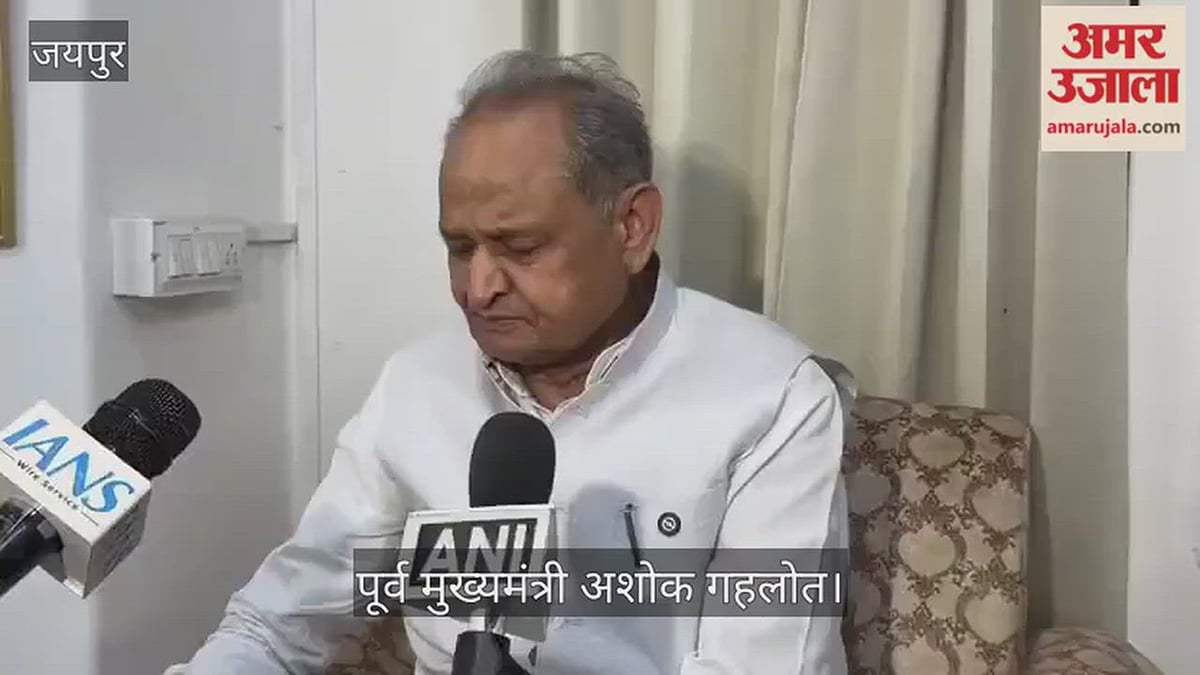
Former Chief Minister Ashok Gehlot has formally raised deep concerns and questions regarding the intricate political mathematics and electoral outcomes of the Bharatpur Municipal Corporation mayoral elections. The high-stakes municipal elections in Bharatpur have suddenly turned into a major political controversy across the state of Rajasthan, attracting widespread media attention and intense scrutiny from prominent political leaders. The central core of the unfolding controversy revolves around the unexpected formation of the administrative board and the dramatic turn of events that led to the final declaration of the mayoral election results in the region.
Delving into the historical context and the official electoral data of the municipal body, political analysts note that urban local body elections in Bharatpur have traditionally been fiercely contested arenas. The structural dynamics of municipal corporations in Rajasthan often witness complex coalitions and shifting political alignments among elected representatives. However, the specific numerical distribution of seats in the recent Bharatpur Municipal Corporation elections has presented an unprecedented scenario that deviates sharply from standard democratic outcomes witnessed in previous electoral terms within the municipal limits.
According to the verified official statistics released following the conclusion of the polls, the total number of wards in the municipal corporation stands at 65. Within this total of 65 seats, the Bharatiya Janata Party managed to secure an official tally of only 20 seats. In stark contrast, independent councilors demonstrated massive electoral dominance at the grassroots level by collectively winning a substantial total of 36 seats, leaving other political factions and smaller parties with the remaining marginal share of representation in the local governing body.
The central controversy highlighted by Ashok Gehlot specifically targets the procedural integrity surrounding the nomination withdrawals and the subsequent formation of the ruling board by a political party holding merely 20 seats out of the total 65. Political stakeholders, local observers, and concerned citizens have expressed profound bewilderment regarding how a party with a clear minority of elected representatives managed to secure the mayor's office despite the overwhelming majority of independent councilors holding 36 seats in the municipal house.
While the immediate political fallout is centered in Bharatpur, the administrative repercussions and discussions regarding local governance transparency resonate strongly across neighboring administrative units, including the Kotputli-Behror district. Local governance experts, regional trade organizations, and community leaders in the extended Jaipur division are closely monitoring these developments, as the stability and democratic legitimacy of urban local bodies directly influence regional developmental funds, municipal service delivery, and grassroots economic planning.
Administrative oversight bodies, election observers, and statutory authorities are currently facing mounting public pressure to clarify the sequence of events that transpired during the crucial nomination withdrawal phase. Transparency advocates and regional political actors have demanded a comprehensive review of the procedural guidelines governing mayoral elections to ensure that the numerical mandate of elected ward councilors is fully respected and accurately reflected in the ultimate formation of municipal governing boards.
As the political debate continues to unfold across the state, public expectations remain high regarding official clarifications from the district administration and the state election department. The overarching timeline moving forward involves rigorous legal and political evaluations by opposition leaders, institutional watchdogs, and local governance participants, setting the stage for heightened scrutiny in all upcoming urban local body elections throughout Rajasthan.