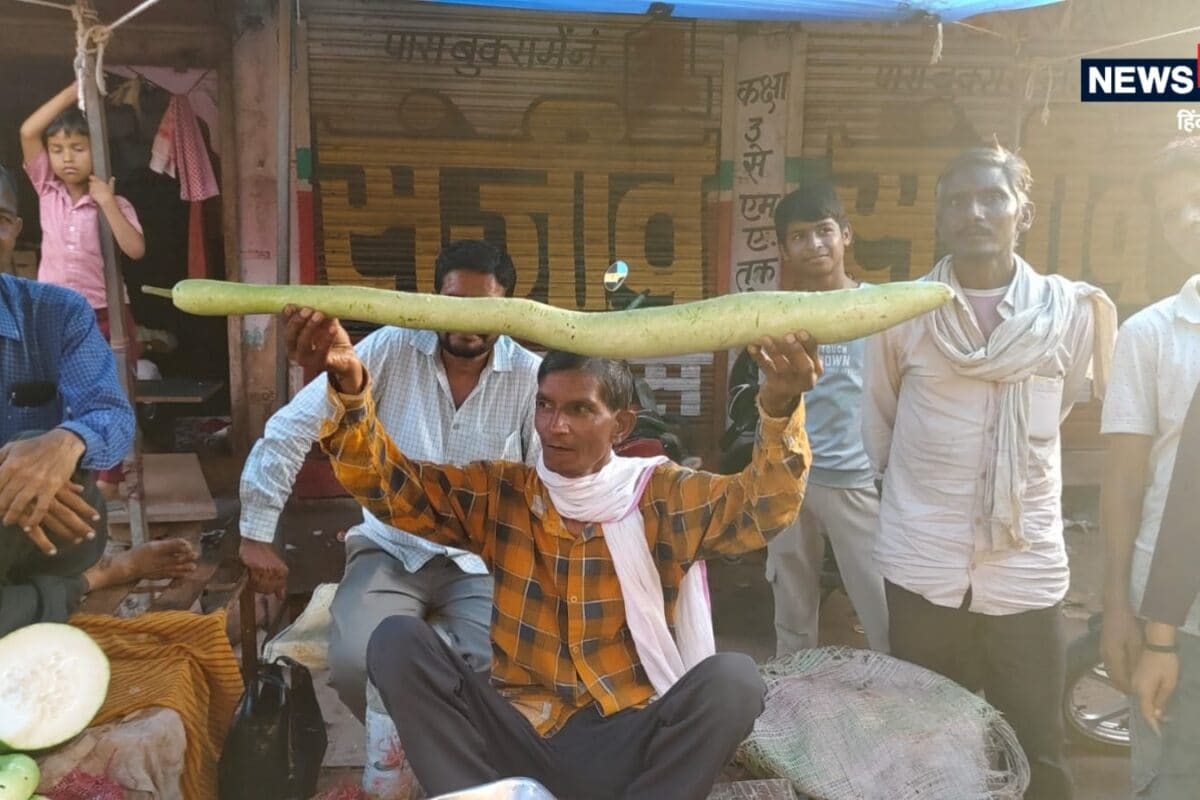
In an extraordinary display of agricultural productivity, a remarkably four-foot-long bottle gourd has emerged as the central point of attraction at the local vegetable market in Sirmathura, located within the Dholpur region. The unusual proportions of this homegrown vegetable have astonished local traders, regular buyers, and farming enthusiasts alike, transforming a routine market day into a scene of widespread public excitement. Citizens and market visitors flocked around the produce in large numbers to witness the botanical anomaly firsthand.
The origin of this viral phenomenon traces back to the rural settlement of Baraipura in Dholpur, where local vegetable vendor Madan Mohan Kushwah successfully cultivated the crop. Madan Mohan Kushwah arrived at the Sirmathura sabzi mandi with this extraordinary specimen alongside his regular inventory of produce, entirely unaware that it would immediately capture the imagination of the entire marketplace. The staggering length and uniform shape of the bottle gourd set it apart instantly from standard commercial varieties available in the region.
As news of the four-foot-long bottle gourd spread rapidly through the marketplace, scores of onlookers gathered closely to examine the vegetable, capturing photographs and recording videos. Many visitors eagerly snapped selfies with the giant produce, and these digital media files quickly circulated across various social media platforms, transforming the humble farmer and his crop into local digital celebrities. The overwhelming public response reflects the profound fascination that unusual agricultural achievements consistently command within rural communities.
According to the grower Madan Mohan Kushwah, the achievement is the direct result of meticulous crop management and a steadfast commitment to traditional organic farming practices. Operating out of his fields in Baraipura, Kushwah cultivates a diverse array of seasonal crops, including brinjals, pumpkins, tomatoes, spinach, and ridge gourds, alongside bottle gourds. Crucially, his farming methodology completely avoids synthetic chemical fertilizers, relying instead entirely on indigenous and organic manure to nourish the soil and sustain plant growth.
Agricultural observers and local community members point out that this rare botanical development underscores the superior viability and health benefits of chemical-free cultivation. By strictly utilizing native organic inputs and devoting careful personal attention to daily farm maintenance, cultivators in Dholpur are demonstrating that traditional agricultural wisdom can yield exceptional results. The incident has sparked renewed conversations among regional farmers regarding the long-term ecological and economic benefits of reverting to natural soil enrichment techniques.
Furthermore, the unexpected prominence of Madan Mohan Kushwah at the Sirmathura market has brought positive localized attention to the broader agricultural ecosystem of Dholpur. While administrative bodies routinely encourage sustainable farming initiatives, tangible success stories driven by independent local vendors provide powerful motivation for the broader farming fraternity. The widespread acclaim of this organic harvest highlights how grassroots dedication can elevate standard agrarian practices into regional focal points of pride.
Looking toward the future, this remarkable episode is expected to inspire heightened interest in organic horticulture throughout Dholpur and surrounding agrarian belts. As digital images of the four-foot-long gourd continue to resonate across online networks, local agricultural stakeholders anticipate a greater appreciation for indigenous farming methods. Madan Mohan Kushwah intends to continue his disciplined organic practices, setting a commendable benchmark for sustainable vegetable cultivation in the region for upcoming growing seasons.