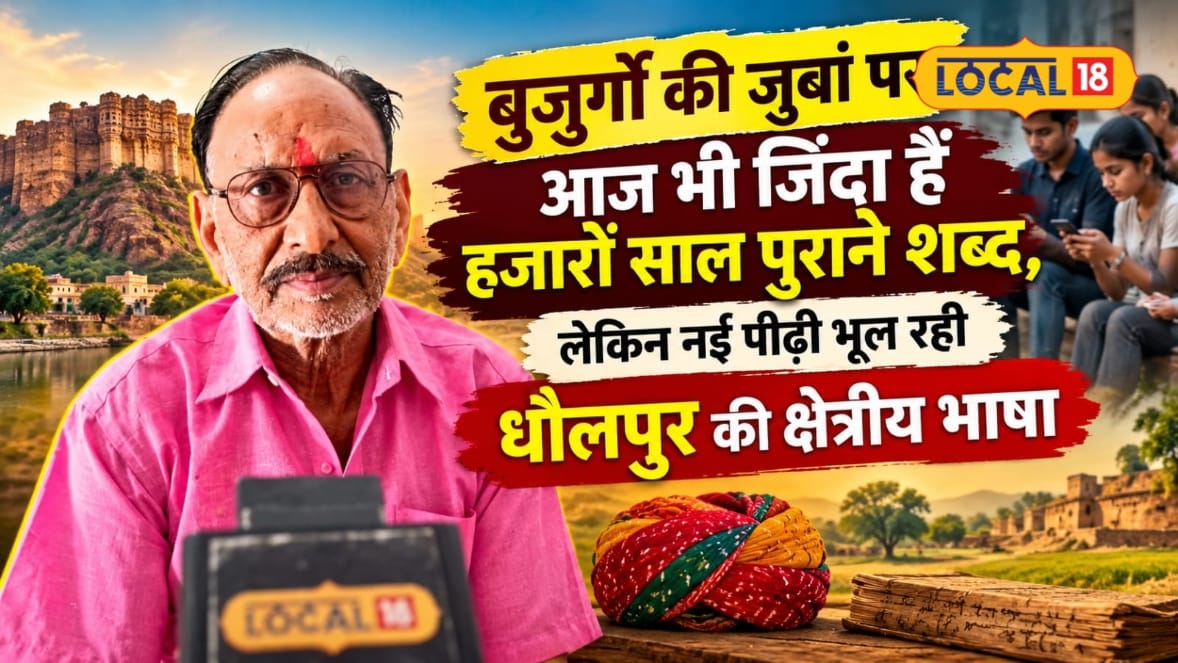
In the culturally rich district of Dholpur, Rajasthan, a profound linguistic crisis is unfolding as thousands of years of traditional regional heritage face the imminent threat of extinction. Amid the relentless march of modernization and the pervasive shift toward English-medium education, the younger generation is steadily abandoning the rich linguistic expressions that have defined the region for millennia. This steady erosion of indigenous vocabulary marks a significant turning point in the cultural trajectory of Dholpur, where ancestral dialects are rapidly giving way to standardized modern forms of communication.
Historically, the regional dialects of Dholpur served as the primary vehicle for storytelling, agricultural coordination, familial bonding, and community folklore. Passed down meticulously through oral traditions from generation to generation, these linguistic forms encapsulated the geography, climate, and social fabric of the region. The vocabulary was deeply interwoven with the daily lives of the local agrarian and artisan communities, functioning not merely as a tool for communication, but as a living archive of historical memory and collective identity within the state of Rajasthan.
On the ground, the reality of this linguistic shift is stark and alarming. Once-common household terms and agricultural descriptors such as 'gadua', 'tivaro', 'batta', and 'leju' have completely vanished from the active vocabulary of school-going children and youth. While older generations continue to employ these terms effortlessly in daily conversations, the intergenerational transmission chain has broken down significantly. Linguistic surveys and local observations indicate that without urgent documentation and institutional encouragement, these indigenous words run the risk of permanent erasure within the span of a single generation.
Voicing deep concern over this cultural depreciation, local resident Vishambhar Dayal Sharma has stepped forward to articulate the anxieties of elders and culture conservationists. According to Sharma, while acquiring modern education and global languages is undeniably essential for the upward mobility of the youth, it must not come at the devastating cost of erasing one's own mother tongue. He asserts that children must be taught to take pride in their regional roots, ensuring that modern pedagogy complements rather than obliterates traditional linguistic heritage.
The cultural implications of losing these indigenous dialects extend far beyond the borders of Dholpur, reflecting a broader nationwide challenge regarding the preservation of localized intangible heritage. As rural communities modernize and migration to urban centers accelerates, regional idioms and unique terminologies are routinely sidelined in favor of homogenized urban vernaculars. This homogenization impoverishes the linguistic diversity of Rajasthan, transforming vibrant, expressive local dialects into silent relics preserved only in academic archives rather than living human discourse.
Addressing this unfolding crisis requires a concerted effort from local community leaders, educational institutions, and cultural preservation bodies operating within Rajasthan. Civil society groups have begun advocating for the informal integration of regional vocabulary into community-level storytelling sessions and cultural festivals. However, systematic institutional backing remains limited, leaving the burden of preservation largely on the dwindling population of elderly speakers who continue to use these words in isolated domestic settings.
Looking toward the future, the survival of Dholpur's ancient linguistic heritage hangs in a delicate balance, heavily reliant on a renewed cultural awakening among families and educators. If timely interventions are not implemented to bridge the widening generational divide, the region risks losing an irreplaceable component of its historical identity alongside its senior citizens. The ultimate preservation of words like 'gadua', 'tivaro', 'batta', and 'leju' will depend entirely on whether the contemporary society chooses to honor its past while navigating the demands of the modern world.