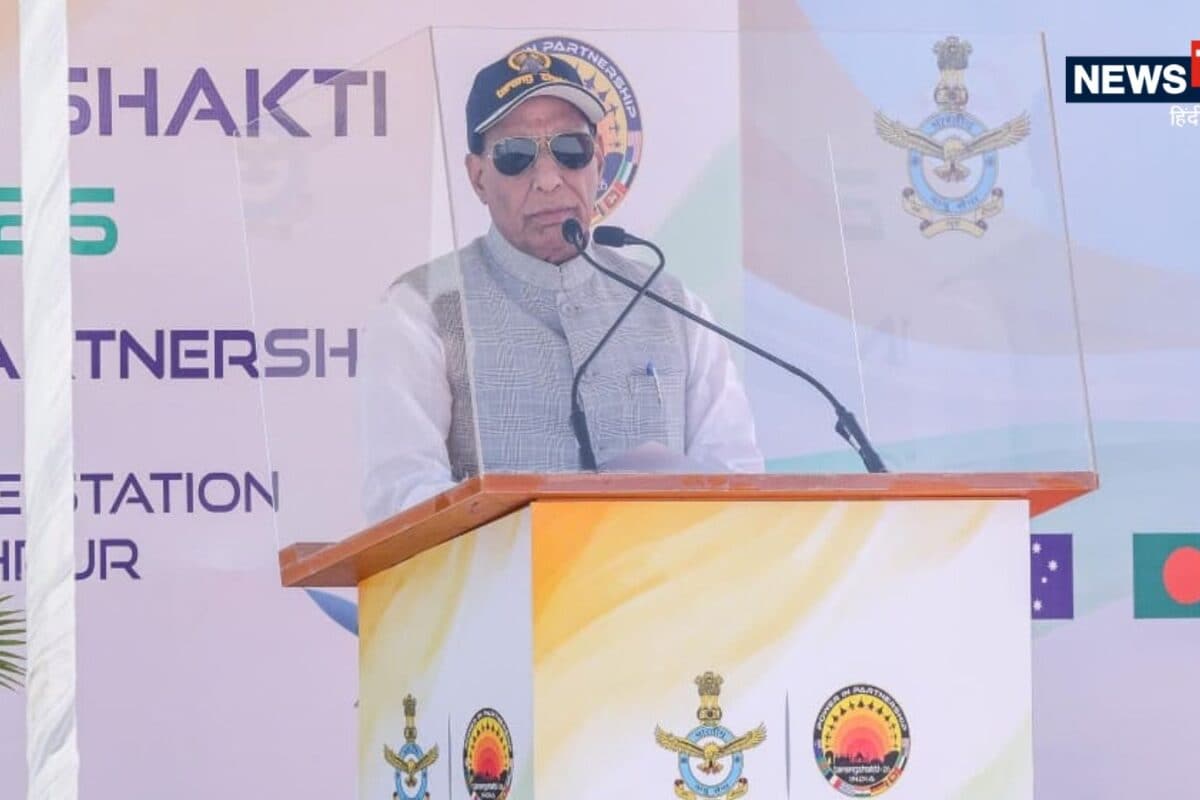
Union Defense Minister Rajnath Singh has delivered a strong and unequivocal message regarding the evolving challenges of modern warfare at the Jodhpur Air Force Station. Speaking during the international aerial military exercise Tarang Shakti-2026, the senior minister outlined the transformative shift required in national defense strategies. His address focused extensively on how global military engagements have moved far beyond traditional combat paradigms into a highly technical domain.
The context of this address lies in the rapidly changing geopolitical environment and the technological advancements defining contemporary conflicts. Historically, military dominance was measured predominantly by the sheer scale of physical armaments and troop numbers. However, the operational doctrines of the armed forces are now undergoing a paradigm shift, incorporating cutting-edge technologies to maintain strategic deterrence and tactical superiority.
During his interaction at the Jodhpur Air Force Station, the Defense Minister elaborated on the operational realities of current and future battlefields. While specific numerical allocations and classified deployment statistics remain restricted, the strategic emphasis was firmly placed on capability enhancement and technological integration. The logistical and financial stakes involved in modernizing military infrastructure demand an unwavering focus on indigenous development and technological self-reliance.
Although situated in Jodhpur, the profound implications of these strategic doctrines resonate across strategic hubs, including regional centers like Kotputli-Behror. The broader national security discourse invariably influences industrial supply chains, local economic dynamics, and community preparedness, fostering a culture of technological awareness and national security consciousness among the citizenry.
Administrative oversight and institutional measures are continuously being adapted to support the ambitious modernization agenda outlined by the leadership. The Ministry of Defense, in active coordination with premier research institutions and the armed forces, continues to implement rigorous statutory frameworks and procurement policies designed to streamline the induction of advanced defense equipment.
Looking toward the future, the timeline for these strategic implementations points toward a fully modernized defense ecosystem. Public expectations remain high regarding indigenous manufacturing capabilities and the successful deployment of next-generation defense technologies, ensuring that the nation remains secure against emerging multi-domain threats in the years ahead.