
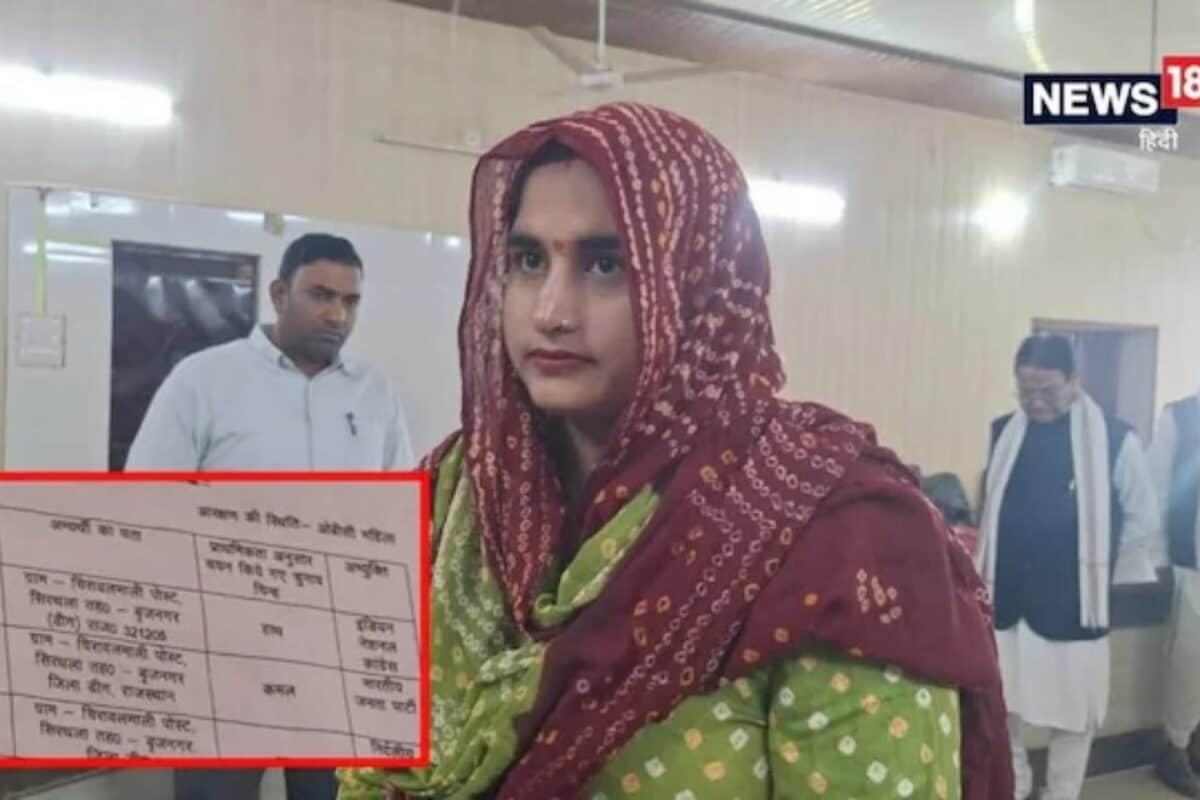
In an extraordinary political development that has captured widespread attention across Rajasthan, the Nagar Panchayat Samiti elections in Deeg district witnessed a most unusual electoral maneuver. Wati Kumari, wife of Rinku, emerged at the center of a high-stakes political drama by filing three separate nominations for the coveted post of Pradhan. Demonstrating a unique tactical approach, she entered the electoral fray simultaneously as a Congress candidate, a Bharatiya Janata Party candidate, and an independent candidate.
The unfolding events in Deeg represent a fascinating chapter in grassroots democracy, where traditional party lines and rigid loyalties experienced unprecedented fluidity. Electoral battles at the panchayat level in Rajasthan are historically intense, driven by local influence, community dynamics, and intricate political maneuvering. However, instances of a single candidate securing nominations across opposing political platforms are exceptionally rare, transforming this local election into a state-level talking point.
Adding a distinct visual and cultural layer to the proceedings, Wati Kumari's sartorial choices during the election milestones became a notable point of discussion. Reports from the ground indicate that she wore a traditional saree during her first filing, shifted to a salwar-suit for her second appearance, and appeared in a different saree altogether during her formal swearing-in ceremony. These deliberate stylistic changes further amplified her visibility throughout the rigorous electoral process.
The mathematical reality of the Nagar Panchayat Samiti prior to the election heavily favored the opposition. Statistical records and political assessments confirmed that the Congress party held a clear and absolute majority within the governing body. Under normal parliamentary and democratic expectations, this numerical advantage should have comfortably secured the Pradhan's seat for the Congress candidate, reflecting the mandate of the elected ward members.
Nevertheless, local governance dynamics and strategic realignments dramatically altered the final outcome. In a stunning reversal that surprised political analysts and party leaders alike, the Pradhan's chair ultimately slipped from the grasp of the majority party and went straight into the BJP's tally. The internal dynamics of the Panchayat Samiti underwent a complete transformation during the crucial voting phase.
Capitalizing on the shifting political tides, Wati Kumari successfully consolidated support and cemented her allegiance to the Bharatiya Janata Party. Transitioning from her multi-party nomination strategy, she officially contested and won the election under the official party symbol of the BJP. This decisive shift enabled her to take oath as the duly elected Pradhan of the Nagar Panchayat Samiti in Deeg.
As the dust settles on the Deeg Panchayat Samiti elections, the political repercussions are being analyzed closely by regional observers and party strategists alike. The journey of Wati Kumari, spanning from three separate nomination papers to occupying the highest executive chair in the local body, stands as a testament to the unpredictable nature of local politics in Rajasthan, leaving citizens and analysts pondering the future stability of the council.
