
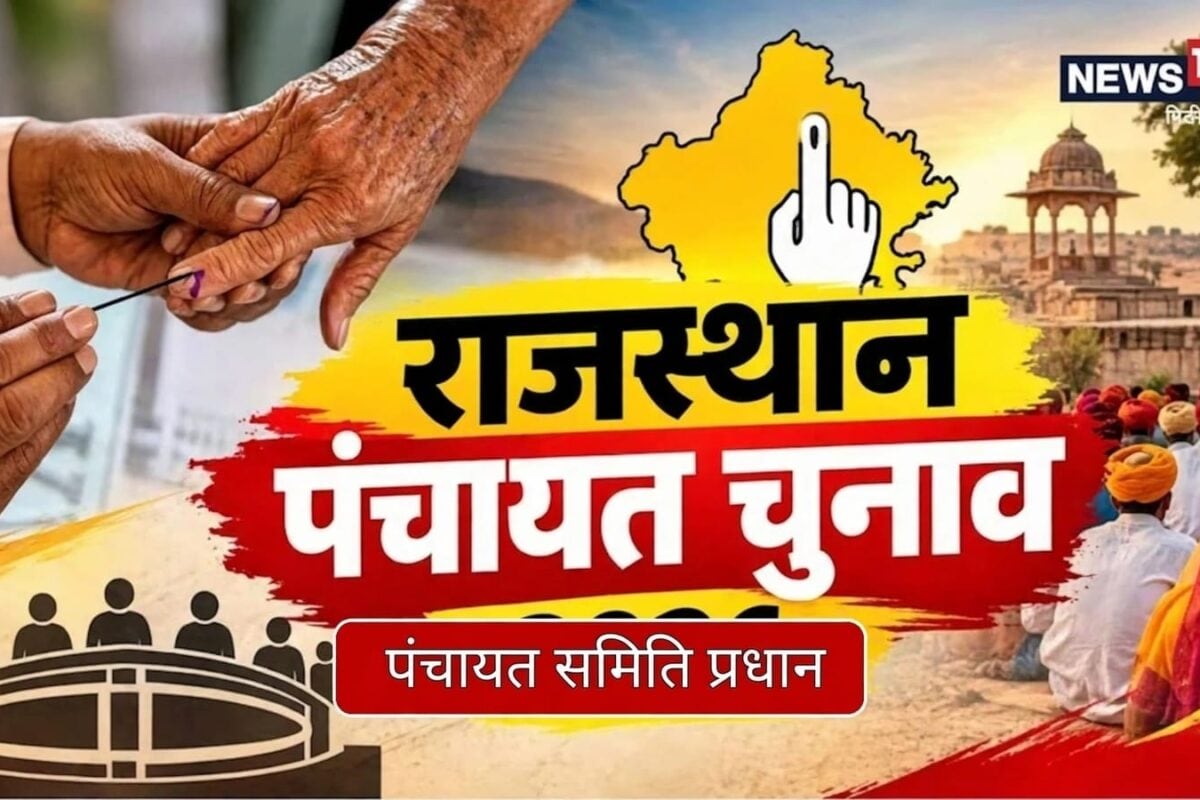
In a decisive and sweeping electoral outcome, the Indian National Congress has established absolute dominance in the Rajasthan Panchayat Samiti pradhan elections, leaving its primary political rival far behind. The State Election Commission officially declared the comprehensive final results for all 419 Panchayat Samiti seats distributed across the desert state. Demonstrating a formidable grassroots network and overwhelming voter support, the Congress party successfully captured an impressive 255 seats, cementing its stronghold in rural local self-governance across Rajasthan.
This electoral exercise holds immense significance within the political landscape of Rajasthan, serving as a crucial barometer of rural sentiment and administrative influence at the grassroots level. Historically, Panchayat Samiti elections act as a foundational stepping stone for political mobilization, directly impacting developmental initiatives, local infrastructure projects, and the distribution of welfare schemes within rural communities. The high-stakes electoral battle witnessed rigorous campaigning by major political outfits, administrative machinery deployment, and intense competition across diverse geographic regions of the state.
A granular analysis of the final statistics released by the State Election Commission reveals a stark disparity in the electoral performance of the competing political entities. While the Congress party celebrated a massive tally of 255 victorious candidates, the Bharatiya Janata Party managed to secure a mere 105 seats, resulting in a commanding victory margin of 150 seats between the two national parties. Furthermore, regional political formations carved out their respective spheres of influence, with the Rashtriya Loktantrik Party securing 24 seats, the Bharat Adivasi Party winning 14 seats, the CPI-M capturing 2 seats, and independent along with other candidates accounting for 19 seats.
The electoral outcomes carried profound regional implications, particularly highlighted in the state capital, Jaipur, where the Congress party demonstrated exceptional electoral dominance. In Jaipur district, the Congress successfully captured 16 out of the 22 available Panchayat Samiti pradhan positions, whereas the Bharatiya Janata Party could secure only four seats. In a striking political anomaly within Chief Minister Bhajanlal Sharma's home assembly constituency of Sanganer, the ruling party's organizational machinery faltered significantly, failing even to field an official candidate, which ultimately enabled RLP candidate Seema Choudhary to be elected as the pradhan.
The ripples of these panchayat election results extend deeply into the regional economy and local community administration of Kotputli-Behror and surrounding areas. Local administrative bodies, civic leaders, and rural business communities closely monitored the political transition, recognizing that stable local governance directly influences agricultural funding, market infrastructure development, and rural employment schemes. The decisive mandate delivered by rural electorates places immense responsibility on the newly elected pradhans to address persistent civic challenges and accelerate developmental works.
Following the declaration of these definitive electoral results, the administrative machinery across all districts has swung into overdrive to ensure smooth compliance with statutory regulations. District election authorities and administrative officials have established rigorous oversight mechanisms to manage the subsequent phases of local self-government formation, maintaining strict adherence to constitutional norms and electoral guidelines during the upcoming proceedings.
Attention now firmly shifts toward the immediate legislative and administrative calendar, specifically the upcoming elections for the post of up-pradhan. The State Election Commission has confirmed that polling for the post of up-pradhan across all 419 Panchayat Samities will be conducted on Saturday. Political parties, newly elected pradhans, and local stakeholders are currently engaged in intense strategic consultations to secure the remaining leadership positions, marking the final formal step in completing Rajasthan's extensive rural local body electoral process.
