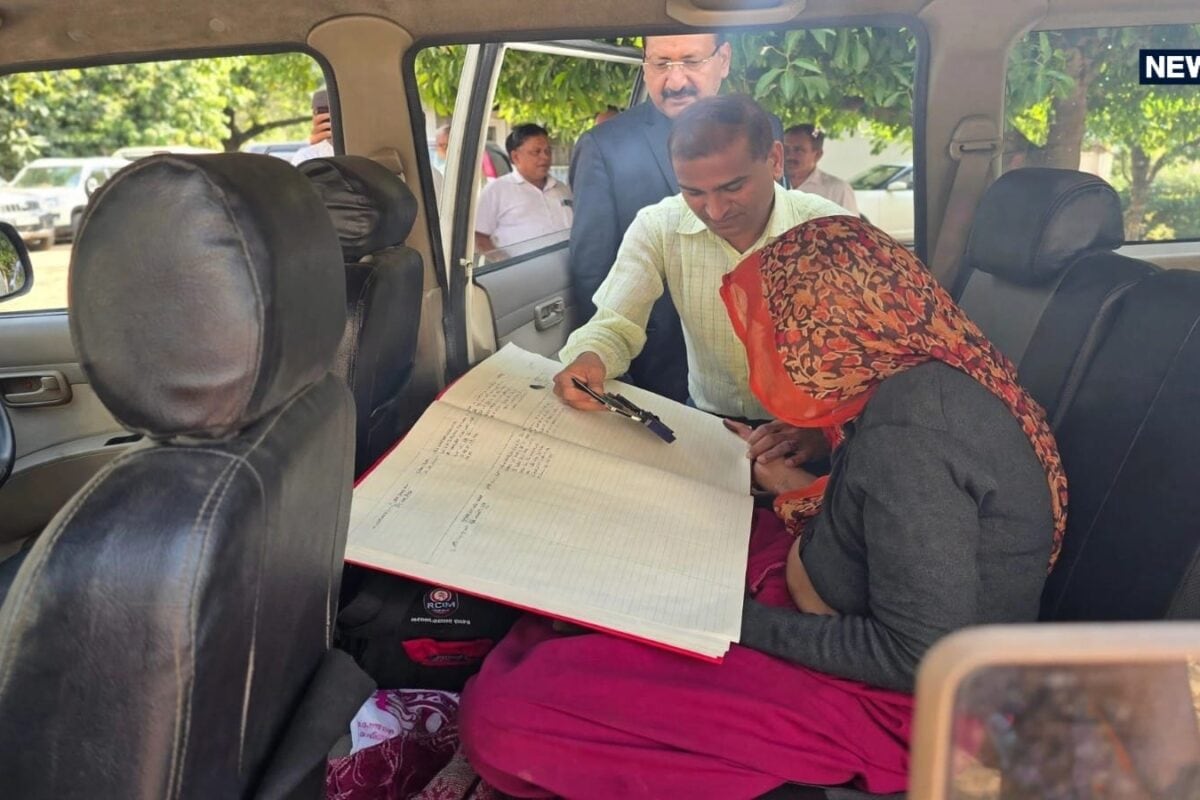
In an extraordinary manifestation of judicial empathy and administrative sensitivity within the regional judicial architecture of Dausa, District and Sessions Judge Keshav Kaushik set a profound benchmark of humanitarian values. Rather than adhering strictly to bureaucratic rigidity, the honorable judge personally descended from the upper-floor courtroom to accommodate the severe physical limitations of an elderly citizen, demonstrating that institutional compassion remains paramount in the delivery of justice.
The foundational roots of this notable legal development trace back to the judicial corridors of the Rajasthan High Court Jaipur Bench, which meticulously deliberated upon and formally passed a decisive award on May 6, 2026. This landmark judicial pronouncement established the financial liabilities and entitlements concerning the claimants, setting in motion a series of statutory compliances that eventually culminated in the resolution of the long-standing legal matter through the motor accident claims or civil adjudication mechanisms.
Complying strictly with the binding directives issued by the appellate judiciary, the financial respondent, specifically identified as The New India Insurance Company, deposited the entirety of the mandated compensation amount, inclusive of accrued interest, scaling up to a precise total of 8,21,067 rupees into the official tribunal accounts. Subsequently, the administrative machinery within the district judiciary initiated the formal procedures required to transfer and disburse these awarded funds directly into the designated savings accounts of the legitimate applicants.
However, logistical and biological impediments suddenly threatened to delay the final execution of this welfare measure when the primary beneficiary, a 96-year-old woman named Sampat Devi Sharma, arrived at the court premises. Due to her advanced chronological age and deeply compromised physical mobility, traversing the steep architectural staircases leading to the first-floor courtroom proved to be an insurmountable physical barrier for the elderly matriarch.
Recognizing the acute distress and helplessness of the aged litigant, District Judge Keshav Kaushik swiftly intervened by bypassing conventional protocol. Demonstrating profound administrative flexibility, the judge personally walked down from his judicial chamber to the parking courtyard, approaching the automobile where Sampat Devi Sharma was seated, thereby eliminating the grueling physical ordeal that would have otherwise compromised her health and dignity.
Amidst the surrounding observation of court officials and bewildered onlookers, the necessary legal formalities, document verifications, and procedural sign-offs were meticulously executed right inside the vehicle. Following the completion of these mandatory administrative validations, Judge Kaushik personally handed over the awarded compensation check of 8,21,067 rupees to the nonagenarian recipient, ensuring that the fruits of judicial deliverance reached her hands directly and respectfully.
This heartwarming incident has generated profound ripples of admiration across the regional administrative circles and the broader community of Dausa-Kotputli region, serving as a powerful reminder of ethical governance and empathetic leadership. Legal experts and civil society members have extensively lauded the gesture, emphasizing that such humane interactions significantly strengthen public trust and institutional credibility within the democratic framework.
Looking forward, the successful culmination of this case establishes a progressive administrative precedent for handling vulnerable litigants across regional judicial setups. The district judiciary remains committed to streamlining accessibility protocols for senior citizens and disabled persons, ensuring that the delivery of justice remains completely unhindered by structural barriers or logistical inadequacies in the times ahead.