
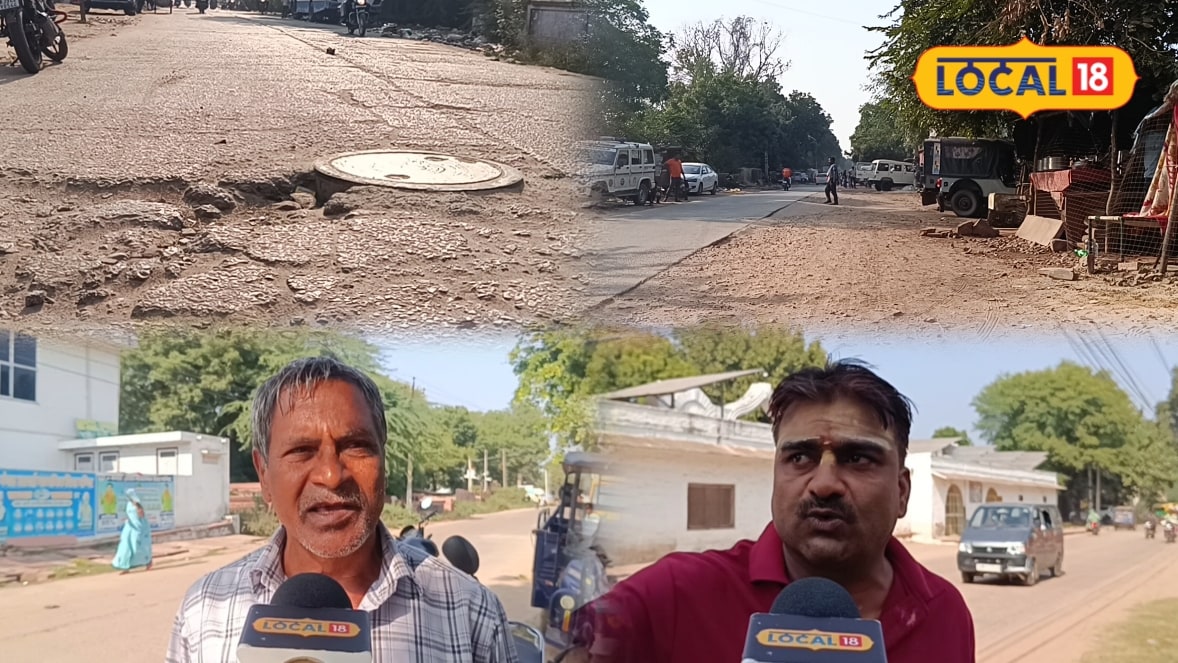
Residents, motorists, and commuters navigating through Karauli are currently confronting severe infrastructural decay along one of the city's most vital thoroughfares. The roughly three-kilometer stretch connecting Collectorate Chowk to Shikarganj has deteriorated to an alarming state, marked by profound craters, broken tarmac, and extensive erosion. This critical route, which passes through a prominent residential area housing local representatives including a legislator, has become a symbol of prolonged infrastructural neglect and bureaucratic inertia.
The historical context of this road degradation traces back to years of deferred maintenance, inadequate drainage systems, and heavy vehicular traffic that routinely pounds the aging surface. Over successive monsoons, waterlogging has severely compromised the sub-base of the road, leading to the formation of massive potholes that span the entire breadth of the carriage-way. Despite its strategic importance as a primary artery connecting administrative hubs to commercial and residential sectors, successive repair efforts have been superficial at best, offering merely temporary patches rather than permanent engineering solutions.
Examining the ground reality reveals a distressing landscape of broken asphalt and exposed stone aggregates across the entire three-kilometer span. The density of craters is so concentrated that drivers are forced into erratic maneuvers, constantly braking and altering their intended paths just to avoid catastrophic vehicular damage. The economic and physical toll of this daily commute is disproportionately borne by regular motorists, auto-rickshaw operators, and commercial transporters whose vehicles suffer regular mechanical failures, suspension damage, and inflated maintenance expenditures.
Beyond general commuters, the most alarming consequence of this infrastructural failure is borne by patients requiring urgent medical attention. Transporting critical patients to nearby hospitals along the bone-jarring, crater-ridden path from Collectorate Chowk to Shikarganj exacerbates medical emergencies, inflicting severe physical agony on vulnerable individuals. Local residents and traders have repeatedly voiced their frustrations, pointing out the glaring irony that despite the road serving areas where influential lawmakers and government functionaries reside, the infrastructure remains in a deplorable condition.
The broader regional impact extends far beyond immediate inconvenience, dampening local commercial activity and tarnishing the infrastructural reputation of the region. Small businesses and shopkeepers along the Shikarganj route report declining footfall as customers actively avoid the treacherous navigation required to reach commercial establishments. Furthermore, the persistent dust pollution generated by deteriorated road shoulders poses significant respiratory hazards to children, the elderly, and vulnerable populations living adjacent to the thoroughfare.
Administrative response to the escalating crisis has thus far remained sluggish, characterized by inter-departmental delays and shifting jurisdictions between local municipal bodies and public works departments. Citizens groups and community leaders have submitted numerous memorandums demanding immediate reconstruction of the entire three-kilometer corridor using modern, durable paving techniques capable of withstanding heavy traffic loads. However, formal timelines for comprehensive rehabilitation projects remain elusive, leaving the aggrieved public waiting for tangible bureaucratic intervention.
Looking forward, the expectations of the populace are firmly set on immediate, transparent, and accountable action from the district administration and elected representatives. Without an urgent, well-funded capital works program to completely rebuild the Collectorate Chowk-Shikarganj corridor, the safety hazard will only intensify with upcoming weather shifts. Kotputli News will continue to monitor the administrative developments closely, ensuring that public pressure is sustained until this vital regional artery is restored to acceptable standards of safety and usability.
