
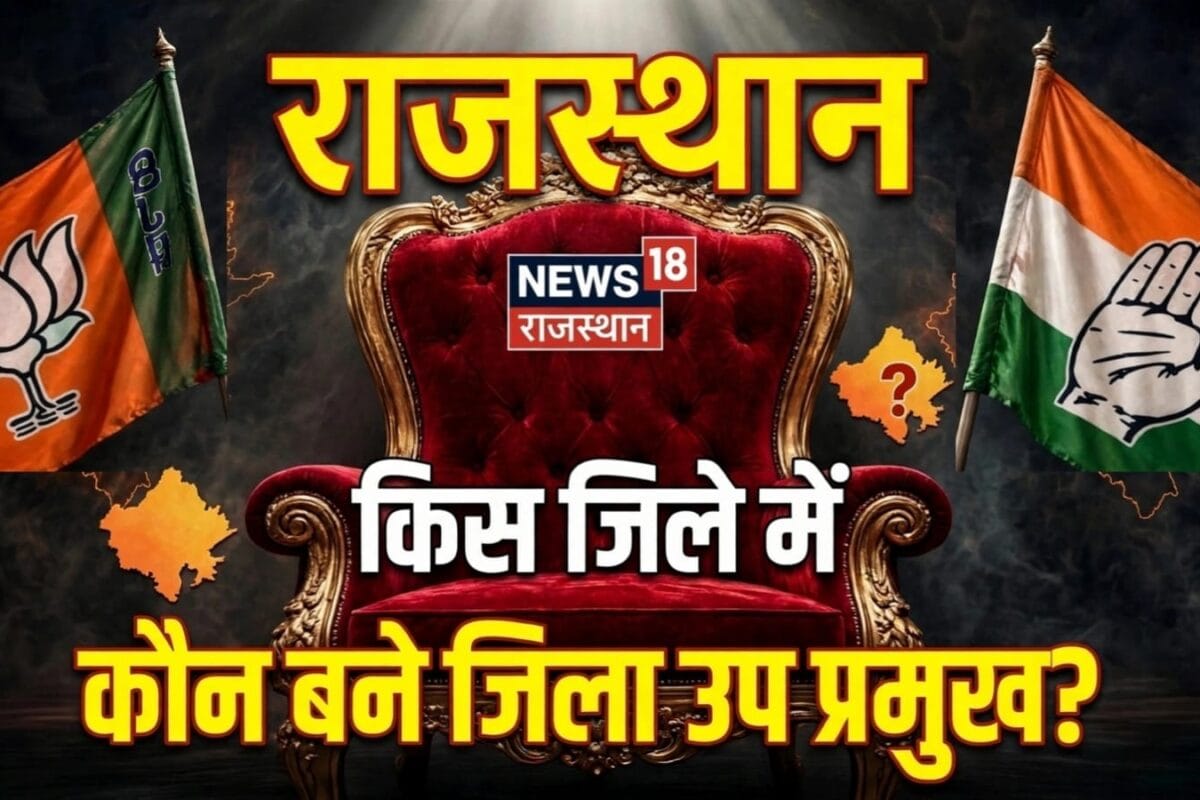
In a decisive political development across Rajasthan, the final election results for the crucial Up Zila Pramukh positions spanning all 37 districts have been officially declared. The political landscape of rural local governance witnessed a sweeping wave in favor of the Congress party, which put up an extraordinary performance by capturing the coveted chairs in 25 districts. This sweeping mandate establishes the party's firm grip over grassroots democratic institutions across the state, marking a significant milestone in local political dynamics.
Analyzing the historical context of local body elections in Rajasthan, the battle for the Up Zila Pramukh seat has always been a fierce prestige issue for major political outfits. These intermediate-level administrative tiers serve as the backbone of rural development, agricultural policy execution, and resource allocation at the district level. Over successive electoral cycles, political parties have heavily invested organizational resources to capture these administrative headquarters to influence local socioeconomic policies and community outreach programs.
The electoral process witnessed remarkable instances of political consensus and intense competition across various districts. Notably, candidates belonging to the Congress party in key regions including Alwar, Dholpur, Dausa, and Jaisalmer were elected unopposed, demonstrating localized political dominance and smooth administrative consensus. In other major urban and rural centers, individual leaders such as Sunil Kumawat in Jaipur and Omprakash Bishnoi in Jodhpur emerged victorious after intense democratic contests, reflecting the dynamic nature of local leadership battles.
Examining the regional impact on communities, local infrastructure development, and regional administration, these elections hold immense value for local trade, agricultural subsidies, and rural employment schemes. The leadership chosen at the Up Zila Pramukh level dictates the implementation speed of welfare measures. Communities across various districts eagerly await the execution of stalled infrastructural projects, drinking water initiatives, and road connectivity enhancements under the newly formed administrative leadership.
From an administrative perspective, the execution of these elections required meticulous oversight by district election officers, law enforcement agencies, and statutory bodies. In exceptionally close contests, such as the one witnessed in Balotara where both major contenders secured an exact tie, administrative protocols involving a formal draw of lots were strictly invoked to break the deadlock, resulting in the victory of BJP candidate Jasaram in accordance with established electoral laws.
Looking ahead toward the future outlook, the newly elected Up Zila Pramukhs will assume office with immediate responsibilities to constitute district committees, finalize annual budgets, and accelerate developmental works. Political observers anticipate heightened legislative and administrative engagement at the grassroots level as these leaders prepare to fulfill their electoral mandates, addressing public expectations while navigating the complex administrative machinery of rural Rajasthan over the coming tenure.
