
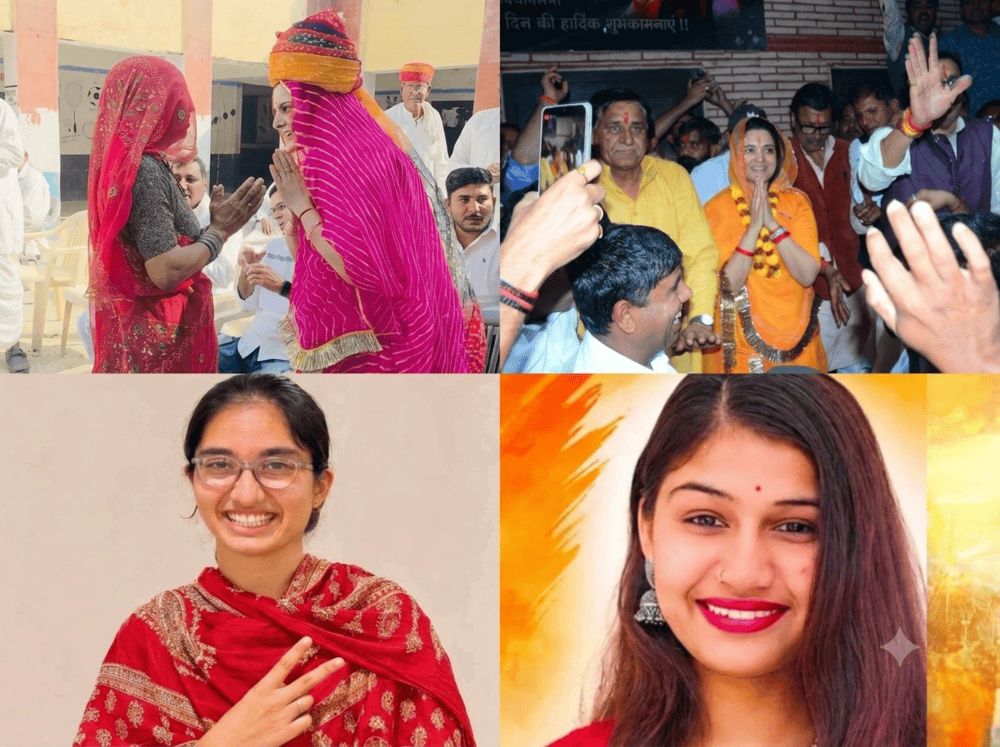
In a watershed moment for grassroots democracy and gender empowerment in Rajasthan, women have decisively demonstrated their political capability by capturing leadership positions across a vast majority of the state. Out of the 37 Zilla Parishads evaluated across the region, women successfully secured the coveted post of Zilla Pramukh in an impressive 26 districts. This remarkable outcome significantly outpaces the mandatory statutory reservation thresholds, proving that female political aspirants are increasingly winning public trust and electoral mandates on merit and widespread community support.
Historically, local self-governance structures in rural administrative zones have faced structural barriers, often limiting active political participation among women despite constitutional reservations. Over successive election cycles, however, systemic reforms, grassroots mobilization, and heightened political consciousness have catalyzed a transformative shift. The recent electoral results in Rajasthan represent the culmination of this prolonged social evolution, establishing a robust precedent for inclusive governance and decentralized administrative leadership across the state.
A granular examination of the election statistics reveals compelling dimensions regarding age demographics and administrative leadership. Across the 37 districts where electoral outcomes were finalized, the newly elected female Zilla Pramukhs are, on average, a striking 12 years younger than their male predecessors and contemporaries. This generational shift introduces a vibrant dynamic into rural local bodies, infusing traditional bureaucratic machinery with modern perspectives, energetic outreach, and progressive priorities geared toward sustainable district development.
Political analysts, civil society organizations, and local community stakeholders have lauded this electoral outcome as a monumental milestone for gender parity in public administration. Observers note that when young women ascend to positions of high authority, it fundamentally alters the socio-cultural fabric of rural societies, inspiring younger generations to pursue leadership roles in public service, governance, and civic administration without traditional constraints.
The cascading effects of this leadership transition are expected to resonate deeply within regional economies and community development frameworks, including within administrative areas such as Kotputli-Behror. With empowered female leaders steering district-level planning and resource allocation, grassroots welfare schemes, educational infrastructure projects, and rural healthcare initiatives are anticipated to receive renewed administrative vigor and transparent execution, directly benefiting local communities and households.
District administration officials and election authorities have initiated formal orientation programs and administrative training modules for the newly elected Zilla Pramukhs to ensure seamless governance transitions. These statutory orientation workshops are designed to equip the young leaders with comprehensive knowledge of financial protocols, budgetary allocations, developmental planning frameworks, and constitutional responsibilities necessary for effective public service delivery.
Looking ahead, the tenure of these newly elected female leaders will be closely monitored by political observers and constituents alike as they assume formal control of local developmental machinery. Notable among these trailblazing leaders are young figures such as Santosh in Jaisalmer and Varsha in Jhalawar, both taking office at the remarkably young age of 21. Their leadership trajectory over the upcoming term will serve as a crucial benchmark for the future of decentralized governance and women's political empowerment throughout the state of Rajasthan.
