
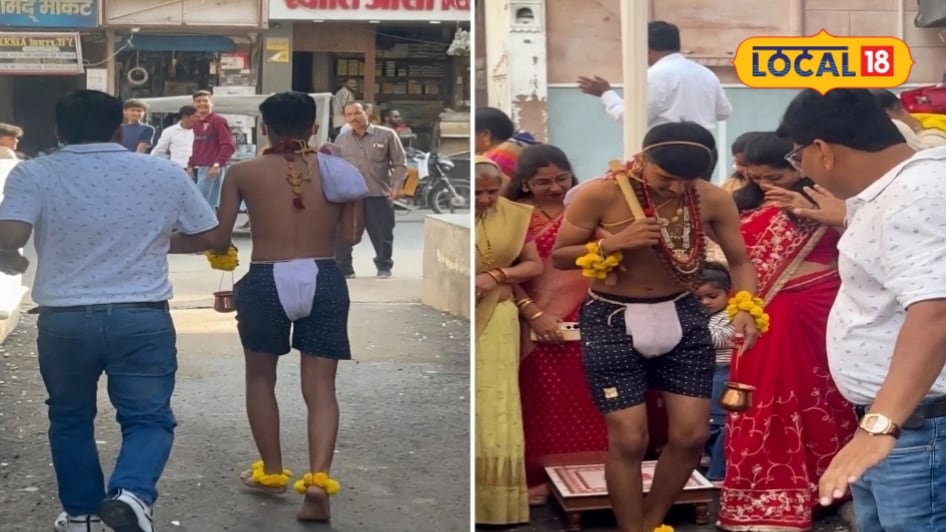
In the vibrant cultural landscape of Bikaner, a fascinating and centuries-old tradition continues to thrive within the Pushkrarna Brahmin community. During the sacred Upanayanam, commonly known as the sacred thread ceremony, a distinctive ritual known as Kashi Gaman is performed with immense enthusiasm, capturing the attention of tradition-keepers and cultural enthusiasts alike. This unique ceremonial enactment vividly brings to life ancient educational practices that have been passed down through generations.
The ritual unfolds immediately after the sacred thread, or Janeu, is formally bestowed upon the young boy, referred to as the Batuk. In accordance with ancient customs representing the pursuit of higher learning and ascetic renunciation, the newly initiated boy instantly picks up a traditional staff, a water pot known as a Kamandal, and a writing slate-cum-stylus, commonly called Pati-Ghota. Armed with these minimalist symbols of a wandering scholar, the boy dramatically attempts to escape and travel toward the holy city of Kashi to pursue spiritual knowledge.
As the young Batuk begins his symbolic journey away from his family residence, a dramatic chase ensues. Family members, closely observing the ritual, quickly spring into action and pursue the fleeing boy to halt his journey toward asceticism. The central role in this pursuit is traditionally played by the maternal uncle, the Mama, who intercepts the young boy along his path and halts his departure from worldly life.
During this emotional and culturally significant interception, the maternal uncle engages with the young Batuk, persuasively explaining the virtues and duties of a householder life. Through gentle persuasion and traditional dialogue, the maternal uncle reminds the boy of his upcoming familial responsibilities and societal duties, successfully convincing him to abandon his journey to Kashi and return to the warmth of his family home.
This traditional enactment serves as a powerful symbolic representation of ancient Indian educational traditions, wherein a young individual theoretically steps onto the path of complete renunciation and scholarship before being formally integrated back into the worldly responsibilities of a householder. The preservation of this ritual highlights the deep-rooted cultural fabric of the Pushkrarna Brahmin community in Bikaner.
While modernization has transformed numerous traditional ceremonies across various communities, the Pushkrarna Brahmins of Bikaner have steadfastly maintained the integrity and enthusiasm surrounding the Kashi Gaman ritual. Elders within the community pass down the precise methodologies and underlying philosophical meanings of the ceremony to the younger generations, ensuring that the historical continuity remains unbroken.
Looking forward, the observance of the Kashi Gaman tradition during the Upanayanam ceremony stands as a testament to the resilience of cultural heritage in Bikaner. As community members gather year after year to witness and participate in this symbolic flight and subsequent reconciliation, the ancient customs continue to educate observers about the philosophical balance between spiritual pursuit and worldly duty.
