
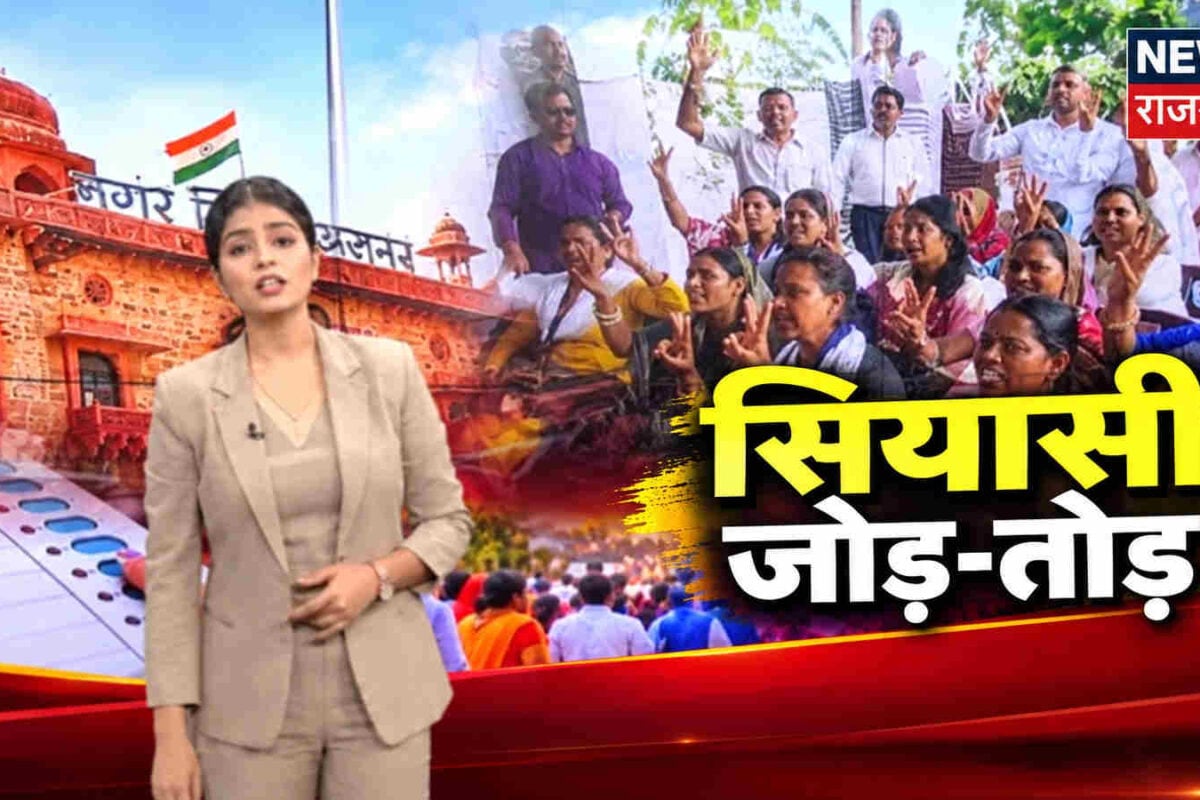
Rajasthan’s local body elections for 2026 entered their decisive phase on 21 September, when the final day for filing nominations closed across the state. In the Jhalawar Nagar Parishad, senior Bharatiya Janata Party (BJP) figure Rajkumar Sony formally submitted his nomination for the chairmanship, signalling the party’s intent to capture a strategic municipal seat. The filing coincided with a flurry of applications from Congress and independent candidates, underscoring the high‑stakes contest for control of urban governance structures that will be decided on 21 September for heads and 22 September for deputy heads.
The backdrop to this contest stretches back to the 2015 local body elections, when Rajasthan witnessed a sharp swing towards the Congress, only to see the BJP regain momentum in the 2020 cycle. The 2026 election is the first in which the state’s newly revised delimitation of wards, based on the 2021 census, will be applied, altering the demographic composition of many municipal councils, including Jhalawar. Historically, Jhalawar’s municipal leadership has been a bellwether for rural‑urban policy alignment, making the current race a litmus test for both parties’ grassroots mobilisation strategies.
Ground‑level preparations have intensified as party workers mobilise volunteers, distribute campaign literature, and organise door‑to‑door outreach. While exact financial outlays remain undisclosed, political analysts estimate that major parties are allocating multi‑crore rupee resources for advertising, transport, and voter engagement in key districts. In Jhalawar, the contest is further complicated by the presence of several local issues—water scarcity, waste management, and road infrastructure—that have become focal points for voter sentiment. The election schedule, with heads elected on 21 September and deputies on 22 September, compresses campaign timelines, prompting candidates to accelerate their outreach efforts.
Stakeholder reactions have been measured. A senior BJP functionary, speaking on condition of anonymity, noted that Rajkumar Sony’s candidature is expected to galvanise the party’s base, especially among youth and small‑business owners. Conversely, a Congress spokesperson highlighted the party’s commitment to inclusive development and warned that any single‑party dominance could marginalise minority voices. Local traders expressed cautious optimism, hoping that a clear mandate will bring stability to municipal services, while civil‑society groups called for transparent polling procedures to ensure that the election reflects the will of the electorate.
The ramifications for the Kotputli‑Behror district are significant. Though geographically distant, the district shares economic ties with Jhalawar through agricultural trade and inter‑district transport corridors. A BJP victory in Jhalawar could facilitate coordinated infrastructure projects, such as the proposed highway upgrade linking Kotputli to the southern parts of Rajasthan. Conversely, a Congress win might shift focus towards social welfare schemes, potentially redirecting state‑level funding towards health and education initiatives that benefit Kotputli‑Behror’s rural communities.
State authorities have issued directives to ensure a smooth electoral process. The Rajasthan State Election Commission has deployed additional security personnel to polling stations, instituted electronic voter‑verification systems, and mandated strict adherence to the Model Code of Conduct from the nomination deadline onward. Municipal officials in Jhalawar have been instructed to update voter rolls, verify candidate eligibility, and facilitate the installation of transparent ballot boxes to mitigate any allegations of malpractice.
Looking ahead, the election results slated for 21 September will set the tone for the deputy elections on 22 September, after which the newly elected heads will assume office in early October. Political observers anticipate that the outcomes will influence the state’s policy agenda for the next five years, especially in areas of urban development, fiscal allocation, and party alliances. Citizens across Rajasthan, including those in Kotputli‑Behror, are urged to exercise their franchise, as the composition of local bodies will directly affect service delivery, local taxation, and community projects for the foreseeable future.