
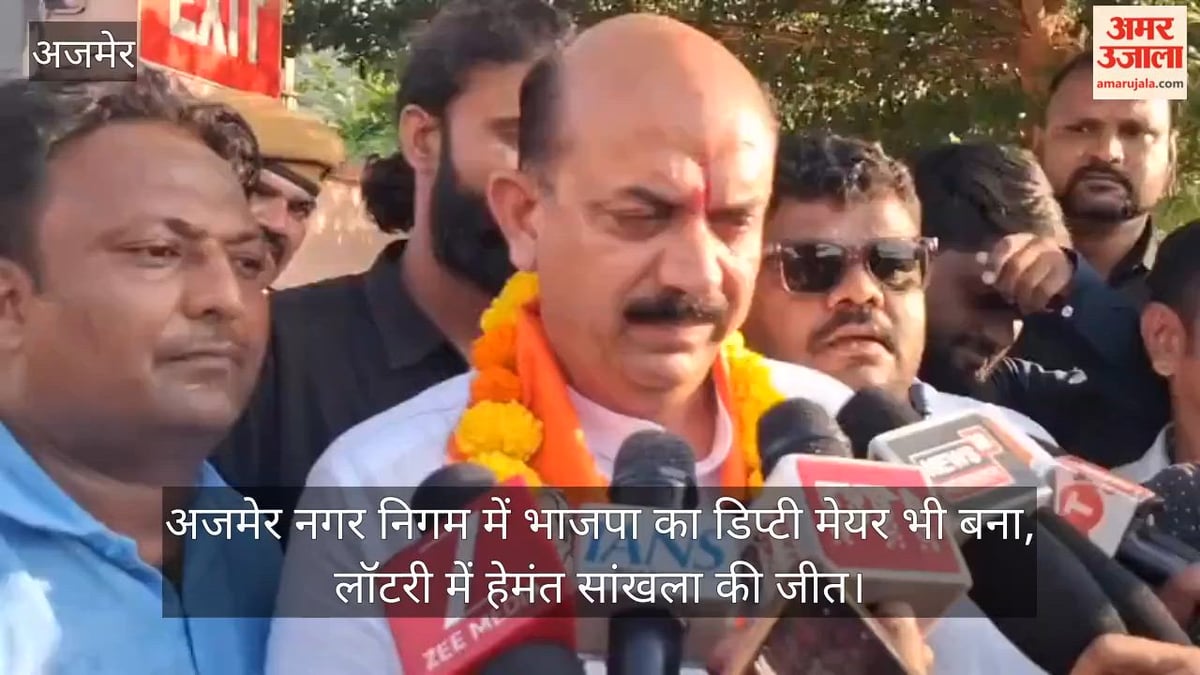
In a significant political development within the urban local body elections of Rajasthan, the Bharatiya Janata Party has further consolidated its authority by securing the Deputy Mayor position in the Ajmer Municipal Corporation. The high-stakes electoral contest, which kept political observers and local residents on edge, ultimately culminated in a dramatic fashion when Hemant Sankhla triumphed through an official lottery draw. This momentous event marks a defining chapter in the ongoing administrative structuring of municipal governance across the region.
The electoral journey leading up to this crucial outcome was characterized by intense political maneuvering, strategic alignments, and extensive negotiations among various political factions within Ajmer. Local municipal elections traditionally set the tone for grassroots political dominance, making the position of Deputy Mayor extremely vital for policy implementation and civic development. As urban centers expand, the leadership within the municipal corporation holds profound responsibility for steering infrastructure projects, public sanitation, and local welfare schemes.
The culmination of the election process through a lottery system underscores the razor-thin margins and fiercely competitive nature of contemporary local body polls. While democratic contests often yield absolute majorities, specific situations involving tied mandates require constitutional and statutory mechanisms like draw of lots to determine the final victor. In this context, Hemant Sankhla's victory through the lottery not only ensured his ascension to the esteemed office of Deputy Mayor but also prevented prolonged administrative gridlock in the Ajmer Municipal Corporation.
Political analysts and local stakeholders have closely monitored these developments, recognizing that a stable municipal leadership is paramount for addressing long-standing civic challenges. Representatives from various factions have emphasized the urgent need for collaborative governance to improve urban amenities, road infrastructure, and waste management systems throughout Ajmer. The consolidation of leadership under the BJP banner is anticipated to streamline policy execution between the municipal body and the state government machinery.
While the immediate geographical focus remains firmly on Ajmer, the broader implications of these urban body results resonate across various districts, including Kotputli-Behror. Local communities and administrative observers in surrounding regions closely analyze urban governance models to replicate successful civic administration practices. The establishment of a definitive leadership structure in major municipal bodies like Ajmer sets a precedent for transparent, accountable, and responsive local governance.
Following the successful conclusion of the election and the subsequent lottery draw, administrative authorities have initiated formal protocols for the assumption of office. The Municipal Corporation of Ajmer is now poised to resume its regular legislative and executive functions with a fully constituted leadership team. Officials are expected to expedite pending municipal files, budget allocations, and developmental projects that had experienced temporary slowdowns during the election cycle.
Looking ahead, the newly elected Deputy Mayor, Hemant Sankhla, alongside the broader municipal leadership, faces high public expectations regarding urban transformation and administrative efficiency. Citizens and local traders anticipate prompt action on pressing civic issues, ranging from potable water supply to commercial license regularizations. The successful resolution of the Deputy Mayor election paves the way for a stable tenure dedicated to the holistic growth and modernization of Ajmer.