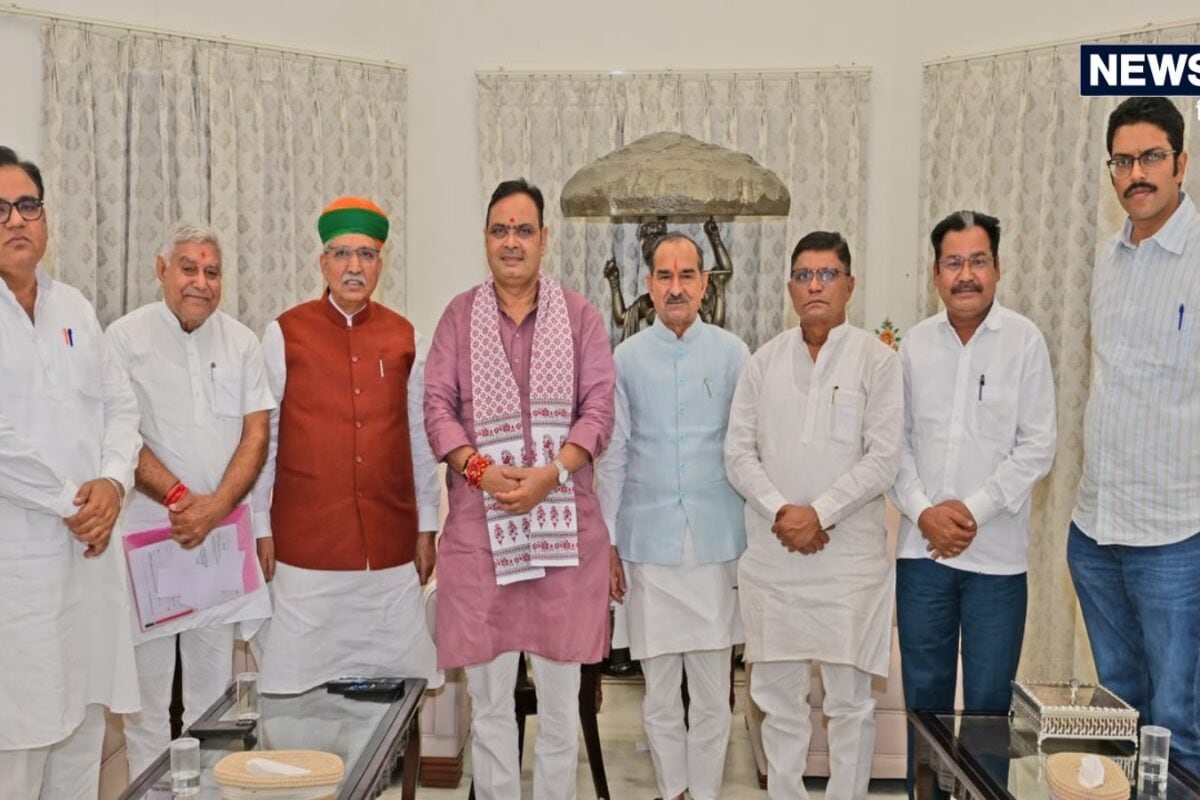
In response to the ongoing agrarian crisis centered around the demand for irrigation water, a high-level administrative meeting was convened at the Chief Minister's official residence in Jaipur. The gathering specifically addressed the twenty-five-day-long farmer agitation currently underway in the Bikaner region, particularly affecting the agricultural belts of Khajuwala. The prolonged protest has drawn widespread attention from political observers, administrative authorities, and the agricultural community alike, necessitating direct intervention from the highest levels of the state government.
The genesis of this intense agitation traces back to acute water scarcity and distribution irregularities that have severely impacted crop yields and livelihoods in Bikaner. For twenty-five consecutive days, local farmers have voiced their grievances regarding inadequate irrigation supplies, which form the absolute lifeline of the desert region's agrarian economy. With agricultural planning hanging in the balance, community leaders and local cultivators resolved to press their demands through sustained public demonstrations, culminating in this crucial administrative outreach.
Assessing the gravity of the situation, the state administration organized a comprehensive review session to analyze the logistical constraints and distribution bottlenecks. While the immediate statistics reflect a twenty-five-day deadlock, the underlying economic stakes involve the sustenance of numerous farming households dependent on adequate canal water allocation. Representatives presented detailed memorandums outlining the precise deficit in water discharge quotas and the resultant distress faced by agrarian communities during the ongoing agricultural cycle.
While the immediate epicenter of the protest remains restricted to Bikaner and Khajuwala, the ramifications of irrigation water disputes resonate deeply across the entire agricultural landscape of the region, including districts like Kotputli-Behror. Agricultural stability in one part of the state invariably influences overall food security, market supply chains, and rural economic vitality. Trading communities, transport sectors, and ancillary rural businesses across various districts monitor these developments closely, given their indirect reliance on robust agricultural output and farmer purchasing power.
Administrative response mechanisms have been mobilized to evaluate the technical feasibility of augmenting water supplies without destabilizing the broader canal distribution network. Senior bureaucrats and irrigation department officials presented technical assessments during the meeting, exploring viable pathways to recalibrate water release schedules. The involvement of senior political leadership underscores the government's stated intent to resolve administrative bottlenecks through structured dialogue rather than prolonged confrontation.
Looking ahead, the successful mitigation of the twenty-five-day agitation depends heavily on the swift implementation of the remedial measures discussed at the Chief Minister's residence. Public expectations remain high as the farming community awaits formal notifications and tangible improvements on the ground regarding irrigation water availability. As administrative follow-ups proceed in the coming days, the primary focus will remain on restoring regular water supply lines and rebuilding trust between the state machinery and the agricultural populace of Bikaner.