
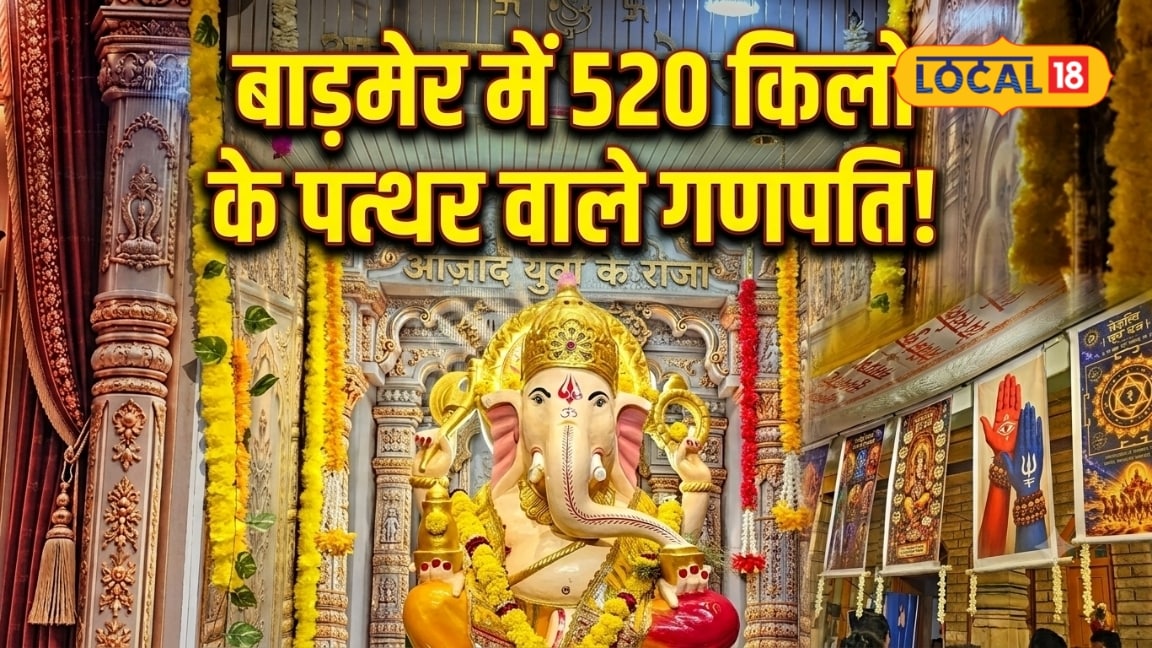
As the festivities of Ganesh Utsav 2026 commence across the region, the historical locality of Juni Chowki Pada in Barmer has emerged as a beacon of ecological consciousness and cultural revival. Spearheaded by the dedicated members of the Azad Youth Group, this year's celebrations have transcended traditional boundaries to introduce a groundbreaking model of sustainable festival management that deeply resonates with modern environmental imperatives.
The cornerstone of this year's celebration is an awe-inspiring, magnificent idol weighing an astonishing 520 kilograms, meticulously sculpted from solid stone. Unlike conventional idols crafted from Plaster of Paris and toxic chemical paints that severely degrade water bodies during traditional immersions, this stone deity represents a permanent, eco-friendly alternative designed to endure for generations without inflicting any harm on local water ecosystems.
Delving into the logistical and operational framework of this unique initiative, local coordinators explained that the monumental 520 kg stone sculpture eliminates the recurring annual expenditure and environmental hazard associated with manufacturing new idols. Instead of undergoing full water submersion, the sacred stone statue is ritually bathed and respectfully preserved in a secure location after the festivities conclude, ensuring zero material wastage.
Complementing the ecological significance of the stone idol, the organizers have conceptualized and executed a remarkably unique 'Poster Museum' inside the main pandal. This educational and spiritual exhibition meticulously displays artistic posters depicting the revered 12 Jyotirlingas, various sacred Shakti Peethas, and numerous divine incarnations, serving as a profound visual medium to reconnect contemporary youth with foundational Sanatan traditions and cultural heritage.
The ripple effect of this exemplary celebration in Barmer extends far beyond its immediate municipal boundaries, offering valuable lessons for neighboring districts and communities striving to balance religious devotion with ecological preservation. Citizens, environmentalists, and cultural scholars visiting the Juni Chowki Pada pandal have universally lauded the Azad Youth Group for demonstrating how grassroots organizations can successfully institutionalize green protocols during massive public gatherings.
Administrative observers and local authorities have also taken cognizance of this proactive community-led model, noting how voluntary compliance with ecological standards proves far more effective than enforced mandates. The initiative has effectively drawn appreciation from civic leaders who frequently grapple with the monumental task of clearing polluted water bodies in the aftermath of prolonged festive seasons.
Looking forward, the success of the 2026 celebration in Barmer is expected to inspire similar sustainable practices in upcoming regional festivals throughout Rajasthan. The Azad Youth Group remains steadfast in its mission to expand this educational outreach, ensuring that future iterations of Ganesh Utsav continue to strengthen the harmonious bond between deep-rooted spiritual faith, cultural education, and absolute environmental preservation.