
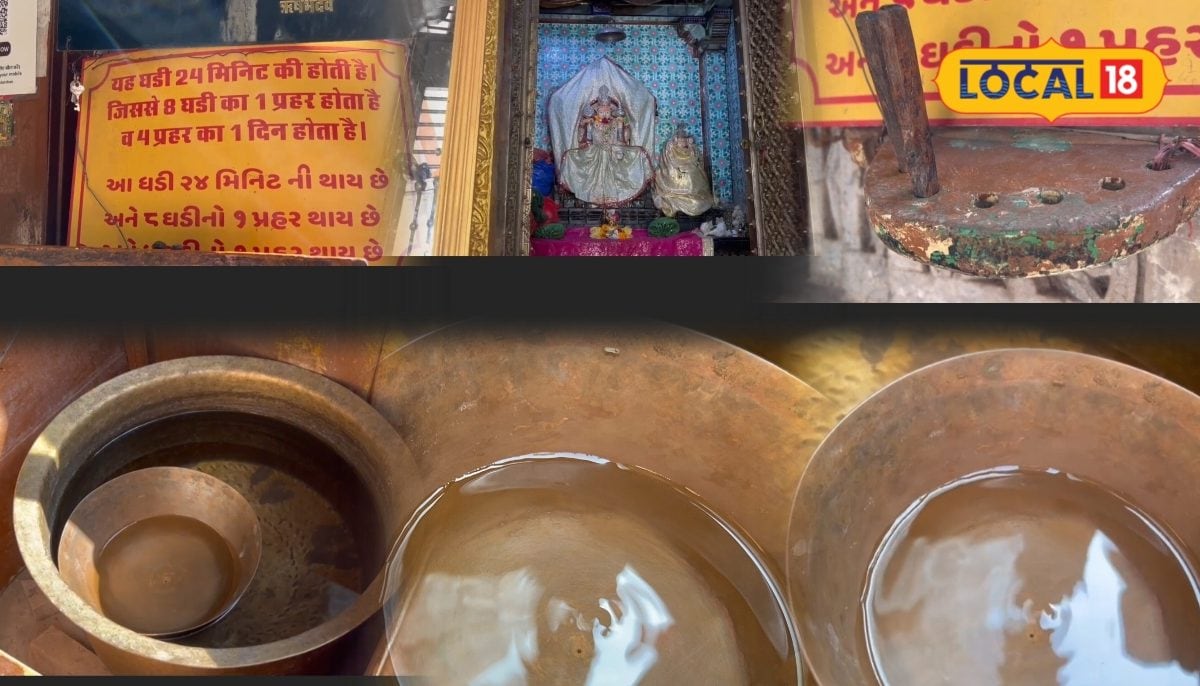
In an era dominated by high-precision digital gadgets and atomic clocks, the historic city of Udaipur continues to maintain a remarkable connection with its ancient heritage. Deep within the traditional temples of this region, a centuries-old water clock tradition remains fully functional and alive, defying the rapid march of modern technology.
Originating from the rich historical context of Mewar, this unique timekeeping system relies on a fascinating combination of simple yet ingenious physics. Historical records and traditional practices indicate that this mechanism was once the definitive standard by which temple priests and administrators regulated daily rituals, worship timings, and sacred ceremonies.
The physical composition of the water clock is a masterclass in minimalist traditional engineering. It typically consists of a specially constructed wooden box, a precisely calibrated brass vessel, and a small copper bowl that floats or sinks at calculated intervals, tracking the passage of time strictly through the steady dripping of water.
Cultural custodians, temple authorities, and local residents bear witness to the remarkable precision of this indigenous technology. While mechanical watches and digital alarms have become ubiquitous worldwide, the caretakers of these Udaipur temples take immense pride in preserving a tangible link to historical scientific inquiry and ancestral wisdom.
The preservation of this tradition holds immense significance not only for Udaipur but also for the broader cultural identity of the Mewar region. It serves as an educational touchstone for younger generations, illustrating how early societies understood temporal mechanics without relying on complex electricity or mechanized gears.
Administrative bodies, cultural preservation societies, and heritage experts have increasingly recognized the value of protecting such living antiquities. Efforts are continuously made to ensure that local temple custodians receive the necessary moral and logistical support to maintain these traditional artifacts for posterity.
Looking forward, the continuation of the water clock tradition in Udaipur stands as a powerful testament to cultural resilience. As modern tourists and heritage enthusiasts visit these temples, the rhythmic dripping of water continues to measure time exactly as it did centuries ago, bridging the gap between ancient science and the modern world.
