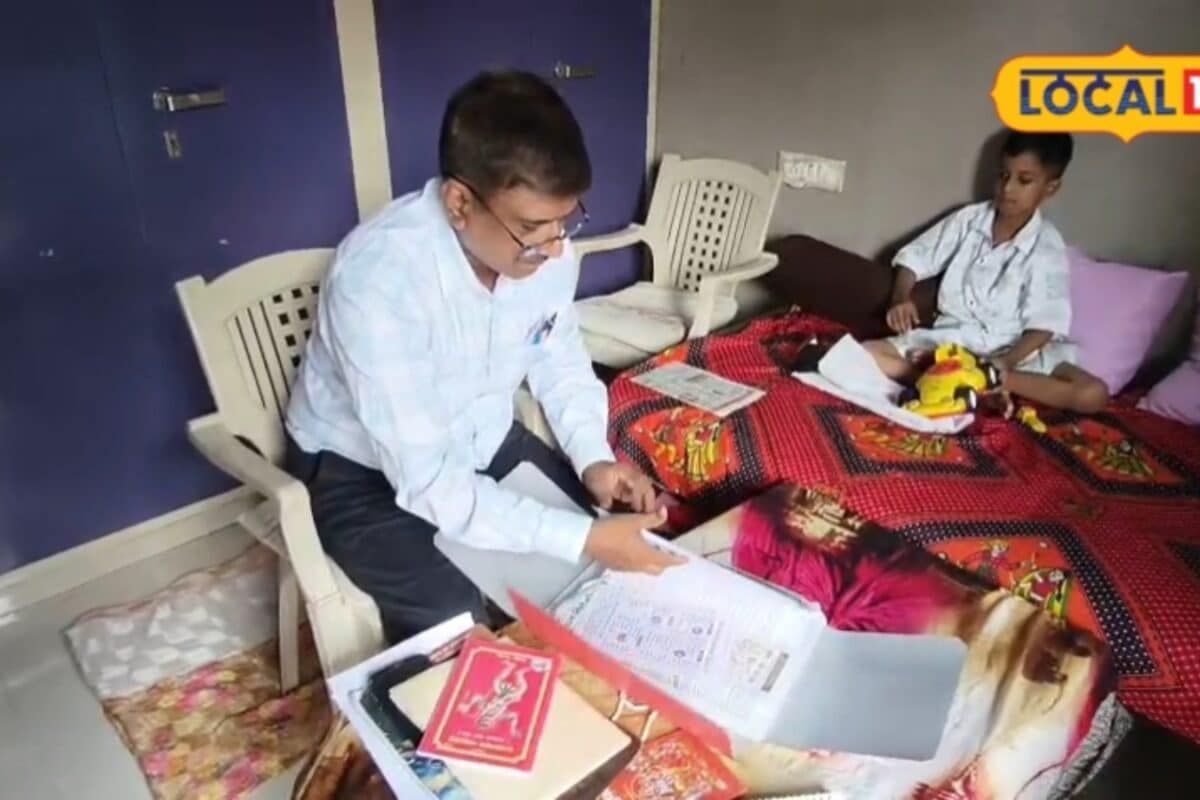
In a remarkable manifestation of religious devotion and steadfast spiritual discipline, a government school teacher residing in Alwar has accomplished a monumental task by handwriting the complete Ramcharit Manas entirely on his own. This extraordinary endeavor, completed over a dedicated timeframe of seven months, has garnered widespread attention and deep admiration from community members, scholars, and local residents alike, highlighting a rare commitment to traditional scriptural preservation.
The meticulous project originated from the deep-seated religious faith and personal reverence harbored by the educator. Choosing to step away from modern digital distractions and conventional conveniences, the teacher dedicated his personal hours to the arduous and patient process of manual transcription. This practice echoes historical traditions where sacred texts were preserved through painstaking hand-copying, thereby ensuring a deep personal connection with every single verse inscribed upon the paper.
Throughout the duration of the seven-month undertaking, the teacher maintained an unwavering schedule, carefully transcribing each chaupai and doha with utmost precision and devotion. The logistical commitment required for such an extensive literary and spiritual undertaking involves immense patience, physical endurance, and spiritual focus. By completing the entire epic by hand, the educator has established a personal milestone of perseverance that stands as a remarkable testament to individual resolve.
The resonance of this spiritual journey quickly extended beyond the study desk, deeply inspiring the immediate household. Following the completion of the monumental text by his father, the teacher's son has officially embarked upon his own spiritual journey by commencing the continuous writing of the sacred name of Lord Rama. This generational transfer of devotion has transformed the household into a vibrant center of spiritual enthusiasm, where traditional values and scriptural reverence are actively practiced and passed down.
Within the broader socio-cultural landscape of the Alwar region and the surrounding Kotputli-Behror district, this father-son initiative has sparked meaningful conversations regarding the preservation of classical literature and spiritual heritage. In an era dominated by rapid technological advancement and digital communication, such deliberate acts of manual devotion serve as a powerful reminder of the enduring significance of cultural roots, patience, and meditative focus within local communities.
While this endeavor stems purely from personal faith and domestic dedication rather than administrative directives, local community leaders and educationists have lauded the exemplary patience demonstrated by the government teacher. Such personal milestones often reinforce the moral and ethical fabric of society, providing younger generations with tangible examples of dedication, respect for ancestral wisdom, and the rewards of sustained concentration.
Looking ahead, the completed manuscript of the Ramcharit Manas stands as a treasured family heirloom and a spiritual anchor for the household. As the son continues his daily practice of writing the name of Lord Rama, the family's shared journey of faith continues to inspire neighbors, relatives, and local visitors, ensuring that the echoes of this remarkable seven-month labor of love will resonate within the community for years to come.