
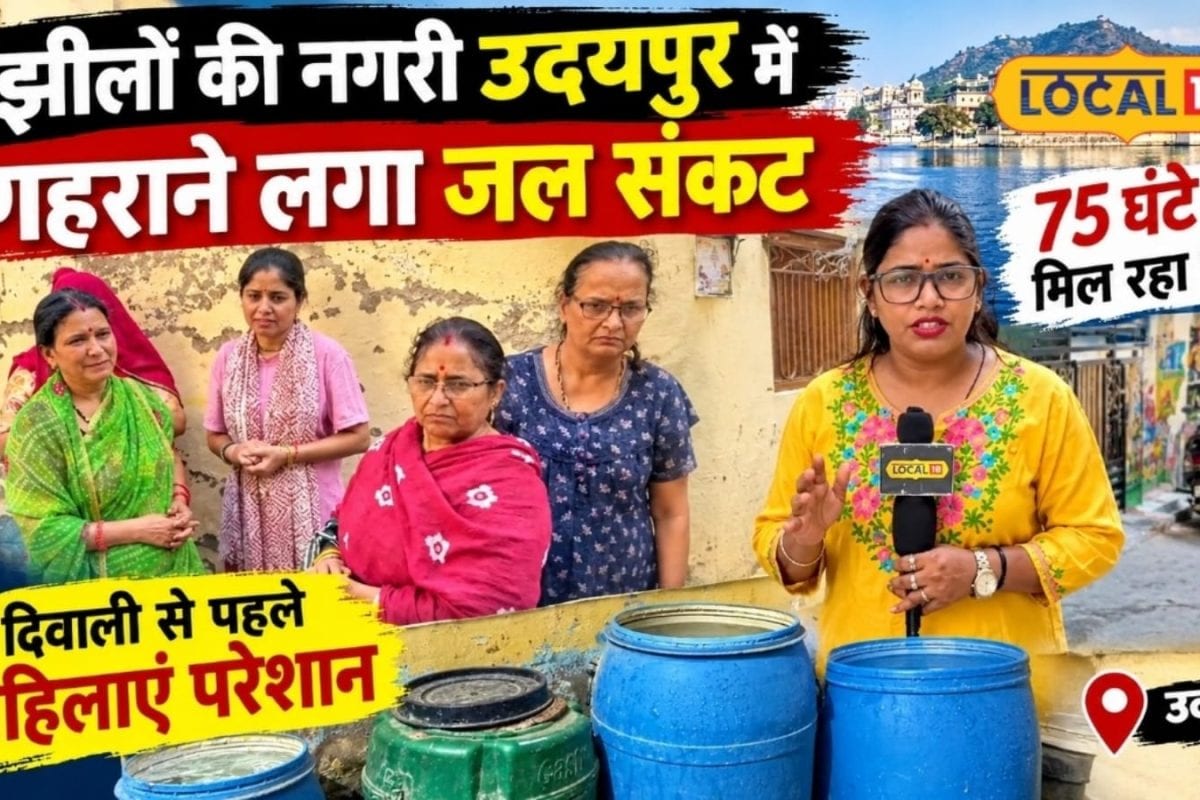
Udaipur, internationally celebrated as the historic city of lakes, is currently grappling with a severe and deepening water crisis that has severely disrupted daily life for local residents. According to ground reports filed by Local 18, households across several municipal areas have been forced to endure agonizing delays of up to 75 hours between successive municipal water supplies. This drastic shortfall has left domestic reservoirs dry and plunged families into immense hardship as they struggle to secure basic water supplies for routine chores.
The current crisis stands in sharp paradox to the geographical identity of Udaipur, which has historically prided itself on its abundant water bodies, scenic lakes, and sophisticated traditional catchment systems. However, infrastructural bottlenecks, maintenance backlogs, and an inability to maintain consistent pumping pressure have combined to paralyze the municipal distribution network. Consequently, water reaching domestic taps is delivered at extremely low pressure, rendering it utterly inadequate for multi-story residential buildings and larger family households.
The human toll of this infrastructural failure is vividly evident in dense residential neighborhoods such as Jagdish Chowk and Bhatiyani Chohatta, where families are spending countless hours waiting in anticipation of erratic pipeline flows. The timing of this severe water scarcity has compounded community distress, coinciding directly with critical festive preparations and intensive seasonal deep cleaning of homes. Women, who traditionally bear the primary burden of household management, are finding it nearly impossible to procure enough water for cooking, cleaning, and basic hygiene.
Amidst mounting frustration, local voices have expressed deep anguish over administrative apathy and the failure of municipal authorities to ensure equitable and regular distribution. During recent ground interactions, several female residents articulated their utter desperation, candidly stating that if these intolerable living conditions persist indefinitely, they will be forced to reconsider their urban residency and abandon the city altogether to return to their ancestral villages where basic survival resources are more reliable.
While the immediate epicenter of this crisis remains urban Udaipur, the psychological and economic repercussions resonate strongly across the broader region, including communities within the Kotputli-Behror district that monitor urban infrastructure trends closely. Local neighborhood economies in Udaipur, ranging from small-scale domestic enterprises to commercial establishments reliant on municipal water availability, are facing operational strains. The community fabric is being tested as neighbors compete for scarce water tanker deliveries and low-pressure municipal trickles.
In response to mounting public outcry and explicit media reports highlighting the plight of citizens, pressure is rapidly mounting on the responsible municipal departments and waterworks agencies to initiate immediate corrective measures. Civic activists and aggrieved residents are demanding transparent schedules, emergency tanker deployments to high-stress zones like Jagdish Chowk and Bhatiyani Chohatta, and urgent technical overhauls of the pumping stations responsible for the 75-hour supply delay.
Looking ahead, public expectations remain guarded as residents wait to see whether local governance bodies will implement sustainable long-term solutions or rely merely on temporary stopgap measures. The overarching demand from the citizenry is for a reliable, scheduled, and high-pressure water supply network that befits the dignity of a major tourist and cultural hub. Without swift and decisive intervention, the threat of demographic displacement voiced by distressed families could transform into a troubling socio-economic reality for the city.
