
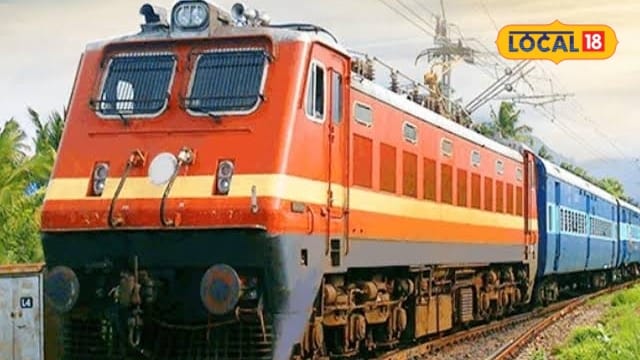
Railway passengers utilizing the Udaipur rail network are confronting immediate travel disruptions following an official administrative announcement regarding the cancellation of multiple train services. The disruption directly stems from essential engineering works undertaken to improve infrastructure capacity and operational efficiency across the designated regional rail network. Authorities have confirmed that train operations will remain suspended to facilitate crucial infrastructural upgrades without compromising passenger safety standards.
The engineering intervention is specifically concentrated on the Ajmer-Chanderiya rail section, a vital transportation artery connecting key economic and cultural hubs within the region. Historically, single-line bottlenecks on this crucial corridor have contributed to persistent scheduling delays and constrained freight movement. Transport experts note that undertaking comprehensive track doubling operations is imperative for long-term network decongestion, improved punctuality, and the eventual introduction of higher-speed passenger and commercial services.
As a direct consequence of these ongoing engineering works, a total of 5 trains have been officially cancelled, causing considerable logistical challenges for daily commuters, families, and commercial travelers. Among the affected services, train number 19606, operating as the Udaipur City-Madar rail service, is scheduled to remain completely cancelled on October 8, 2026. This specific cancellation halts a vital connection between Udaipur City and Madar, requiring hundreds of stranded passengers to recalibrate their travel schedules and seek alternative transport modalities.
Local commuters, daily wage earners, and business representatives have voiced significant concerns regarding the sudden alteration in train schedules and the resultant travel uncertainty. Many passengers emphasized that unexpected cancellations severely disrupt personal itineraries, business commitments, and medical travel plans. While travelers acknowledge the long-term utility of infrastructure development, merchant bodies have stressed the urgent need for advance communication and more robust alternative transport provisions during prolonged engineering blocks.
The regional repercussions of these railway cancellations extend far beyond immediate commuter inconvenience, touching upon broader economic activities that rely on seamless connectivity through the Ajmer-Chanderiya corridor. Small traders, tourism stakeholders, and regional service providers dependent on incoming and outgoing passenger traffic anticipate temporary slowdowns in commercial turnover during the execution phase. Ensuring minimal collateral economic damage remains a primary concern for local enterprise associations monitoring the situation.
In response to passenger grievances and logistical challenges, railway administrative authorities have stepped up coordination efforts to streamline communication regarding the cancellations. Station directors and customer service desks at Udaipur City and connecting stations have been directed to assist affected ticket holders with prompt refund processing and guidance on alternative routes. Officials maintain that rigorous safety protocols and adherence to projected engineering timelines remain their highest operational priorities during this phase.
Looking toward the future, the completion of the Ajmer-Chanderiya doubling project promises to usher in a new era of reliable, high-capacity rail transport for the entire region. Public expectations center on enhanced train frequency, reduced transit times, and greater overall network resilience once normal operations resume following the scheduled interventions. Passengers affected by the October 8, 2026 cancellation of train number 19606 and other impacted services are strongly advised to verify train statuses before embarking toward railway stations.