
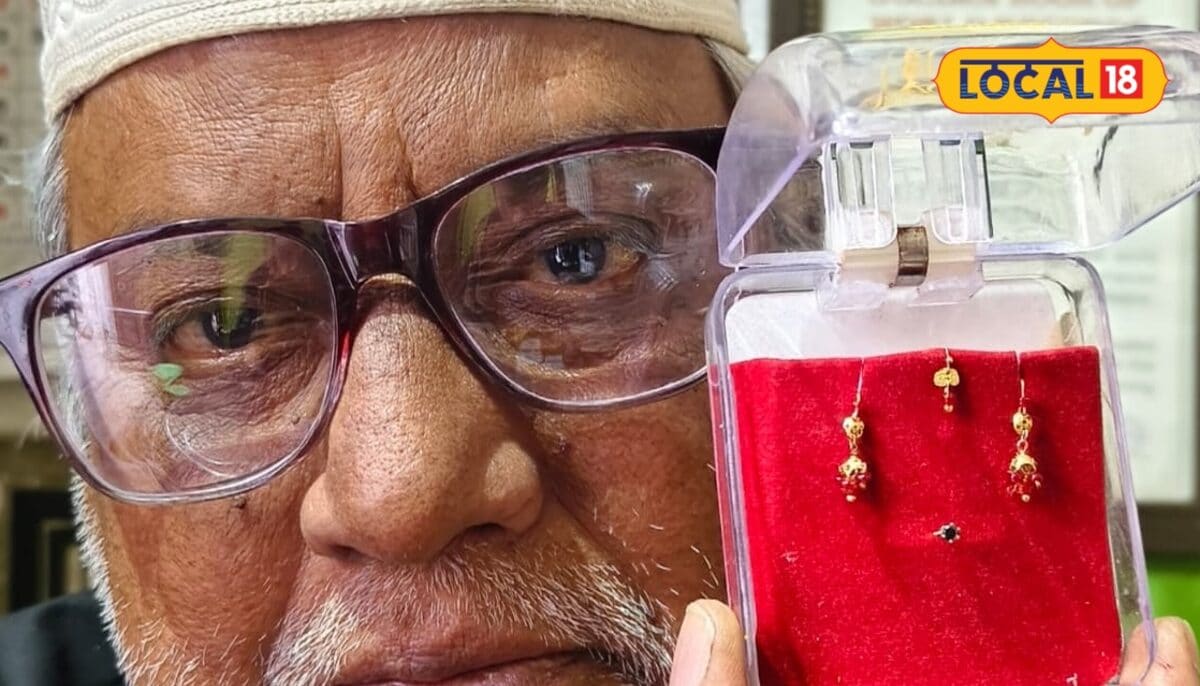
In an extraordinary display of microscopic craftsmanship, renowned gold artisan Dr Iqbal Sakka based in Udaipur has successfully created the world's smallest and lightest gold earrings without utilizing any welding or heating techniques. The meticulously crafted creation involves 24-karat gold broken down into 36 microscopic pieces, combined with a 2-millimeter American diamond-studded ring and an Om-inscribed teeka. Weighing a mere 0.090 milligrams and measuring 3 millimeters in length, these meenakari-adorned earrings represent a pinnacle of precision artistry that pushes the boundaries of traditional goldsmithing.
The historical context of this monumental achievement is rooted in decades of dedication to micro-art by Dr Iqbal Sakka, who has consistently challenged the limitations of human dexterity through miniature sculptures and jewelry. Traditional goldsmithing heavily relies on thermal processes, solders, and various welding methods to join precious metals. However, the artisan discarded these conventional practices entirely, relying solely on specialized tools and extreme patience to assemble the 36 distinct fragments of 24-karat gold without applying a single degree of heat.
Delving into the financial, logistical, and technical stakes of the project, the creation required an intense concentration span totaling 75 hours of uninterrupted microscopic labor. The sheer fragility of the 0.090-milligram structure meant that a single misplaced breath or minor tremor could ruin days of painstaking work. Alongside the 3-millimeter earrings, the complete ensemble features a 2-millimeter ring embedded with an American diamond and a religious teeka bearing the sacred Om symbol, all executed at a scale so microscopic that the naked human eye cannot perceive the intricate meenakari details without the aid of a powerful magnifying lens.
Stakeholder perspectives within the artisanal and jewelry community highlight the profound significance of this milestone for traditional craftsmen across the region and beyond. Fellow artisans, local merchants, and cultural commentators have expressed immense pride in Dr Iqbal Sakka for elevating Indian miniature art onto the global stage. Observers note that such painstaking accomplishments inspire younger generations of designers to explore unconventional techniques and revive dying arts that require immense mental discipline and physical steadiness.
Examining the regional impact on the broader cultural landscape and manufacturing hubs, including districts like Kotputli-Behror, this achievement serves as a strong testament to the enduring talent inherent in Indian artisans. Local industry representatives and community leaders emphasize that while large-scale mechanized production dominates modern markets, the preservation of handcrafted miniature arts maintains the soulful heritage of indigenous craftsmanship. Such world records bring positive national and international attention to the creative potential thriving within local workshops.
From an administrative and regulatory standpoint, accomplishments of this nature invite recognition from various cultural bodies, record-keeping organizations, and institutional patrons. Local administrative officials and cultural councils frequently review such verified achievements to document the artistic milestones attained by regional visionaries. While the project is purely artistic rather than commercial, institutional encouragement ensures that traditional artisans receive the formal acknowledgment they rightfully deserve on public platforms.
Looking toward the future, the forward outlook for Dr Iqbal Sakka involves presenting these micro-creations to global record registries and exhibiting the pieces for cultural educational programs. Public expectations remain high as enthusiasts anticipate even more astonishing feats of micro-goldsmithing in the upcoming timelines. Through unwavering dedication and unparalleled skill, the artisan continues to redefine the limits of what is physically possible with 24-karat gold, inspiring a new era of artistic exploration.
