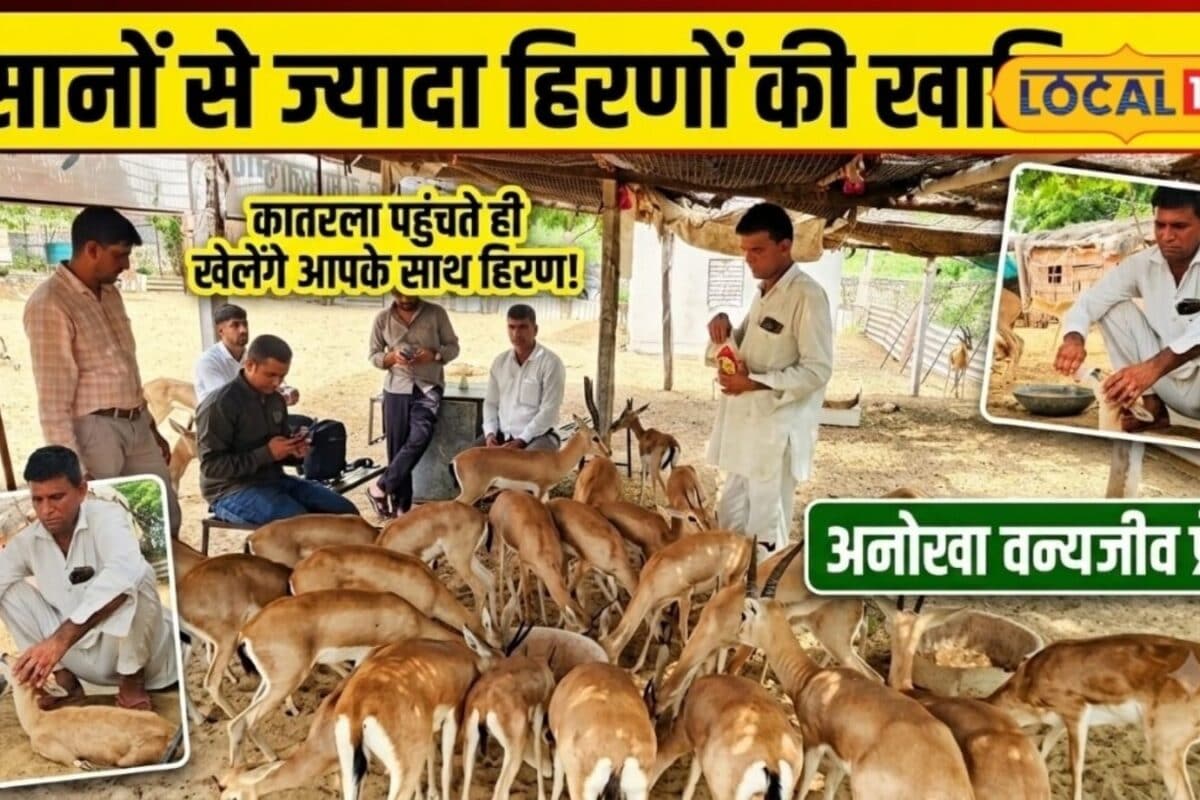
Deep within the arid expanse of the Thar desert, Katrala village in Barmer district has captured national attention for a remarkable sociological and ecological phenomenon. While the region is traditionally characterized by punishing heat and barren sand, this remote settlement is defined instead by an extraordinary bond of compassion between humans and wild deer. The village stands as a living testament to ancient conservation ethos revived for the modern era.
The foundational turning point for this unique sanctuary arrived in the year 2020, when a collective of dedicated local youths joined forces to establish the Amrita Devi Wildlife Institute. Conceived out of an urgent necessity to protect vulnerable fauna from the harsh realities of desert life, the institute transformed Katrala from a simple rural hamlet into a specialized haven for distressed, hunted, or injured wildlife.
Today, the ground reality within the village reflects a staggering level of interspecies harmony, anchored by precise statistics. More than 125 deer now inhabit the area in close proximity to human dwellings, completely devoid of fear. These majestic animals approach villagers willingly, accepting offerings of gram and millet directly from human hands as part of their daily routine.
Beyond the prominent population of deer, the sanctuary's scope of operations encompasses a wide array of desert fauna. The institute provides systematic medical treatment and rehabilitation to a diverse spectrum of animals, including rabbits, nilgai, peacocks, pigeons, and tortoises, ensuring that no injured creature is left to suffer without professional veterinary intervention.
The operational framework of the Amrita Devi Wildlife Institute specifically targets critical threats faced by wildlife in the region. Animals suffering from the severe aftermath of hunting expeditions, vicious attacks by stray dogs, debilitating diseases, or accidental collisions on expanding roadways are promptly rescued, brought to the facility, and nursed back to health.
This grassroots conservation model has rapidly evolved into an administrative and ecological benchmark for the wider region. By actively involving local citizens in the daily welfare of the animals, the community has effectively dismantled traditional barriers between human settlements and wildlife habitats, proving that coexistence is entirely achievable through dedicated local leadership.
As the initiative continues to expand its reach and capabilities, community leaders and wildlife advocates look toward the future with optimism. The sustained success of Katrala village and its thriving population of over 125 protected deer underscores the profound potential of community-driven conservation in safeguarding India's rich biodiversity for generations to come.