
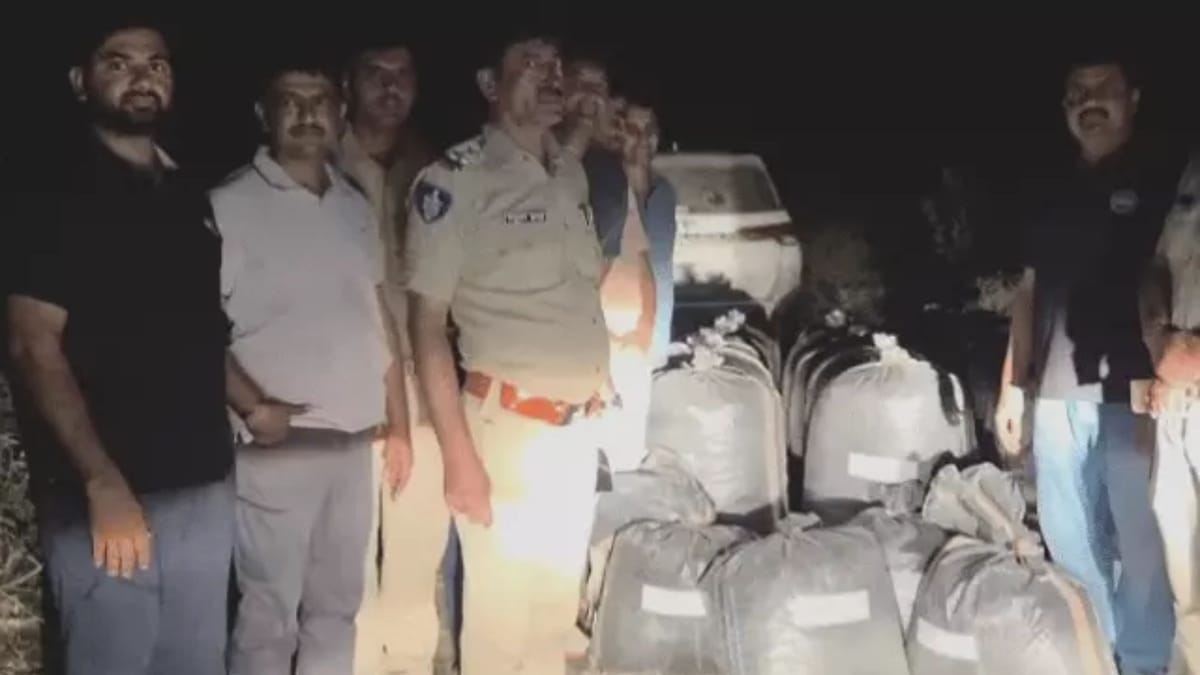
Jodhpur police on Monday seized a stolen Toyota Fortuner that was found to contain 378 kg of poppy husk, a key raw material used in the production of illegal narcotics. The vehicle, discovered parked on the outskirts of the city, bore a falsified registration number plate, indicating a deliberate attempt to evade detection. When officers arrived to secure the vehicle, the individuals responsible for the shipment fled the scene, leaving behind the contraband and a trail of investigative leads.
The incident is part of a broader pattern of drug‑smuggling operations that have historically used Rajasthan’s extensive road network to transport narcotics from border regions to urban markets. Over the past decade, law‑enforcement agencies have reported a steady increase in the concealment of poppy derivatives within commercial vehicles, exploiting gaps in vehicle verification and checkpoint procedures. The use of a high‑profile SUV such as a Fortuner reflects a calculated choice, given its capacity and the perception of legitimacy among road users.
According to preliminary forensic analysis, the 378 kg of poppy husk recovered from the vehicle represents a substantial logistical undertaking, likely involving multiple actors and a coordinated supply chain. The sheer weight suggests that the cargo was intended for processing into opium or heroin at a downstream facility, potentially generating revenue in the millions of rupees. The falsified number plate further underscores the sophistication of the operation, as smugglers often employ counterfeit documentation to obscure the origin and ownership of their transport assets.
Police officials, speaking on condition of anonymity, emphasized that the seizure was the result of a targeted intelligence operation that traced the vehicle’s movement across state borders. A senior officer remarked that the smugglers’ rapid departure upon police arrival is indicative of a well‑rehearsed escape plan, likely supported by local networks. Community members in nearby villages expressed alarm, fearing that such large‑scale drug movements could infiltrate local markets and undermine agricultural livelihoods.
The ramifications for the Kotputli‑Behror district are significant. Situated within a short driving distance of Jodhpur, Kotputli’s agrarian economy relies heavily on cotton, wheat, and mustard cultivation. An influx of poppy husk could tempt some farmers to divert crops toward illicit cultivation, attracted by higher profit margins. Moreover, the presence of sophisticated smuggling rings raises concerns about corruption, violence, and the erosion of social fabric in the region.
In response, the Rajasthan Police have launched a multi‑agency task force that includes the Narcotics Control Bureau and the state’s Excise Department. The task force is mandated to conduct a thorough audit of vehicle registration records, enhance checkpoint inspections on major highways, and increase surveillance in border districts. Authorities have also pledged to collaborate with neighboring states to dismantle the broader network that facilitated the Jodhpur shipment.
Looking ahead, investigators anticipate that the seized poppy husk will be subjected to detailed laboratory testing to trace its geographic origin, which could reveal links to cultivation zones in Punjab or Himachal Pradesh. The police have set a deadline of thirty days to file charges against any identified conspirators, while also urging the public to report suspicious activities. Community outreach programmes are being planned to educate farmers about the legal and social risks associated with drug‑related agriculture, aiming to prevent future incursions into the Kotputli‑Behror district.