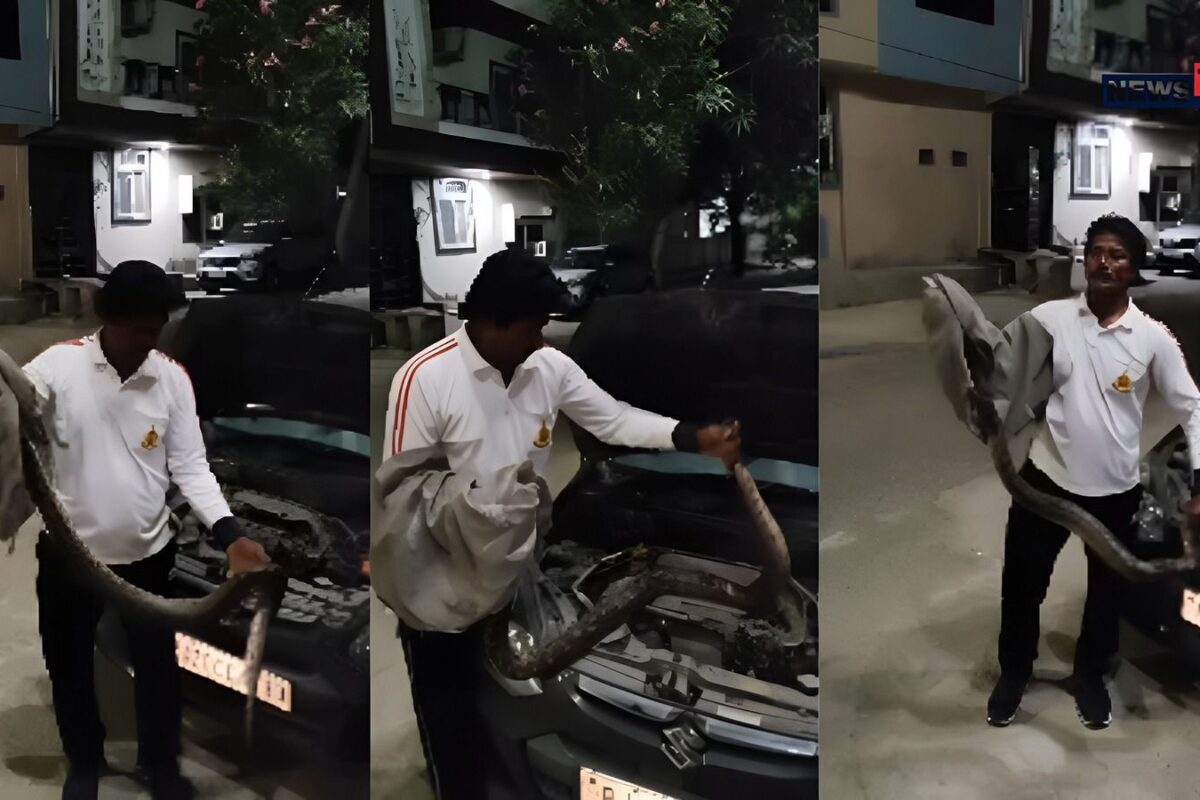
A wave of panic gripped the Shastri Nagar Dadabari area in Kota when a massive seven-foot python was discovered coiled tightly inside the engine compartment of a parked Swift car. The unusual presence of the reptile in a densely populated urban residential zone immediately drew the attention of startled passersby, who recognized the severe hazard posed to both human life and the animal itself. The dramatic discovery transformed a routine residential street into a site of intense public curiosity and concern, highlighting the unexpected wildlife encounters occurring within municipal limits.
Urban wildlife habitats often intersect with human settlements due to rapid infrastructural expansion, agricultural proximity, and environmental shifts that drive wild animals to seek shelter in urban spaces. Vehicles, particularly stationary cars left parked for extended periods, frequently provide warm, dark, and enclosed environments that mimic natural burrows, making them highly attractive resting places for cold-blooded reptiles seeking refuge from changing weather conditions or searching for prey.
The scale of the crisis became evident as the massive dimensions of the reptile—measuring a formidable seven feet in length—complicate standard removal procedures. The physical confinement of a vehicle engine bay restricts movement and visibility, turning the extraction process into a high-stakes operational challenge that requires specialized knowledge, precise tools, and immense patience to prevent injury to the animal or damage to the vehicle's intricate mechanical systems.
Recognizing the immediate danger, alert citizens waste no time and promptly contact the Srinathpuram fire station to coordinate an emergency response. The situation demands professional intervention, prompting the deployment of experienced snake catcher Govind Sharma to the location, whose expertise proves crucial in calming the tense atmosphere and planning a safe extraction method.
The regional implications of such wildlife intrusions extend beyond immediate municipal concerns, reflecting broader ecological patterns across the Kotputli-Behror district and neighboring administrative zones. Communities living in proximity to green belts, seasonal riverbeds, and forested corridors face recurring challenges regarding human-wildlife coexistence, necessitating heightened public awareness, preparedness, and robust local rescue infrastructure to handle unexpected animal emergencies smoothly.
Administrative oversight and statutory responsiveness play a pivotal role in managing these wildlife incidents safely and legally under established conservation frameworks. Following the successful extraction, the operational protocol shifts to wildlife authorities, wherein forest officer Avani Singh Jadoun from the New Ladpura range is formally notified to oversee the safe transfer and rehabilitation of the rescued python.
Concluding the multi-agency rescue operation, the seven-foot python is successfully transported under official supervision and released unharmed into its secure natural habitat at Chambal Garden. This positive resolution underscores the importance of inter-departmental coordination between fire services, wildlife experts, and forest administration, establishing a reliable precedent for future urban wildlife rescue operations in the region.