
The Meteorological Department has officially announced a weather alert for rainfall across Rajasthan starting from September 11. This forecast indicates a potential continuation of wet spells in various parts of the state, maintaining atmospheric moisture and influencing agricultural planning across local communities.
Even as meteorological instruments and official forecasts predict precipitation, natural indicators have begun presenting a contrasting narrative regarding the progression of the monsoon season. Traditional ecological markers observed across the region suggest that climatic transitions are already underway in local ecosystems.
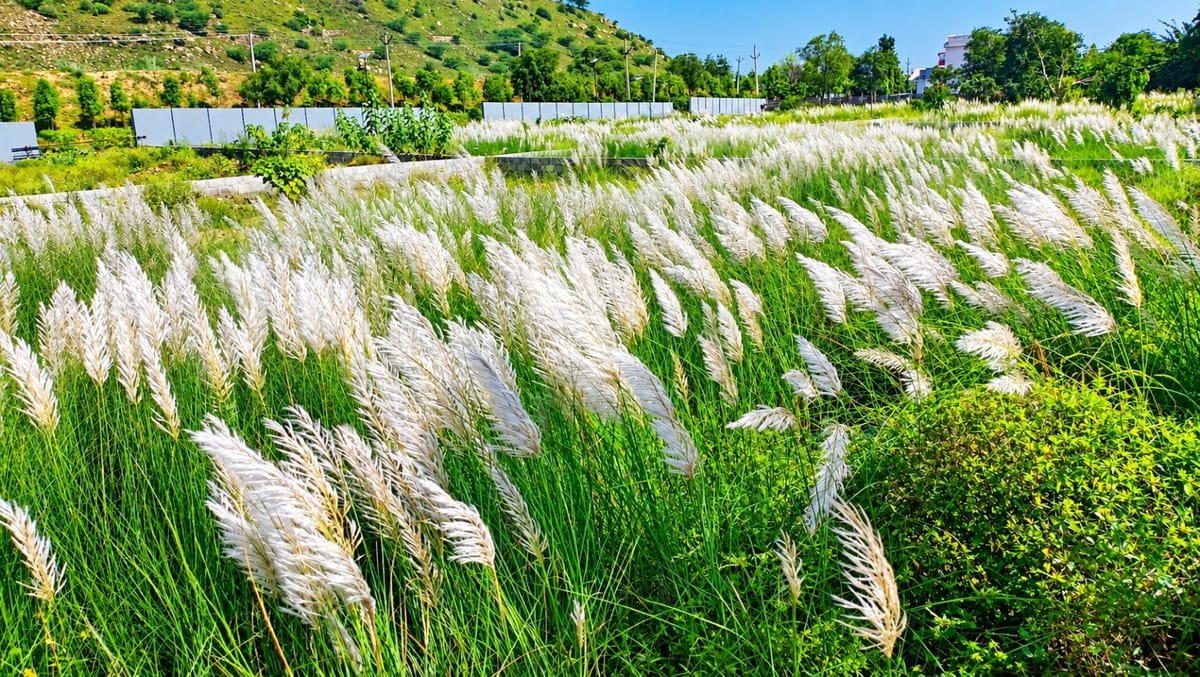
A striking example of this natural transition is clearly visible in Kukas, located within the Jaipur district. Across the local landscape, white Kans grass has begun to bloom extensively, functioning as a traditional and reliable ecological signifier of the impending arrival of the autumn season.
Local environmental observers and residents traditionally associate the blossoming of white Kans grass with the gradual withdrawal of heavy monsoon rains and the onset of cooler, transitional weather patterns. This botanical phenomenon has consistently served as an intuitive indicator for communities across the region for generations.
The simultaneous occurrence of an official rainfall alert from meteorological authorities and the visible proliferation of autumn flora in Kukas highlights a fascinating intersection between scientific forecasting and natural seasonal observations. While administrative bodies rely on radar and atmospheric data, local flora provides an organic timeline of climatic shifts.
Agricultural planners and local administrators must navigate both scientific forecasts of upcoming rainfall from September 11 and the undeniable signs of seasonal retreat displayed by nature. Balancing these dual indicators remains essential for managing local resources and agricultural activities effectively.
As the timeline approaches September 11, residents across Rajasthan, including Jaipur and surrounding districts, will closely monitor actual weather developments while observing the ongoing botanical changes. The combination of official meteorological warnings and nature's signals provides a comprehensive picture of the state's current transitional climate.