
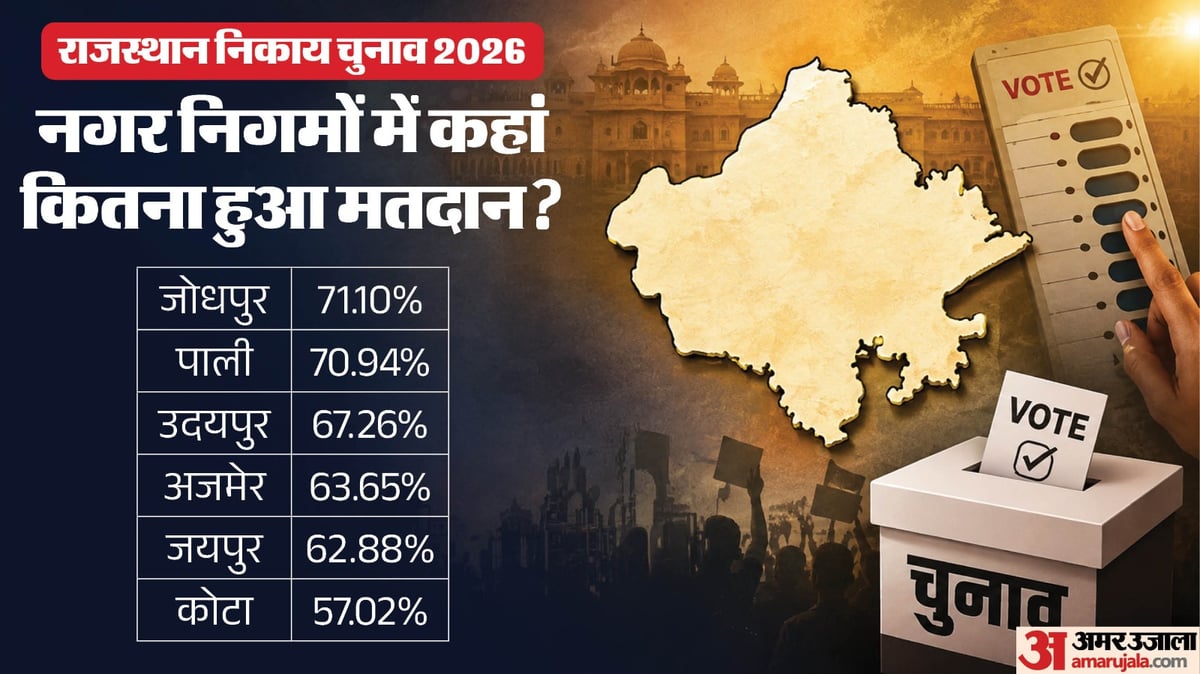
The second and final stage of Rajasthan's urban local body elections concluded on Saturday, bringing the statewide polling exercise to a close after a comprehensive schedule that covered all 147 municipal entities. The Election Commission of India reported an overall voter turnout of 70.01%, a figure that reflects robust civic participation across the state. Of the 8,763,595 registered voters, 6,135,153 exercised their franchise, marking one of the higher turnouts in recent urban elections.
These elections, mandated under the 74th Constitutional Amendment, are a critical component of India's decentralised governance framework. Since the amendment’s adoption in 1992, urban local bodies have been entrusted with responsibilities ranging from water supply and sanitation to local infrastructure and urban planning. Rajasthan, with its diverse mix of historic cities, industrial hubs, and emerging towns, has traditionally seen varied voter engagement, making the 70.01% turnout a noteworthy benchmark.
On the ground, the logistical effort was massive. Polling stations were set up in schools, community halls, and temporary structures to accommodate the electorate across remote villages and densely populated urban wards. Security forces, election officials, and volunteers coordinated to ensure smooth voting, while electronic voting machines (EVMs) and Voter Verified Paper Audit Trails (VVPATs) were deployed in every booth. The final tally shows that Jodhpur district recorded the highest voter participation, while Kota registered the lowest, highlighting regional disparities that merit further analysis.
Election officials, speaking to the press after the count, emphasized the professionalism of the staff and the smooth conduct of the process. "The turnout reflects the confidence of citizens in the democratic process," an official said, adding that the high participation rates in districts such as Jodhpur were encouraging. Local traders in Jodhpur expressed optimism, noting that a vibrant municipal council could accelerate infrastructure projects that benefit commerce. Conversely, residents of Kota voiced concerns about the low turnout, urging future civic bodies to engage more actively with the community to raise awareness.
For Kotputli‑Behror district, the election results carry significant implications. The district, which straddles the edge of the National Capital Region, has been experiencing rapid urbanisation and industrial growth. A newly elected municipal council is expected to focus on improving road connectivity, waste management, and water supply—issues that have been central to local debates. Business owners anticipate that a responsive local government will streamline permits and foster a more conducive environment for investment.
The state administration, through the Chief Electoral Officer, has pledged to scrutinise the election data for any irregularities and to ensure that the newly elected representatives are sworn in promptly. The Election Commission has also announced a post‑poll audit of the VVPAT records to reinforce transparency. Meanwhile, the Rajasthan Urban Development Authority has been instructed to prepare a roadmap for the incoming councils, aligning their mandates with the state’s broader urban development policies.
Looking ahead, the newly elected municipal bodies will convene for their first meetings within the next two weeks, after which they will elect mayors and deputy mayors. The next phase will involve the formulation of annual budgets, prioritisation of development projects, and the establishment of citizen grievance redressal mechanisms. Stakeholders across the state are watching closely, expecting that the fresh mandate will translate into tangible improvements in public services and urban livability.