
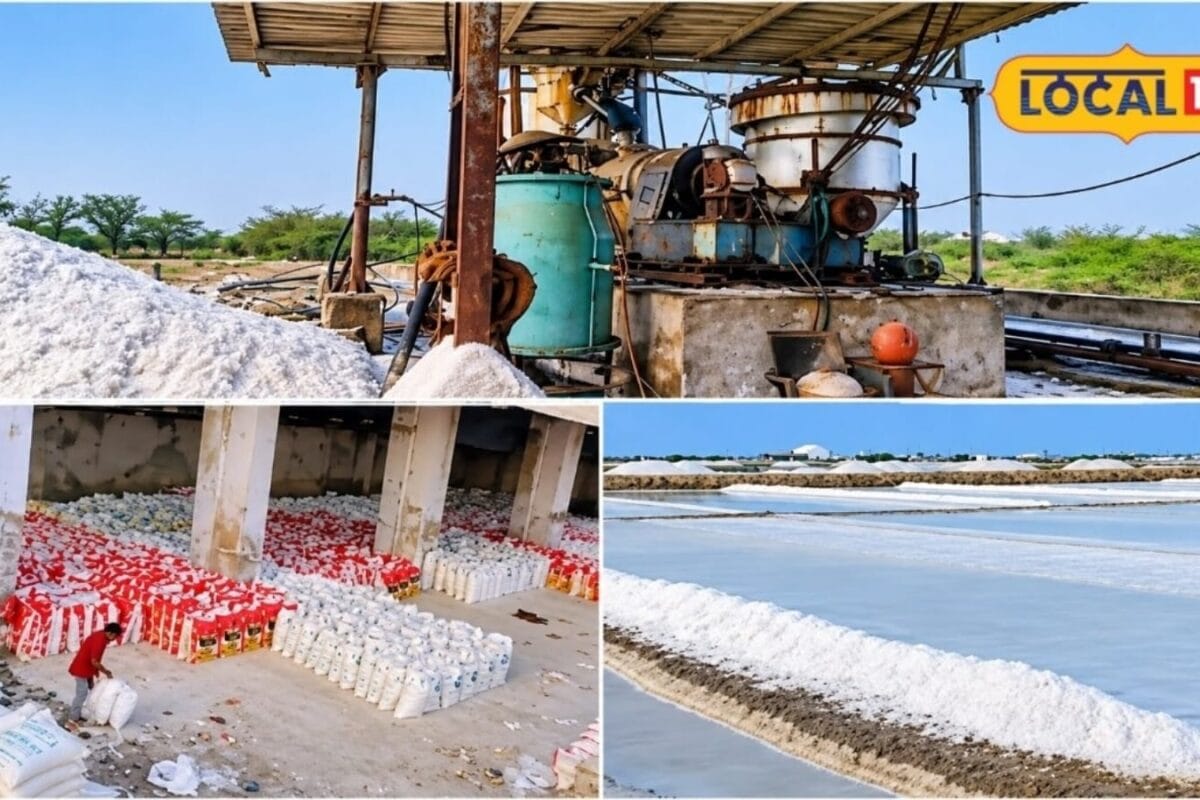
In a monumental development that is set to redefine the traditional salt marketplace across Rajasthan and beyond, scientific interventions have successfully elevated the quality benchmarks of salt produced in the ecologically significant Sambar Lake. Researchers and technical experts have overhauled the conventional processing methodologies, introducing cutting-edge scientific refinements that directly target and eradicate long-standing impurities within the crystalline harvest. This breakthrough marks a decisive turning point for an industry that has historically relied on time-tested, albeit less refined, extraction procedures across the arid expanses of the state.
Historically, salt harvested from the vast stretches of Sambar Lake and the surrounding Nawa region contained sodium chloride levels hovering strictly between 90 to 95 percent. While this traditional yield sufficed for various domestic and industrial applications for decades, it consistently lagged behind the stringent purity standards demanded by high-end chemical and pharmaceutical processing units. The presence of residual impurities not only limited the commercial value of the produce in competitive national markets but also imposed severe pricing constraints on local salt producers, refiners, and merchants who struggled to fetch premium valuations for their hard-earned labor.
Addressing these chronic structural limitations, scientists stationed at the esteemed Central Salt and Marine Chemicals Research Institute in Bhavnagar undertook rigorous investigative trials to optimize the crystallization phase. By engineering and deploying specially designed crystallizer beds during the evaporation and harvesting cycles, the research team successfully separated and eliminated complex mineral impurities that previously contaminated the crude salt beds. This meticulous separation mechanism directly propelled the chemical purity of the final product up to an unprecedented 99.5 percent, establishing a remarkable benchmark for industrial-grade salt production in western India.
Alongside the dramatic surge in chemical purity, the newly optimized extraction protocol has also yielded remarkable visual enhancements, pushing the overall whiteness index of the salt beyond the 85 percent threshold. In the commercial marketplace, visual brightness serves as an immediate indicator of consumer acceptance and refined quality, meaning this dual achievement in purity and whiteness instantly positions the regional produce on par with premier national brands. Industry observers and local trade associations have welcomed these technical upgrades, noting that higher aesthetic and chemical grades will drastically reduce processing losses and minimize operational overheads for processing units operating within the region.
The broader economic resonance of this scientific milestone extends deeply into the heartland of Rajasthan, where the salt industry acts as a foundational pillar for regional prosperity and community sustenance. Across the primary production zones of Sambar and Nawa, thousands of local families depend directly or indirectly on the cyclical rhythm of salt farming, transportation, and preliminary processing for their daily livelihood. With the state's comprehensive salt industry commanding an impressive annual business turnover of approximately 1000 crore rupees, any qualitative elevation in the end product directly translates into enhanced revenue generation capacity, stronger profit margins, and greater financial security for the labor force.
To safeguard and sustain these economic gains, administrative bodies, industrial cooperatives, and technological institutions are actively collaborating to streamline the commercial rollout of the newly developed crystallizer bed technology. Authorities emphasize that widespread adoption of these scientific protocols across all operational pans will be vigorously supported through technical guidance, infrastructural upgrades, and targeted training workshops for local salt cultivators. Ensuring unhindered access to modern refining techniques remains an administrative priority, designed to protect micro-producers from market exploitation while simultaneously expanding their footprint into lucrative export and specialty chemical sectors.
Looking toward the horizon, the successful implementation of this advanced purification technique opens up expansive new avenues for industrial growth, infrastructural modernization, and sustainable resource management within the state. As local refineries begin integrating these standards into their daily production cycles, market analysts anticipate a steady upward trajectory in the valuation of Rajasthan-origin salt across domestic commodity exchanges. By seamlessly bridging traditional harvesting wisdom with contemporary scientific innovation, the Sambar and Nawa salt sectors are fully prepared to embark upon a transformative era characterized by unmatched quality, economic resilience, and long-term prosperity.
