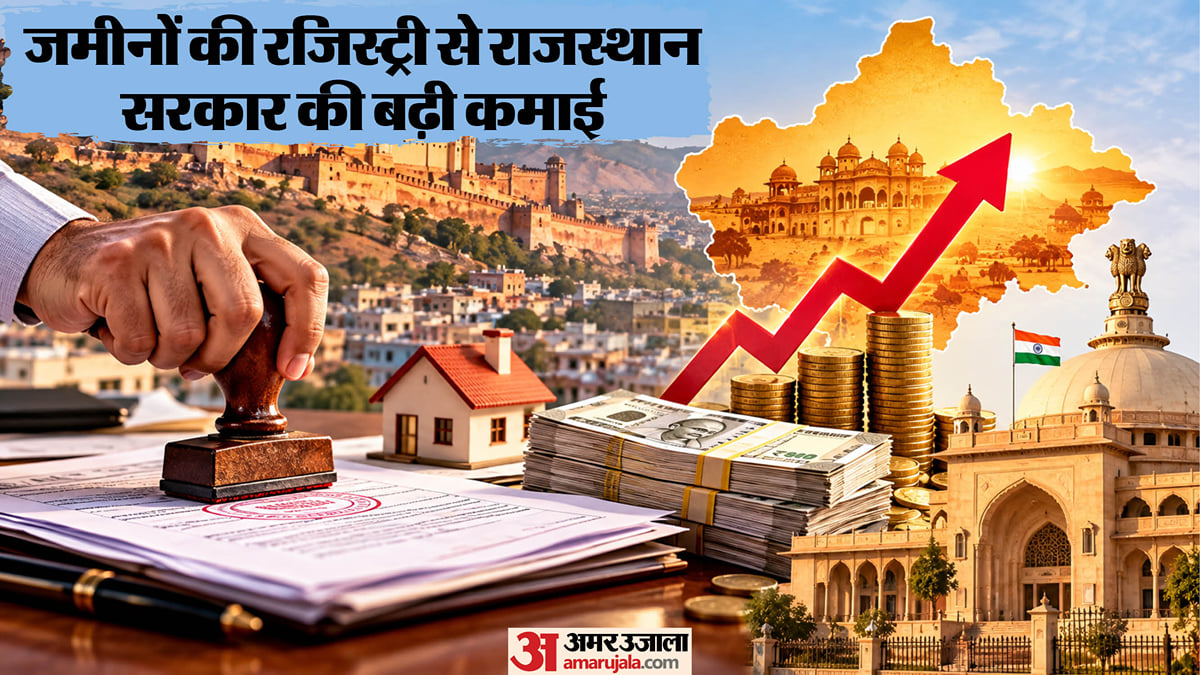
In a significant development for the state economy of Rajasthan, the government has reported a monumental surge in financial earnings originating directly from land transactions, property sales, and official asset registrations. This notable economic upward trajectory highlights a robust resurgence in the real estate sector, capturing the attention of financial analysts and administrative authorities alike throughout the region.
Historically, property registrations and the corresponding stamp duty collections have served as vital barometers for measuring the overall economic health and liquidity of the state. Over previous fiscal periods, administrative departments have continuously sought to streamline documentation procedures, eliminate bureaucratic bottlenecks, and encourage formal registration of land assets among citizens, which has systematically laid the groundwork for the current financial milestone.
Delving into the exact statistical parameters provided by the authorities, the state has successfully garnered a staggering 7,264 crore rupees in total revenue through ongoing registries and applicable stamp duties during the current financial year. This specific fiscal metric underscores the massive volume of transactions successfully processed across various sub-registrar offices, signifying active market participation by buyers and sellers across districts.
Key stakeholders, including real estate developers, property brokers, and everyday citizens engaged in property acquisition, have shared varied perspectives regarding this financial expansion. While administrative officials celebrate the enhanced revenue generation as a testament to efficient governance and transparent digital processing, consumer groups emphasize the necessity of maintaining balanced assessment rates to ensure long-term affordability for middle-income families.
Examining the regional repercussions of this economic development within localities such as the Kotputli-Behror district, the local economy experiences distinct reverberations as land transactions stimulate localized commercial activities. The influx of revenue at the state level often translates into better infrastructural allocation, improved local amenities, and heightened commercial investments within these rapidly growing semi-urban and rural centers.
On the administrative front, regulatory bodies and revenue departments have maintained rigorous oversight to plug any potential loopholes and ensure absolute transparency in property evaluations. Strict implementation of digital land records and streamlined appointment procedures have minimized manual intervention, thereby reducing processing time and encouraging more citizens to complete official legal documentation for their real estate holdings.
Looking ahead toward the remainder of the fiscal year, revenue authorities remain optimistic about sustaining this impressive growth trajectory. As upcoming procedures are further modernized and public awareness initiatives regarding the legal necessity of prompt property registration continue to expand, the state anticipates even higher fiscal yields, ultimately contributing significantly to the broader economic development framework of Rajasthan.