
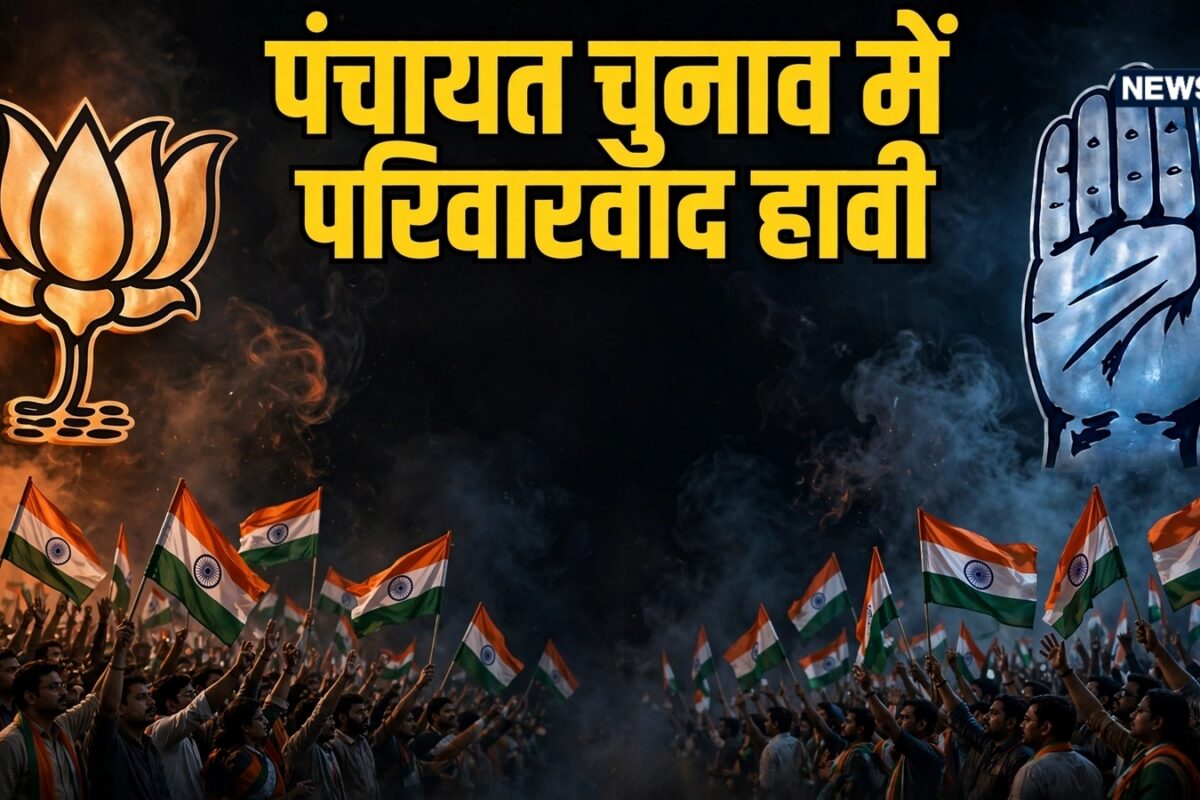
The political landscape of Rajasthan is currently witnessing intense discussions as the preparations for the Rajasthan Panchayat Elections 2026 bring the contentious issue of dynastic politics back to the forefront. Across multiple districts in the state, the candidate selection process has heavily favored relatives of influential leaders over dedicated grassroots party workers who have spent years building the organization from the ground level.
Historically, local body elections in Rajasthan serve as the fundamental bedrock of democratic representation, allowing community leaders and grounded workers to step into public service. However, the current political scenario reveals a distinct trend where political lineage frequently outweighs organizational service, leaving ordinary members disillusioned about their prospects of securing party nominations.
A detailed examination of the candidate lists across key regions indicates that family members of sitting ministers, Members of Parliament, Members of Legislative Assembly, and former ministers have secured prominent positions in the electoral fray. Districts such as Nagaur, Sikar, Banswara, Kota, Bikaner, and Dungarpur have emerged as focal points for this trend, where wives, sons, daughters, sisters, and nieces of influential politicians have been given tickets.
The inclusion of relatives across major political formations, including the Bharatiya Janata Party, the Indian National Congress, and the Rashtriya Loktantrik Party, demonstrates a bipartisan reliance on familial networks. Critics and veteran party members argue that this systemic preference for relatives undermines the core principles of democracy and diminishes the motivational morale of sincere workers who tirelessly campaign during every electoral cycle.
As these candidates vie for powerful administrative seats ranging from district chief to Panchayat Samiti pradhan, the local communities within these affected districts are observing the developments closely. The overarching economic and social impact of these elections resonates deeply through the rural infrastructure, where local governance dictates the distribution of development funds and community welfare initiatives.
Administrative authorities and election watchdogs are closely monitoring the adherence to electoral guidelines and expenditure limits as the campaign phase progresses. While the administrative machinery ensures a transparent and orderly voting process, political analysts note that the ultimate responsibility of validating or rejecting dynastic politics rests entirely with the electorate.
Looking ahead, the crucial question remains how voters in Nagaur, Sikar, Banswara, Kota, Bikaner, Dungarpur, and across Rajasthan will respond to the dominance of political families. The upcoming electoral outcomes will ultimately determine whether personal public outreach, individual merit, and grassroots dedication can successfully counterbalance the formidable influence of established political dynasties.
